War damage, internet shutdowns push Iran’s economy into deeper crisis
War damage is already estimated at €229 billion, as more than 1,000 hours of internet shutdowns and port blockages squeezed Iranian jobs and startups.
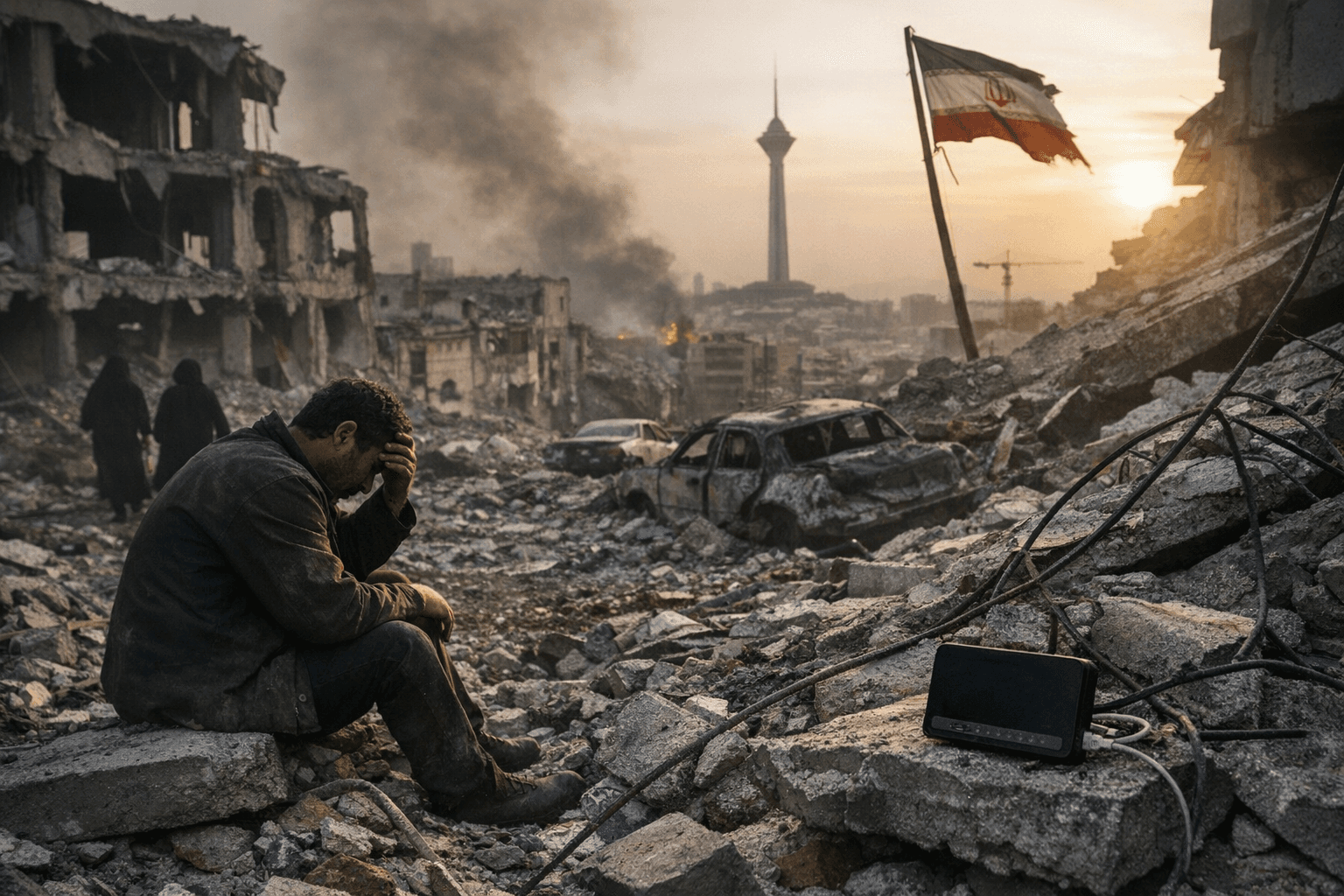
Iran’s war damage bill has already reached about €229 billion, and the strain is showing up in the most ordinary parts of the economy, from shuttered workshops and idle factories to startups that have lost access to customers, payments and data.
Iranian government spokesperson Fatemeh Mohajerani cited the preliminary estimate on April 14, while trade unionist Ismail Abdi warned that workers, teachers and wage earners were bearing the heaviest burden. Contract workers, day laborers and informal workers were the first to suffer when factories, workshops or service projects shut down or scaled back, a pattern now visible across manufacturing and services after six weeks of war.

The damage has been compounded by the blockade of the Strait of Hormuz, which has kept goods from reaching Iranian ports. DW reported that more than 93 million people were living in the shadow of a war that could flare up again at any moment, underscoring how fragile the domestic recovery had become. With industrial facilities destroyed and production in many sectors brought to a standstill, job losses were growing at the same time that household spending power was being squeezed.

The digital economy has been hit especially hard. Iran International reported that more than 1,000 hours of internet shutdowns had crippled small businesses and startups. Communications Minister Sattar Hashemi said the outages were costing more than $35 million a day, or roughly $1.5 billion since the conflict began. Afshin Kolahi of the Iran Chamber of Commerce put the broader daily damage, including indirect effects, as high as $80 million. For entrepreneurs already shut off from search engines, email, social media, payment systems and backend tools, rebuilding on domestic platforms felt, in their words, like starting from scratch.
That matters because Iran’s digital economy accounts for an estimated 5% to 6% of GDP. A prolonged shutdown does not just interrupt commerce; it erodes the sector that helps other businesses sell, bill and hire. The effect reaches beyond Tehran’s balance sheet and into the state’s negotiating room, because deeper civilian pain makes it harder for the government to absorb a long conflict without visible economic and political costs.
The regional risks are no smaller. A Reuters-linked Thomson Reuters Institute analysis said the effective closure of the Strait of Hormuz had halted roughly 20% of global petroleum flow and forced all five major container lines to suspend transits through the waterway. Israel has already felt the economic spillover, with GDP shrinking 3.5% in the April-to-June quarter of 2025, business sector output down 6.2% and consumer spending down 4.1%. The longer the disruption lasts, the more the war looks like an economic shock with regional reach, not just a military confrontation.
This article was produced by Prism’s automated news system from verified source data, official records, and press releases, then run through automated quality and moderation checks before publishing. The system is built and supervised by the people who set the standards it runs under. Read our full AI policy.
Did this article answer your question?