Reuters/Ipsos poll shows Americans blame Trump for rising living costs
Most Americans say living costs are on the wrong track, and 55% of Republicans blame Trump’s policies. The squeeze is becoming a midterm warning sign.
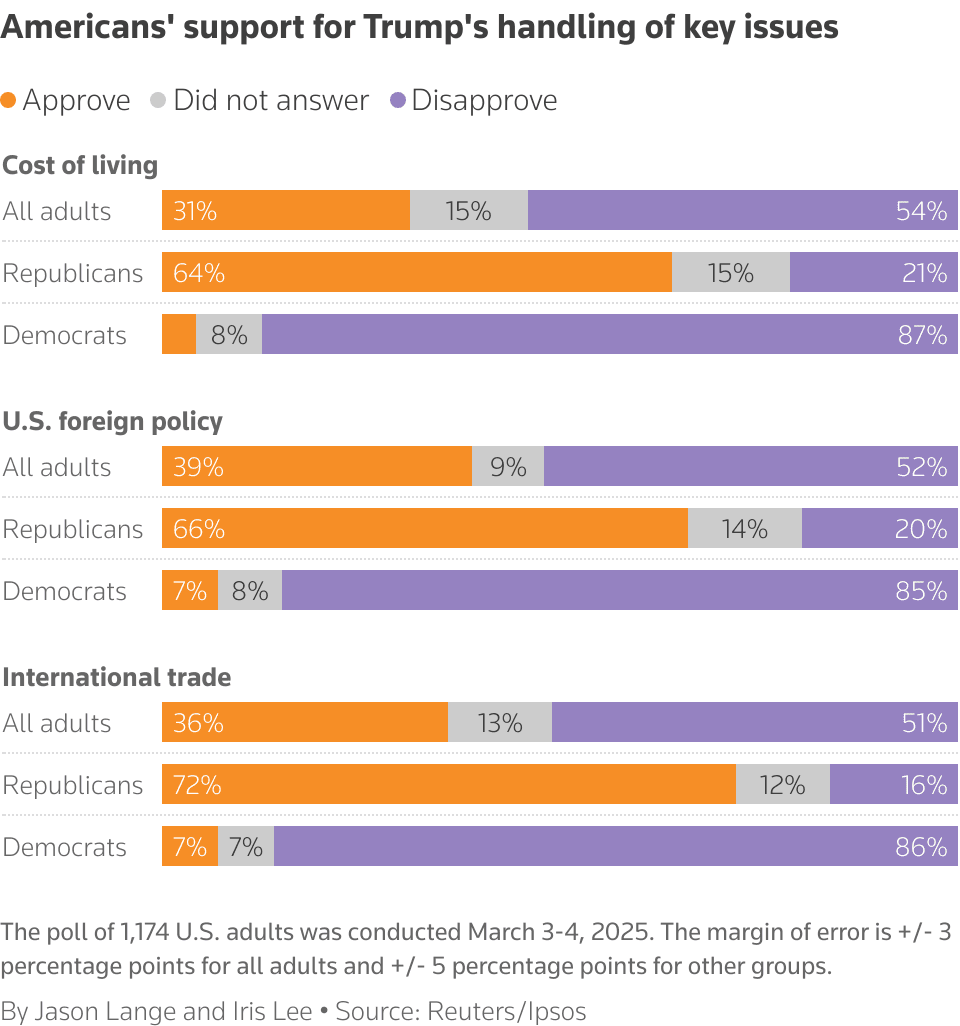
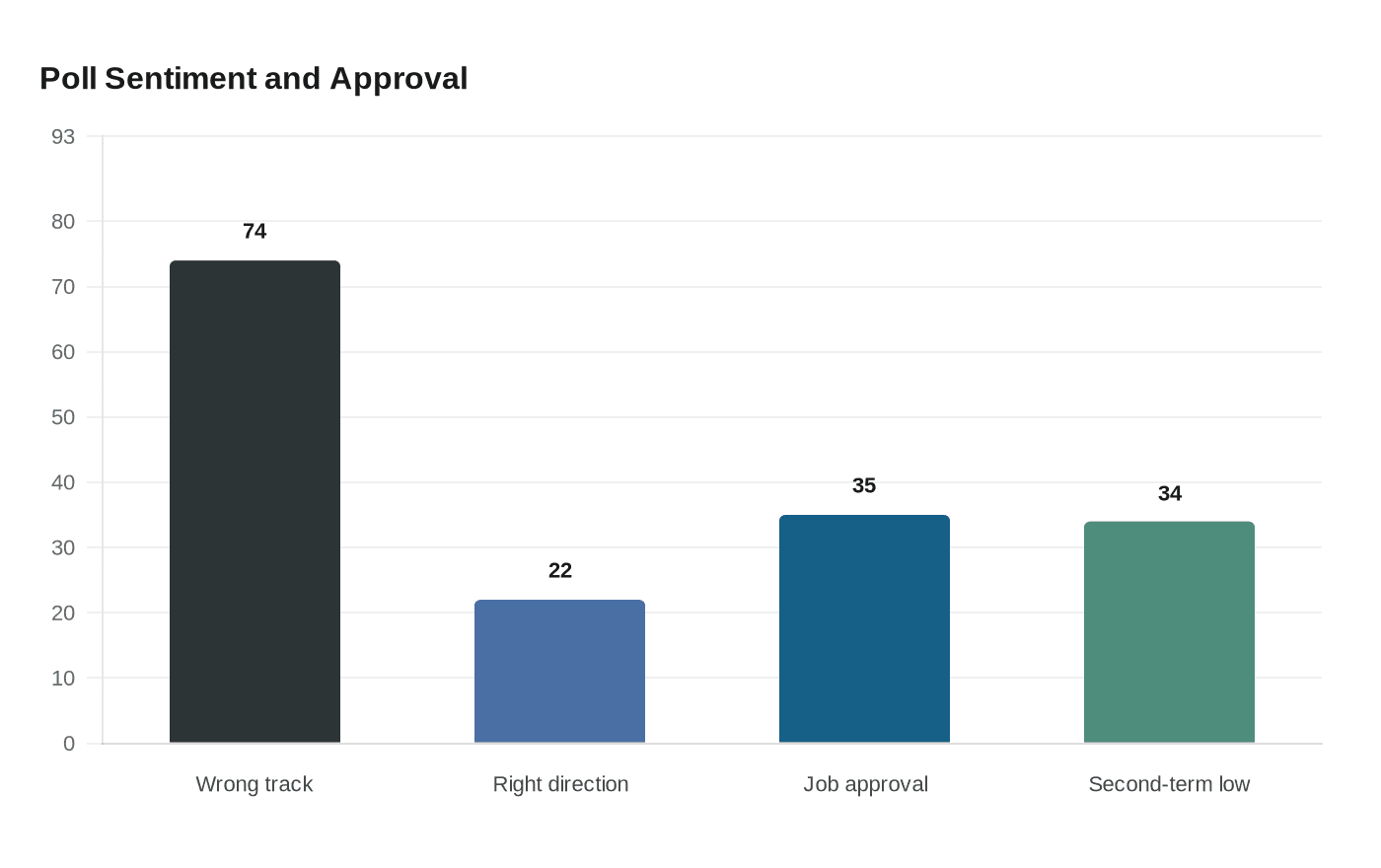
Americans are growing sharply more pessimistic about the price of everyday life, and the discontent is reaching well beyond Democratic voters. In a Reuters/Ipsos poll conducted May 15-18, 74% of respondents said the cost of living was off on the wrong track, while just 22% said it was going in the right direction. More than three quarters of Americans, including 55% of Republicans, said President Donald Trump’s policies have increased the cost of living in their community.
The numbers point to a widening strain on Trump’s political standing as families keep absorbing higher prices for basic needs. Trump’s overall job approval stood at 35% in the same poll, only slightly above his second-term low of 34%. Republican support has also softened: 21% of Republicans said they disapprove of his performance, and only 47% approved of his handling of the cost of living.
That dissatisfaction matters because inflation politics is still being judged at the kitchen table. Reuters/Ipsos has repeatedly found Americans worried about the cost of healthcare, food, housing and energy, a mix that captures the daily pressure voters feel long before they see any improvement in headline economic indicators. Rising gasoline prices have added to the strain after U.S. and Israeli strikes on Iran disrupted global oil trade, pushing pump prices about 50% higher.
The politics are especially delicate for Republicans because the November 2026 midterm elections will determine control of both chambers of Congress. That makes the cost-of-living debate more than a snapshot of frustration; it is a test of turnout and loyalty in a year when every marginal Republican voter could matter. Republican consultant Jeanette Hoffman warned that weakening enthusiasm could hurt turnout.
For now, the poll suggests that affordability remains one of the clearest sources of anger in American politics. Even as broader economic data can improve in the abstract, the price of groceries, gas, housing and healthcare continues to define how many households judge Trump, and how they are likely to judge the party in power next November.
Know something we missed? Have a correction or additional information?
Submit a Tip