Rising Fuel and Fertilizer Costs Squeeze Texas Farmers Amid Middle East Conflict
Nelson Reus was fertilizing 500 acres of corn in Hondo when the U.S. attacked Iran. Now diesel has jumped $1+ per gallon in a month, and Texas farmers fear a 50% surge in fuel costs.
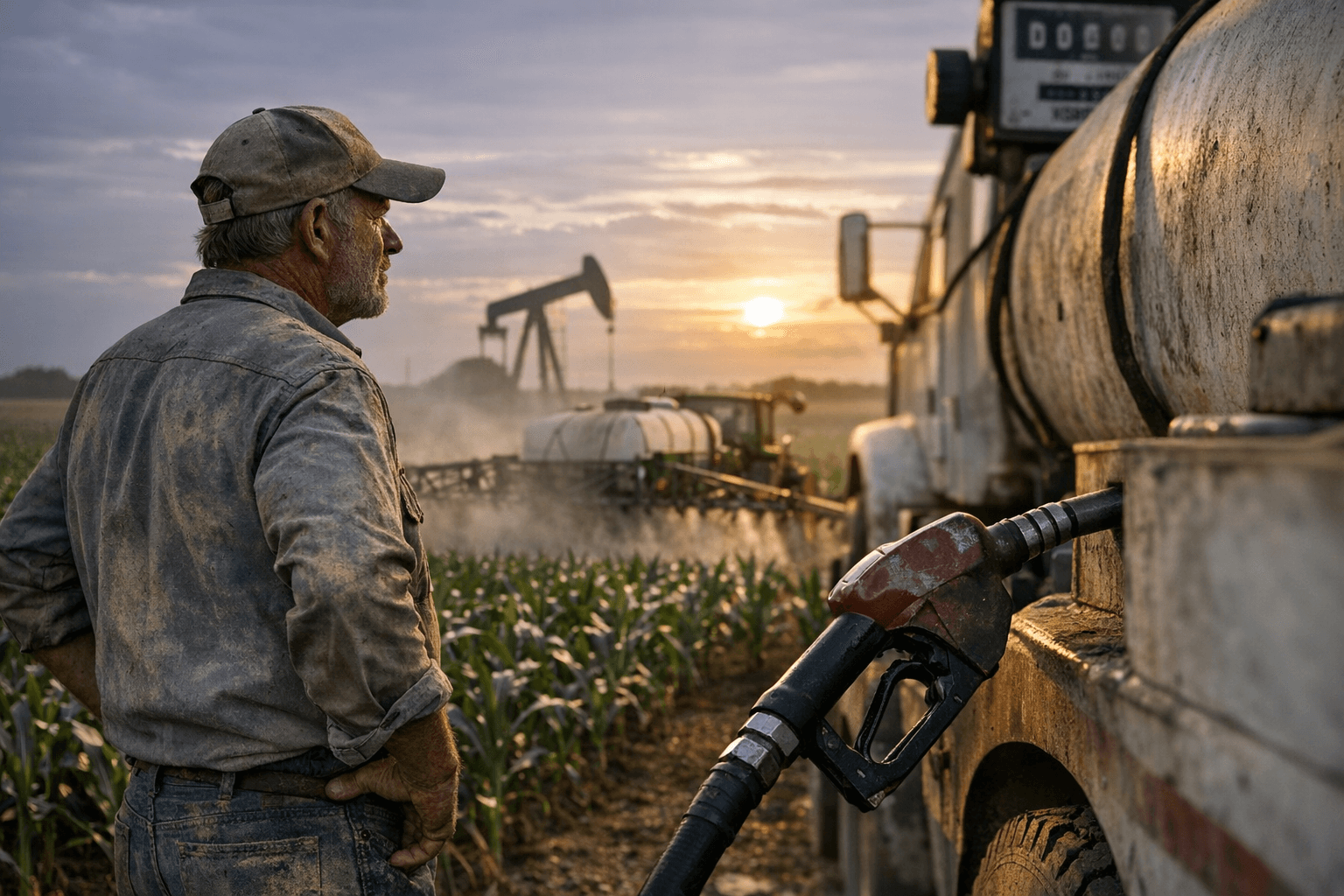
The war in the Middle East isn't just rattling global oil markets; it's squeezing two industries that keep food and supplies moving across the country: truckers and farmers.
Nelson Reus was already in the field when it began. The third-generation Hondo farmer had planted wheat in early January and was fertilizing and planting corn on 500 acres of his family farm in early March just as the U.S. and Israel launched attacks on Iran. Since then, he has been watching fertilizer and fuel prices spike, wondering how much the war is shaving off his bottom line. Depending on how long the conflict lasts, fuel alone could amount to a possible 50% increase in his operating costs.
The numbers behind that anxiety are stark. The national average price for a gallon of diesel has risen by more than a dollar per gallon in the past month since the U.S. war with Iran began. As of March 24, the national average on-highway diesel price rose another 30 cents to $5.375, according to data from the U.S. Energy Information Administration. Diesel, which powers most of America's farm equipment and 18-wheelers, has skyrocketed since the conflict began; in some areas it has jumped more than 20%, and in states like Texas, where everything is so spread out, the fuel cost adds up quickly.
Allen Kaminski, an Austin County rancher who raises cattle and grows hay, kept his receipts. In May last year, he paid $2.25 per gallon for off-road farm diesel; filling the 100-gallon tank on his truck cost $225. The same fill-up now runs $456 — a $231 swing in a single year. "It's a big change. It's a big impact," Kaminski said. "Let's say I'll burn 30 gallons a day in one tractor, so I'm going to burn $150 worth of fuel. Plus, it's just not that fuel, but it's the parts, the twine, the net wrap that I use. All that's increasing because the transportation costs to get my supplies or parts that I need to the store is increasing."
Fertilizer costs are compounding the damage. The war has effectively blocked the Strait of Hormuz, a major chokepoint through which one-third of the world's fertilizer passes, creating a shock to the global fertilizer supply just as American farmers prepare for spring planting season. According to Agricultural Economic Insights, nitrogen fertilizer costs in the U.S. were up 30% since the war began. While most fertilizer used on U.S. farms is made in North America, the rising cost of natural gas means American-made fertilizer will get more expensive as well. The American Farm Bureau Federation described reports of companies freezing fertilizer sales at a critical time, with planting season coming into full swing.
The problem for Texas farmers is that their revenue hasn't moved to match. Even before the conflict, farmers were already losing money on the crops they were growing, with typical losses running around $150 per acre of corn and close to $200 per acre of cotton. Farmers aren't making much of a profit, if at all, and the U.S.-China trade war closed off one of the largest markets for American farmers, plunging the value of their crops.
For states like Texas, this represents a double hit, as many farms rely on diesel-powered equipment and long trucking routes to move those crops. John Esparza, president of the Texas Trucking Association, said he had paid at least 80 cents more per gallon than he would normally expect to pay — a cost that compounds rapidly when trucking fleets are buying 150 gallons at a time.
Alternative fertilizer suppliers exist, including Morocco and several Latin American countries, but high prices for U.S. farmers will likely remain until the strait reopens, with the list of possible economic consequences growing longer by the day. Prices could go higher still if more countries follow the lead of China, which recently restricted its own fertilizer exports in a bid to stockpile its reserves.
Even before the war began, USDA economists projected that food prices this year would rise more than in 2024 or 2025. "When farmers face supply shortages or major price increases, those impacts ripple through the entire food chain," said Zippy Duvall, president of the American Farm Bureau Federation. For Texas farmers already absorbing losses before the first shot was fired, the war has simply accelerated a reckoning that was already arriving.
Know something we missed? Have a correction or additional information?
Submit a Tip