Russia Faces Heavy Drone Attack After Rejecting Ukraine Ceasefire Offer
Russia intercepted 347 Ukrainian drones overnight as Moscow rejected a ceasefire, disrupting airports and exposing air-defense strain before Victory Day.
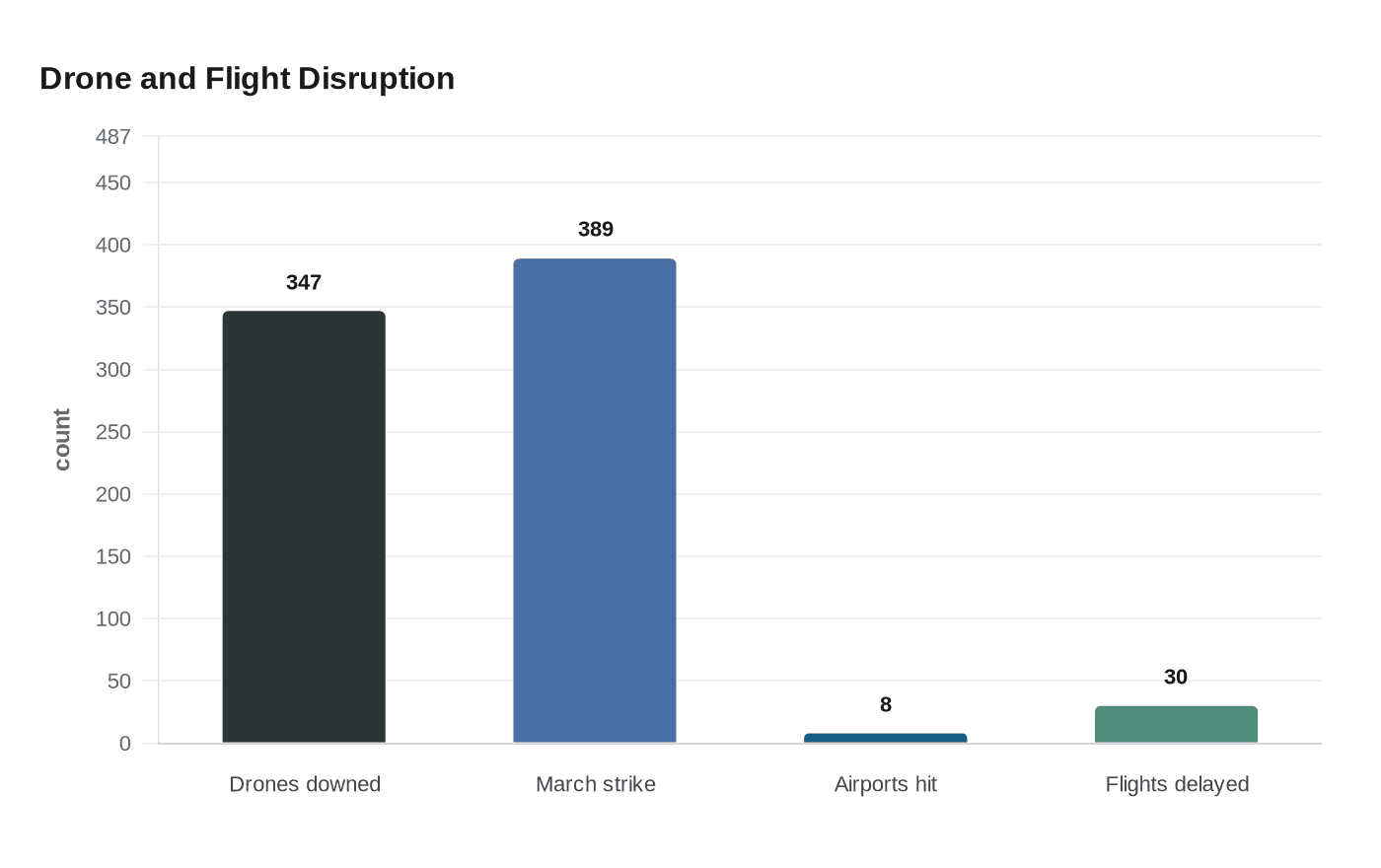
Moscow was forced into an all-night air-defense scramble after Russia’s Defense Ministry said it shot down 347 Ukrainian drones over more than 20 regions, including the capital. The barrage, one of the heaviest of the war, pushed the conflict’s air threat deep into Russian territory and rattled civilian travel just as the Kremlin was preparing for Victory Day, its most politically important holiday.
The scale of the attack mattered as much as the damage. Russian officials said the drones were intercepted over a span of roughly 15 hours, and Moscow Mayor Sergei Sobyanin said more than 50 drones heading for the capital were brought down. The ministry called it Ukraine’s second-biggest aerial attack since Russia’s full-scale invasion, trailing only a March strike that Russia said involved 389 drones. Even without major reported hits on the ground, the volume alone showed how far Ukraine can stretch Russia’s air defenses.
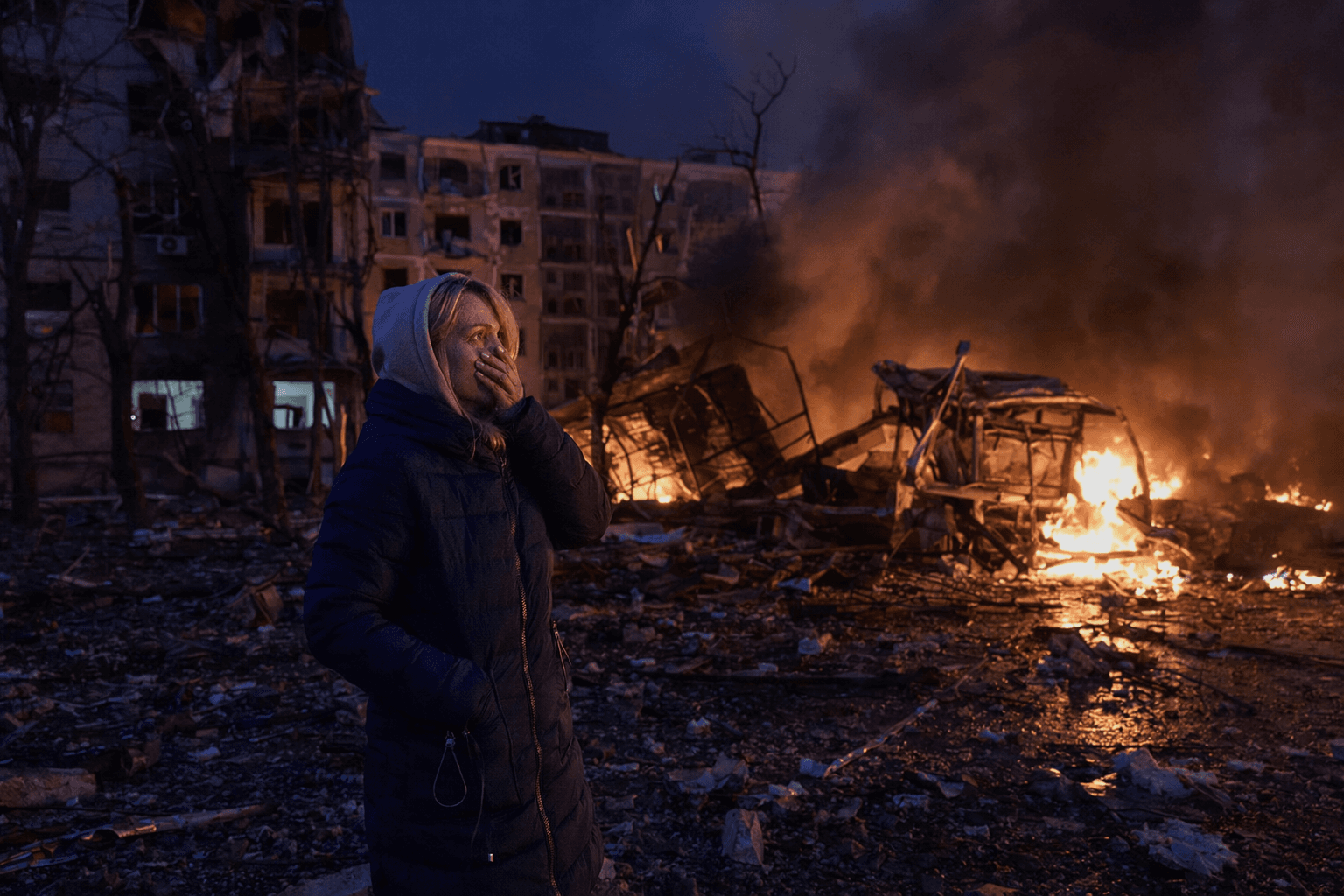
Air traffic was among the clearest signs of disruption. Russia’s federal air transport agency, Rosaviatsiya, said temporary flight restrictions affected eight airports on May 7, 2026, and 30 flights in the Moscow region were delayed by more than two hours. Coverage of the same episode said more than 100 flights at Vnukovo Airport were delayed or canceled, while Vnukovo, Domodedovo, Sheremetyevo and Zhukovsky were placed under restrictions at points during the alert. The effect was to expose how quickly Ukraine’s drones can force airports, security services and airlines into reactive mode across a huge geographic area.
The timing sharpened the political message. Russia had announced a unilateral ceasefire for May 8 and 9 around Victory Day, which marks the Soviet defeat of Nazi Germany in World War II and remains central to Russian state identity. Ukraine dismissed that offer as “not serious” and put forward its own separate ceasefire idea, underscoring how little trust existed between the two sides. By May 8, both governments were accusing each other of violations almost immediately, turning the truce into another signal of mutual suspicion rather than a step toward de-escalation.
That is what gives the drone attack its wider significance. Victory Day is meant to project stability, strength and continuity, yet the capital instead spent the holiday buildup under air alerts, flight restrictions and visible strain. Reporting on the 2026 parade said it had already been scaled back, with less military hardware on display because of security concerns. Against that backdrop, the drone barrage was not only a battlefield event. It was a message that Ukraine can still reach into Russia, embarrass the Kremlin on a symbolic date and force Moscow to defend its own skies while claiming control of the moment.
This article was produced by Prism’s automated news system from verified source data, official records, and press releases, then run through automated quality and moderation checks before publishing. The system is built and supervised by the people who set the standards it runs under. Read our full AI policy.
Did this article answer your question?