Russia intensifies drone strikes on Ukraine's ports as exports limp on
Russia fired more than 800 drones at Ukrainian port infrastructure in four months, even as Odesa kept 30 million metric tons of cargo moving. Each hit raises shipping risk and food-price pressure.

Russia’s drone campaign against Ukraine’s ports has become a direct strike on the country’s export lifeline, with more than 800 drones aimed at port infrastructure in the first four months of 2026, more than ten times the number seen in the same period a year earlier. The attacks have concentrated on Odesa and the surrounding region, where seaports handle grain, metals and other cargo that bring in foreign currency and help keep the wartime economy afloat.
Ukraine said more than 30 million metric tons of cargo still moved through its ports since the start of the year, showing how hard Kyiv is trying to preserve maritime trade even under repeated fire. But the numbers also show the strain. The National Bank of Ukraine said year-on-year exports of goods rose just 0.6% in March, a weak reading for an economy that depends on external earnings to fund defense, imports and reconstruction.

The damage has accumulated since Russia’s full-scale invasion in February 2022. Oleksii Kuleba said more than 900 port facilities and 177 civilian vessels have been damaged or partially destroyed. Warehouses, cranes, rail links and shipping routes have all come under pressure, creating longer delays and higher costs for exporters. Each new strike adds another layer of uncertainty for shipowners and insurers already pricing for a war zone on the Black Sea.
The latest attacks underlined how persistent the campaign has become. On May 1, a drone strike damaged port infrastructure in the Odesa region and wounded two people in Odesa. Two days earlier, another strike hit port infrastructure in southern Odesa and wounded two more people. On April 27, drones attacked Odesa, injuring at least 11 people, including two children, while also damaging homes and port-area infrastructure. On April 22, a strike on Odesa port was linked to the death of a railway worker elsewhere in the region.
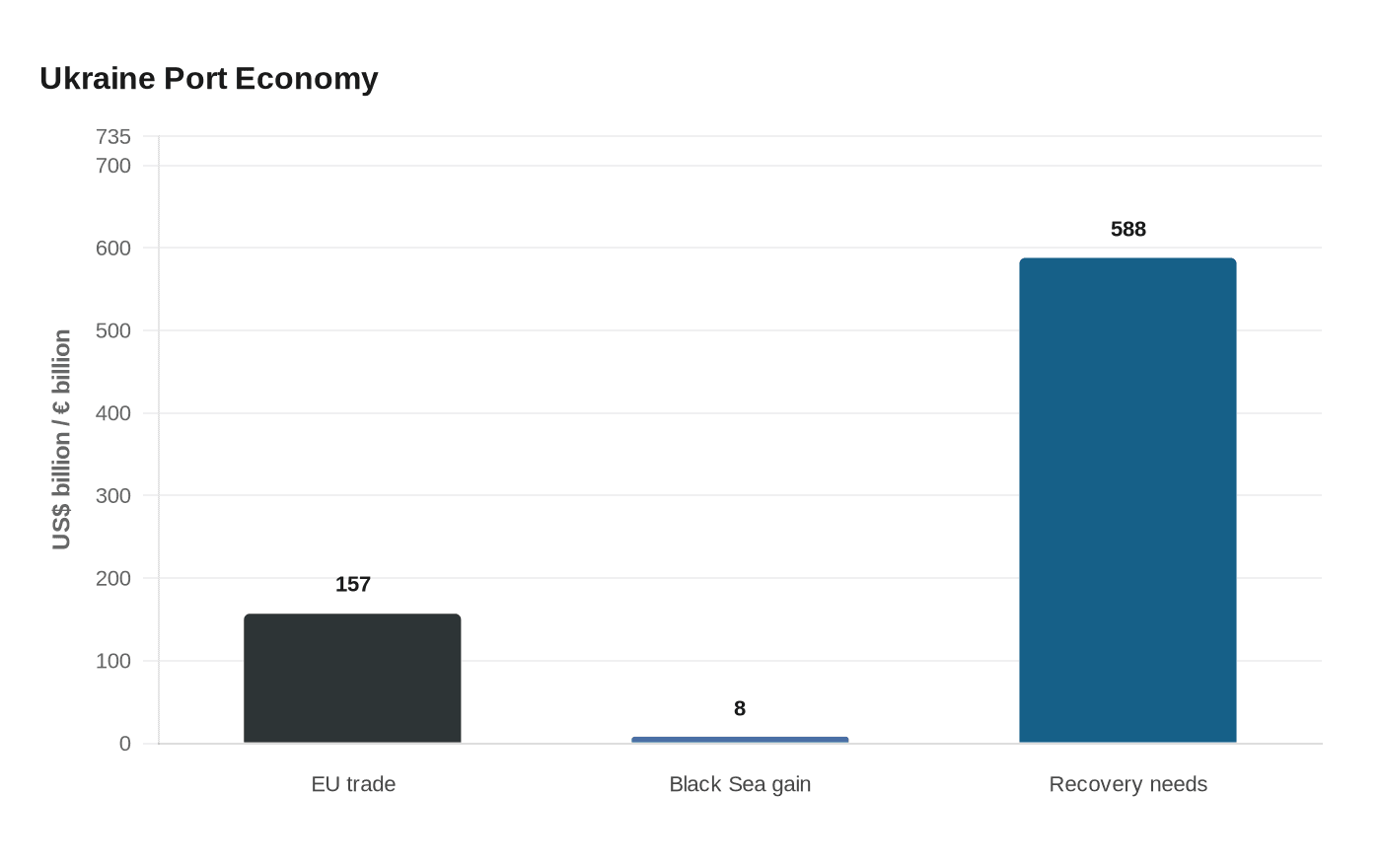
The stakes extend well beyond Ukraine. The European Commission said Russia’s blockade of Ukrainian seaports forced the launch of the EU-Ukraine Solidarity Lanes in May 2022 to keep trade moving by rail, road and inland waterways. Those routes have carried more than 60 million tonnes of non-agricultural products and about €157 billion in total trade. The World Bank said Ukraine’s deep seaports under the Black Sea Corridor added about US$8 billion to the economy in 2024 through higher export volumes and lower export costs. With Ukraine’s reconstruction and recovery needs now estimated at almost US$588 billion over the next decade, every hit on port infrastructure deepens a crisis that is already reshaping food logistics, shipping insurance and the country’s ability to finance its recovery.
This article was produced by Prism’s automated news system from verified source data, official records, and press releases, then run through automated quality and moderation checks before publishing. The system is built and supervised by the people who set the standards it runs under. Read our full AI policy.
Did this article answer your question?