Russian interior minister visits North Korea as ties deepen further
Russian interior minister Vladimir Kolokoltsev landed in Pyongyang for law-enforcement talks, a sign the Moscow-Pyongyang alliance is moving deeper into state security.
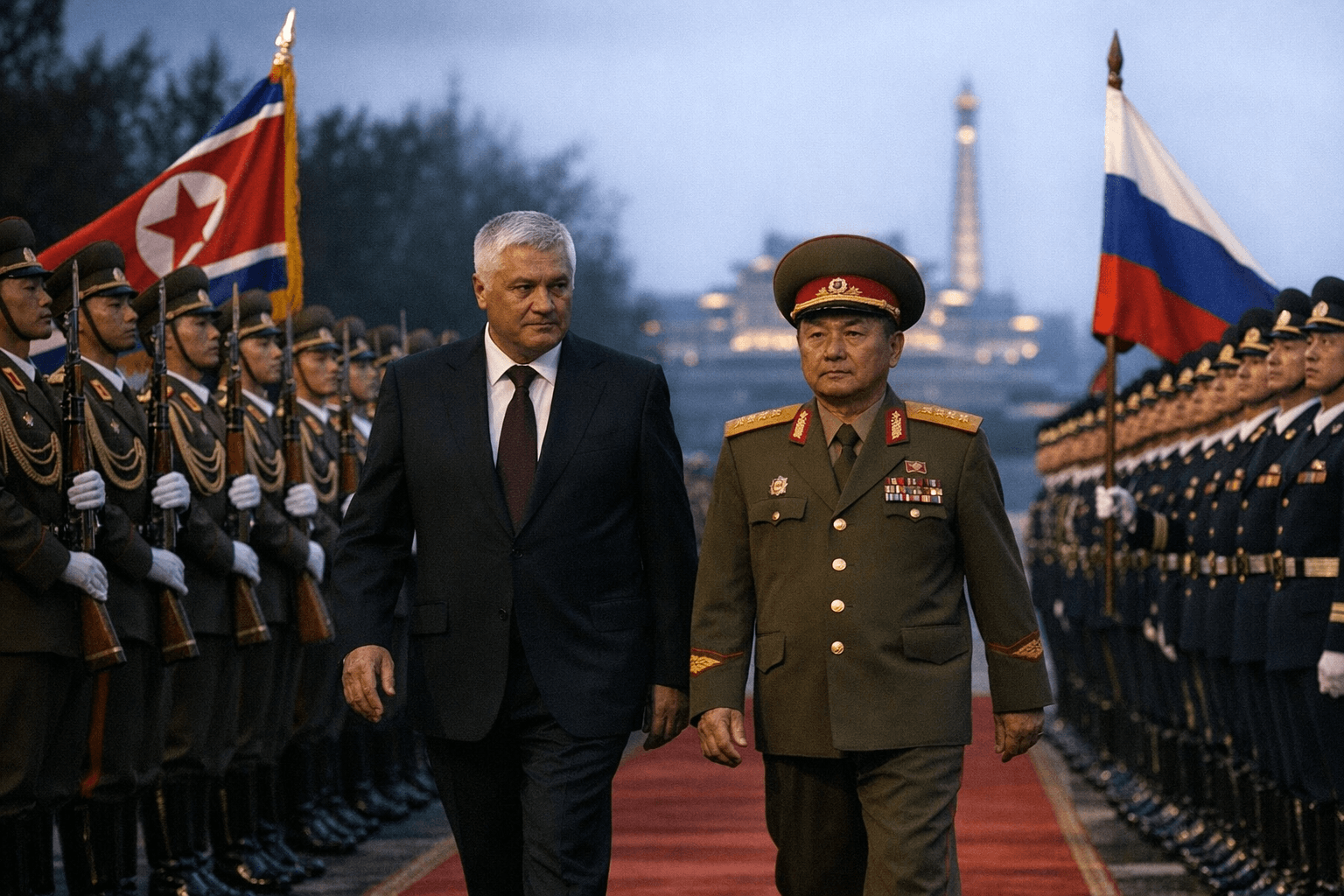
Russian Interior Minister Vladimir Kolokoltsev arrived in Pyongyang on April 20 for talks that pushed the Russia-North Korea relationship further beyond weapons headlines and into the machinery of state security. The Russian Interior Ministry said the visit would include a series of working meetings, while ministry spokeswoman Irina Volk said the two sides would discuss cooperation in law enforcement.
North Korea’s public security minister, Pang Tu-sop, met Kolokoltsev’s delegation in Pyongyang, underscoring that the visit was not simply ceremonial. A law-enforcement agenda can cover policing, border control, crime prevention and other internal-security ties, all areas that become more sensitive when two governments are already cooperating on defense and wartime logistics.
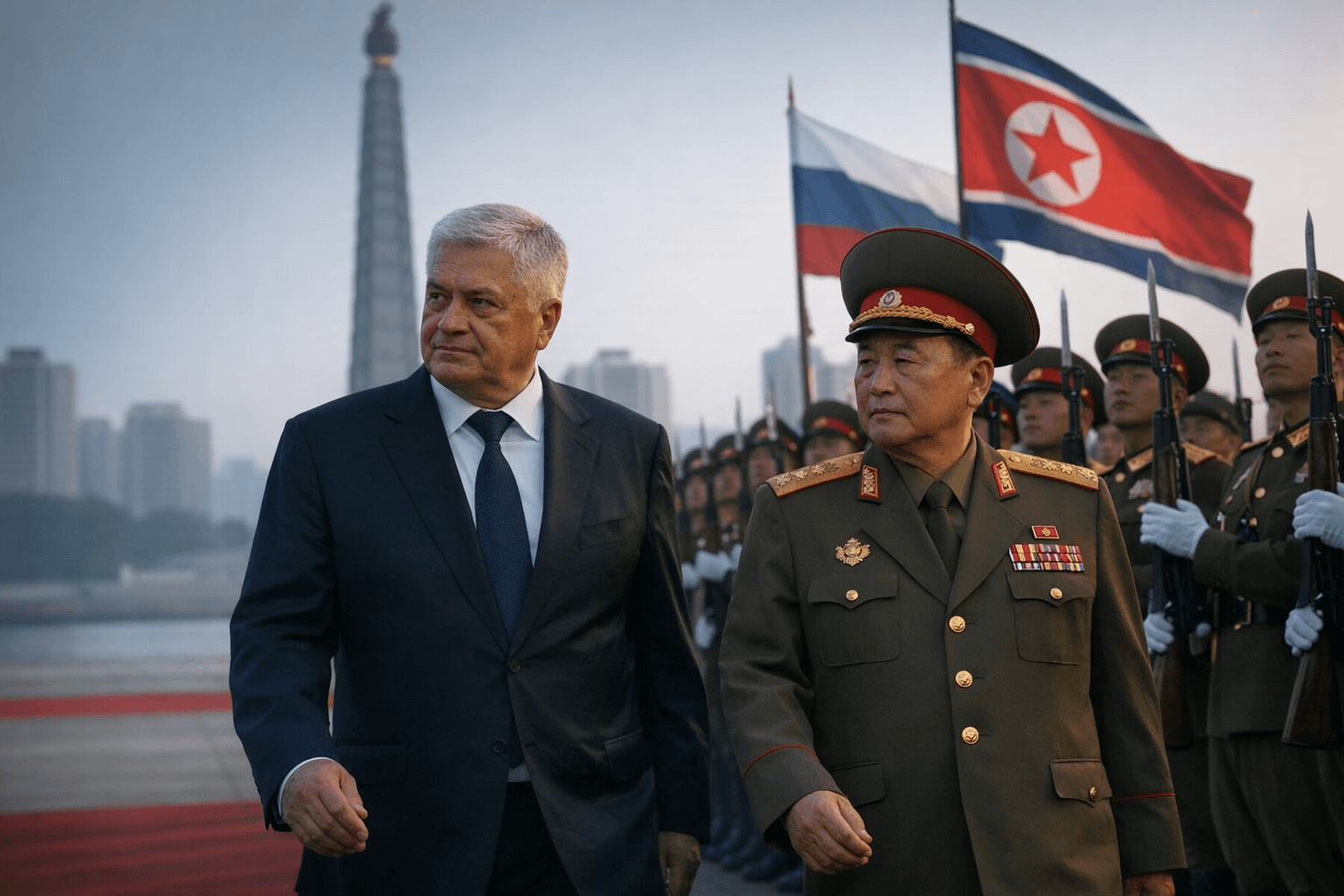
That broader backdrop gives the trip its weight. Russia and North Korea signed a Comprehensive Strategic Partnership Treaty in Pyongyang on June 18, 2024, during a visit by Vladimir Putin. The pact entered into force on December 4, 2024, after ratification by both countries, and it included a mutual defense provision that formalized a relationship far stronger than routine diplomatic contact.
The military side of that partnership has already moved onto the battlefield. North Korea sent an estimated total of 14,000 troops to support Russia in the Kursk region in western Russia, including about 3,000 reinforcements to replace losses, according to Reuters’ reporting. North Korea later publicly confirmed in April 2025 that it had sent troops to Russia and tied the deployment to the 2024 treaty.
Washington and its partners have treated that cooperation as a sanctions and security concern. U.S. officials said in 2025 that Russia’s training of North Korean soldiers violated United Nations Security Council resolutions. A sanctions-monitoring report transmitted to the Security Council on May 29, 2025, alleged unlawful military cooperation between North Korea and Russia, including arms transfers and Russian training of North Korean troops.
Against that backdrop, Kolokoltsev’s visit suggests the relationship is becoming institutionalized at cabinet level. The symbolism matters, but so does the agenda. Once interior ministries are exchanging working meetings, the partnership is no longer limited to summit language or battlefield coordination. It is moving into the practical layers of state power that can outlast a single war, including policing, border security and internal-security coordination.
This article was produced by Prism’s automated news system from verified source data, official records, and press releases, then run through automated quality and moderation checks before publishing. The system is built and supervised by the people who set the standards it runs under. Read our full AI policy.
Did this article answer your question?


