Saif al‑Islam Gaddafi reported killed at Zintan residence
Saif al‑Islam Gaddafi, long wanted by the ICC, was reported shot dead in Zintan, deepening Libya's political fragmentation and raising questions about security and accountability.
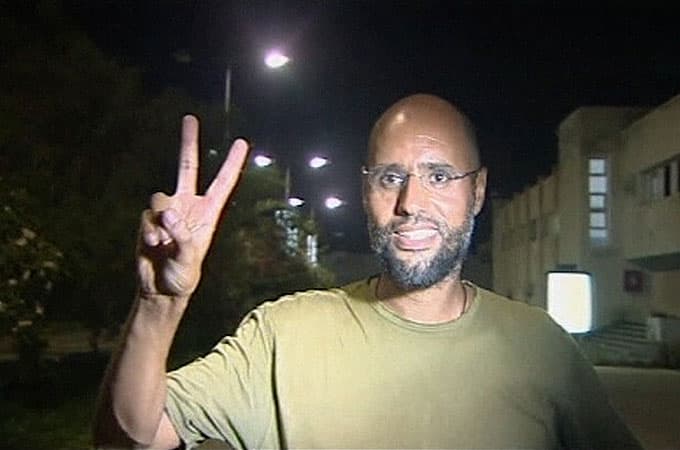
Armed men attacked the home of Saif al‑Islam Gaddafi in the western Libyan town of Zintan, killing the 53‑year‑old son of the late dictator Muammar Gaddafi, multiple members of his legal and political team said on Feb. 3, 2026. His lawyer and political adviser announced the death on Facebook, and the head of his political team confirmed the reports to the Libyan News Agency.
Khaled al‑Zaidi, described by associates as Gaddafi’s lawyer, told AFP that "a 'four‑man commando' unit carried out an assassination at his home in the city of Zintan." His political team called the killing a "cowardly and treacherous assassination," saying "masked men killed him at his home in Zintan." Zintan lies some 136 km (85 miles) southwest of Tripoli, and has been a center of local militia power since the 2011 fall of Muammar Gaddafi.
The circumstances remain contested. A sister of Saif al‑Islam told Libyan television that he had died near the border with Algeria, offering a competing account of where the attack occurred. Libyan prosecutors were reported to be investigating the killing, but no group has claimed responsibility and there has been no independent forensic or hospital confirmation released publicly.
Reactions from family and former spokesmen were immediate. Hamid Gaddafi, a cousin, said he had "fallen as a martyr." Moussa Ibrahim, who served as a spokesman for the old regime, posted on X that "They killed him treacherously. He wanted a united, sovereign Libya, safe for all its people," and added that he had spoken with Saif al‑Islam two days earlier, who "spoke of nothing but a peaceful Libya and the safety of its people."
Saif al‑Islam was a consequential figure in Libya’s post‑2011 politics. Born in June 1972, he was viewed in earlier years as his father's potential heir and played a role in outreach to the West before 2011. He was captured while trying to flee in 2011, held by militias in Zintan for years, and despite a 2015 death sentence in absentia by a Tripoli court was eventually released under an amnesty in 2017. He remained a controversial figure: wanted by the International Criminal Court on charges tied to the 2011 crackdown, yet politically active, including participation in UN‑brokered dialogues.
The killing underlines the fragility of security in a country long fractured among rival governments and armed groups. Libya's divided institutions, with competing authorities in Tripoli and the east, have repeatedly struggled to assert control over militias and provide coherent judicial oversight. The death of Saif al‑Islam could reshape those dynamics by removing a polarizing political actor who once sought a public role and by provoking retaliatory moves among allied factions.
Key questions remain unanswered: who ordered the attack, whether the scene has been forensically examined, and which judicial authority is leading the probe. International actors that have monitored Libya’s law‑and‑order collapse, including the ICC and the UN mission, have not issued public confirmations as of now. Without independent verification, the competing accounts of location and motive will complicate efforts to establish accountability and could deepen instability in an already volatile landscape.
This article was produced by Prism’s automated news system from verified source data, official records, and press releases, then run through automated quality and moderation checks before publishing. The system is built and supervised by the people who set the standards it runs under. Read our full AI policy.
Did this article answer your question?