Samsung chip profit soars 49-fold amid AI hardware boom
Samsung’s chip profit jumped 49-fold to 53.7 trillion won as AI demand tightened supply, with the company warning the squeeze could worsen in 2027.
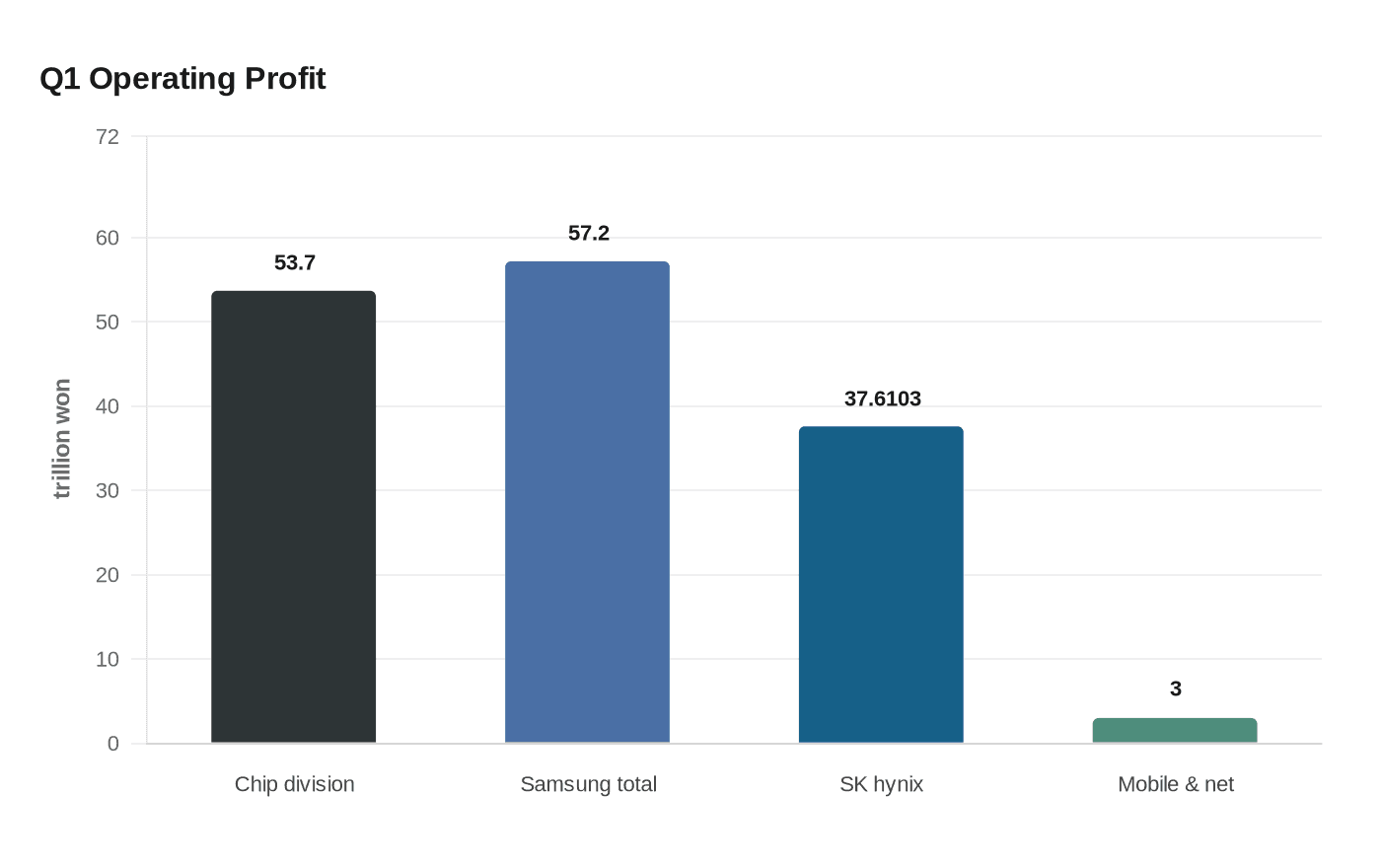
Samsung Electronics has turned the AI hardware boom into a record quarter, but the bigger story is the shortage it says is still ahead. The company’s chip division posted operating profit of 53.7 trillion won in January-March, up 49-fold from a year earlier, and accounted for 94% of Samsung’s 57.2 trillion won in total operating profit. Revenue rose 69% to 133.9 trillion won, both quarterly records, as customers rushed to lock in supply.
The scale of the result shows how central memory and advanced chips have become to AI buildouts. Samsung said it had signed multi-year binding contracts with customers seeking guaranteed supply, a sign that buyers are no longer treating semiconductor availability as a routine procurement issue. The company also beat expectations by a wide margin, surpassing the 35.3 trillion won average analyst estimate for chip profit. Within Samsung’s Device Solutions division, sales jumped 86% from the previous quarter, with memory revenue and operating profit both reaching record highs.
Yet the same surge that lifted Samsung is also distorting the market. Samsung warned that supply remains far short of demand and said the imbalance could worsen in 2027 as AI spending keeps climbing. As data-center operators pour money into Nvidia-style accelerators, manufacturers are shifting more output toward advanced chips, tightening supply for conventional memory parts used across phones, PCs, servers and other electronics. If that pattern persists, cloud providers trying to expand AI capacity are likely to stay at the front of the line, while device makers and automakers could face tighter allocations and higher component costs. Consumers would feel the effect later through pricier gadgets, slower product launches and fewer promotions.
Samsung’s earnings also underline that the AI boom is lifting more than one memory giant. SK hynix reported record first-quarter revenue of 52.5763 trillion won and operating profit of 37.6103 trillion won, another sign that high-value memory products are driving the cycle. Samsung said its own mobile and network division saw profit fall 30% to 3 trillion won, showing how higher memory prices can squeeze other parts of the business even as the chip division surges.
For now, Samsung looks like one of the clearest winners in the global scramble for AI infrastructure. But the company’s own warning suggests this is not just a profit story. It is a capacity story, and the market may be discovering that the next chip shortage is already building inside the industry’s strongest earnings boom.
This article was produced by Prism’s automated news system from verified source data, official records, and press releases, then run through automated quality and moderation checks before publishing. The system is built and supervised by the people who set the standards it runs under. Read our full AI policy.
Did this article answer your question?
%3Amax_bytes(150000)%3Astrip_icc()%2FCertificate-of-deposit-2301f2164ceb4e91b100cb92aa6f868a.jpg&w=1920&q=75)