San Francisco Commission Streamlining Task Force Recommends Merging, Cutting City Boards
San Francisco's commission task force recommended cutting and consolidating city boards to reduce fragmentation, lower commission seats and reshape appointment powers.
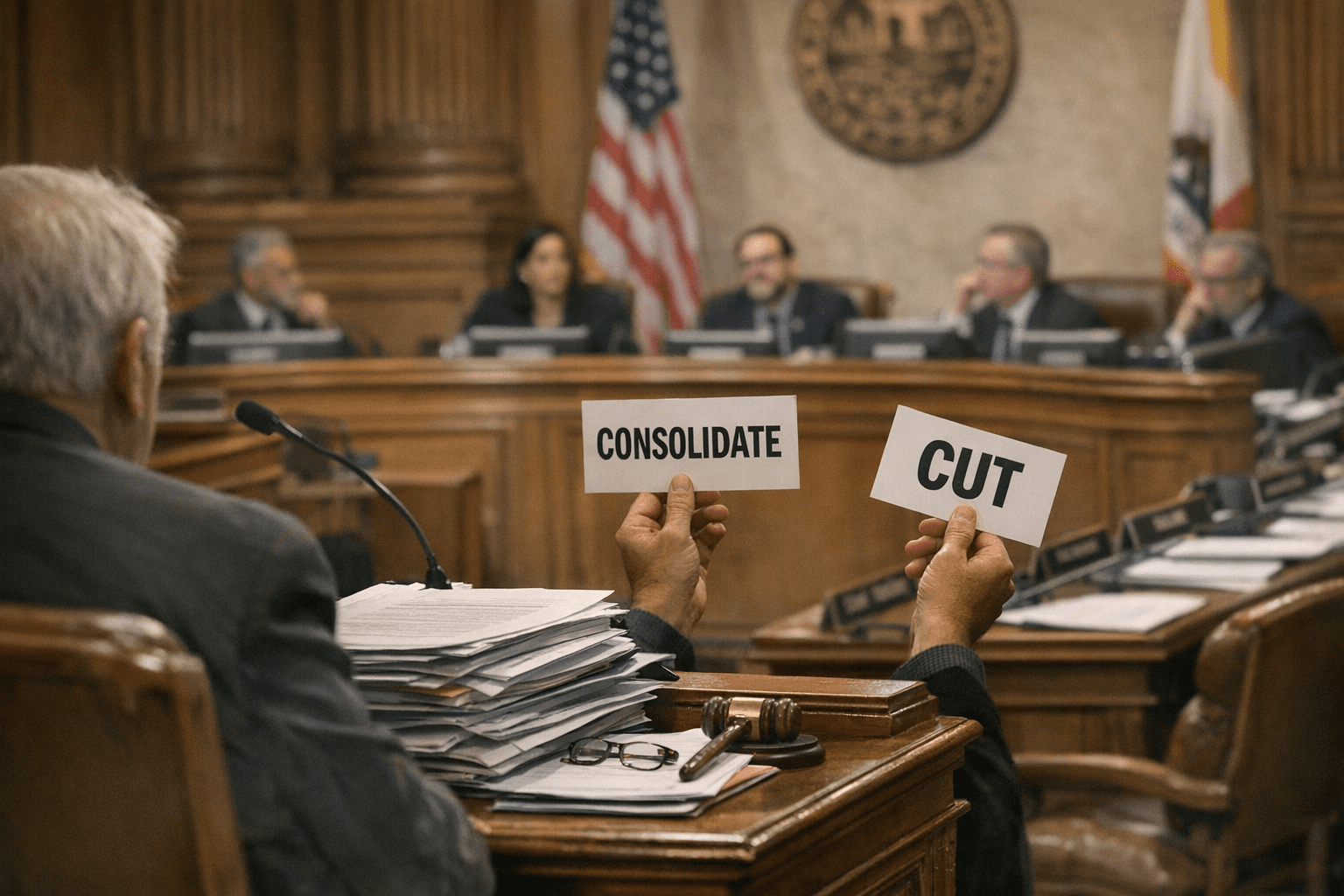
San Francisco's Commission Streamlining Task Force adopted a final set of recommendations to shrink and reorganize the city's boards and commissions, saying consolidation will strengthen public input and make government easier to understand. The changes would cut the total number of public meeting bodies and reduce the number of commission seats, with immediate implications for how residents access advisory power in city government.
The task force, created by voter-approved Proposition E in November 2024, completed a year-long review and approved its recommendations on January 30, 2026. Chair Ed Harrington said, “I have faith that whatever comes out of the board to go to the voters will be something that’s worth the voters considering.” The San Francisco Examiner recorded Harrington noting the group had made “good decisions in terms of cleaning up” the existing system, but that “their work is not the final word.”
Prop E established a five-member Commission Streamlining Task Force whose members were appointed by the Mayor, the Board of Supervisors, the City Administrator, the City Attorney and the Controller. The Task Force’s analysis identified 152 public bodies in scope, of which about 115 actively meet and 37 are inactive. After public engagement and staff outreach, the Task Force recommended retaining 87 bodies, down from the 152 identified, and cutting commission seats from about 1,500 to 900.
Staff engagement factored into the recommendations. Task Force staff convened a meeting with more than 65 clerks, secretaries and commission staff to collect input on mission, onboarding, training and best practices. The work relied on standardized evaluation tools: “The templates are a tool to ensure a consistent and structured process to evaluate the list of existing bodies purpose, structure, appointment process, and effectiveness, in order to inform the Streamlining Task Force’s eventual final recommendations.” Supporters argued consolidation will reduce fragmentation and improve coordination; Media Api Sf summarized the rationale this way: “1. Elevate and coordinate public input: fragmented and duplicative bodies dilute each other’s impact. Instead of diffusing input across 152 bodies that do not always coordinate effectively, the Task Force recommends retaining 87 bodies with well-defined scopes that will act as more robust and influential venues for public participation.” It also cited this goal: “2. Make government easier to understand: a sprawling commission system can make government opaque and inaccessible to many, especially those who [text truncated in source excerpt].”
The recommendations also propose structural changes to governance. They include new standards for term lengths and limits, sunset dates, and appointment and removal procedures, and would increase mayoral authority to appoint, hire and fire commissioners and department heads. Turning the Task Force’s recommendations into law requires several steps: the final report was due to the Mayor and Board of Supervisors by February 1, 2026; proposed legislation must be submitted to the Board by March 1, 2026, including ordinance language for municipal-code bodies and proposed Charter amendments for voter consideration. The Board is scheduled to hold a hearing by April 1, 2026; ordinances would take effect within 90 days unless eight supervisors reject them, and the Board must decide by July whether to place any Charter amendment on the November ballot.
A procedural note raised by observers remains unresolved. One watchdog flagged a calendar entry listing February 18 that appears to conflict with Prop E’s February 1 submission deadline: “Unfortunately, the Task Force’s planned meeting calendar appears to conflict with the legal text of ‘Prop. E’ voters passed last November. The ‘Prop. E’ legal text stated the main deadline for the Streamlining Task Force to submit its recommendations ... is February 1, 2026. That seems to conflict with the February 18 date listed in the Task Force’s meeting calendar.”
For San Franciscans, the recommendations promise fewer, clearer venues for public participation but also fewer seats and a shift in appointment power to the mayor - changes that will reshape opportunities for neighborhood advocates, nonprofit leaders and civic volunteers to influence city policy. The next steps are administrative and legislative: the Board of Supervisors will receive the final report and, in the coming weeks, consider ordinance language and any Charter changes. Residents who want to follow or influence the process should monitor Board hearings and look for the Task Force’s full report and the Budget and Legislative Analyst’s cost-benefit analysis, which Prop E required.
Know something we missed? Have a correction or additional information?
Submit a Tip