Sanctioned Russian Oil Tankers Head Toward Cuba, Testing U.S. Policy
Russia's Anatoly Kolodkin, carrying 730,000 barrels of crude, was north of Haiti on Sunday closing in on Cuba's Matanzas terminal, defying U.S. sanctions in a direct test of Washington's enforcement resolve.
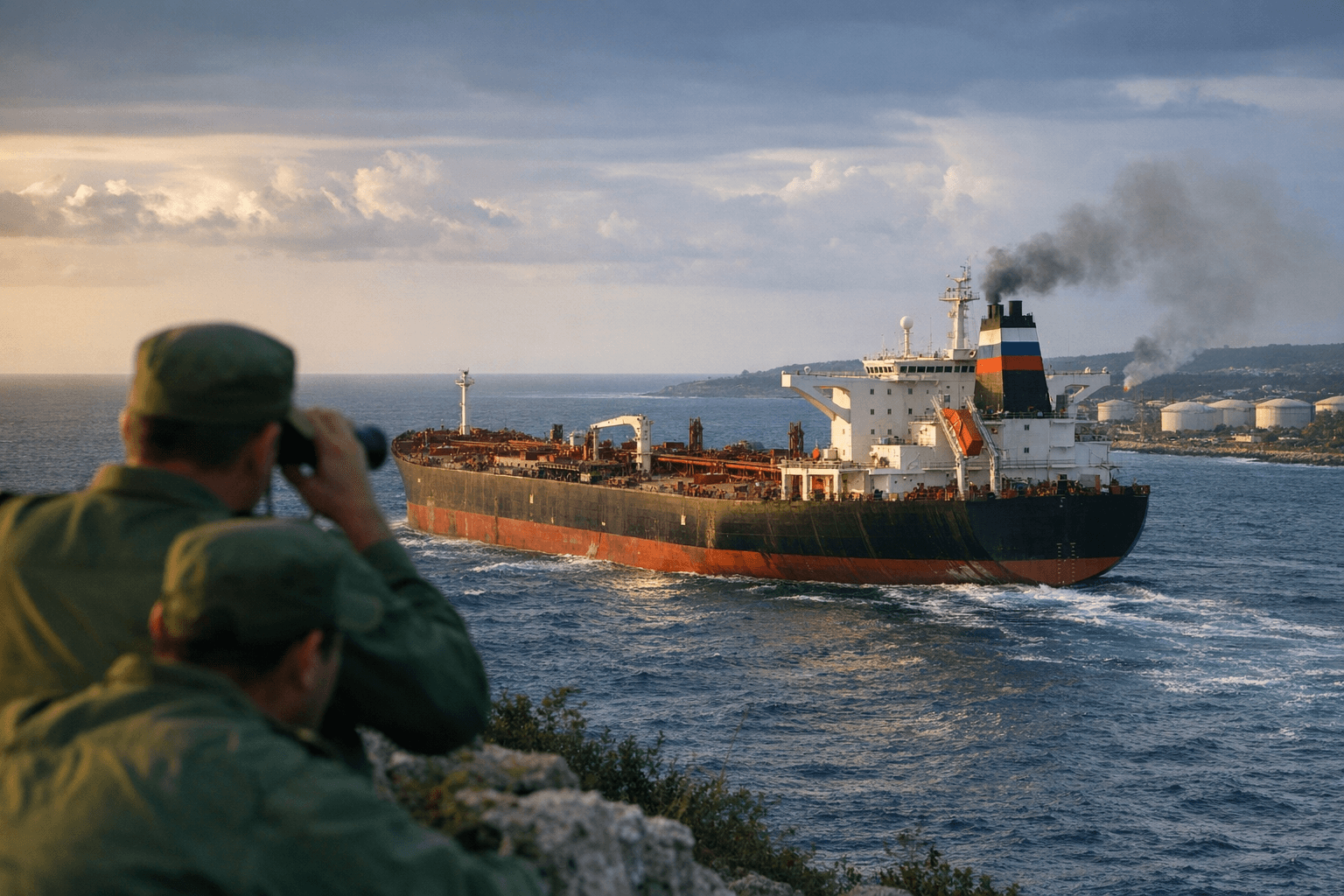
North of Haiti on Sunday, the sanctioned Russian tanker Anatoly Kolodkin was still closing in on Cuba, its AIS transponder cheekily listing "Atlantis" as its destination while maritime analytics firm Kpler tracked every nautical mile toward the Matanzas oil terminal on Cuba's north coast.
The Anatoly Kolodkin, which is carrying 730,000 barrels of crude, was north of Haiti as it headed toward the port of Matanzas in western Cuba, according to Kpler. The vessel, owned by Russian state shipping company Sovcomflot and listed under sanctions by the United States, the European Union, and the United Kingdom, had loaded its cargo at the Russian port of Primorsk on 8 March and spent three weeks crossing the Atlantic on a course Washington had explicitly moved to block.
Russia's Energy Minister Sergei Tsivilev confirmed the shipments, saying "We are sending humanitarian aid. We are providing humanitarian support," framing the move as assistance to help Cuba cope with severe fuel shortages. The Kremlin had already dismissed President Donald Trump's tariff threats, noting that Washington and Moscow "don't have much trade right now."
The humanitarian framing landed against a backdrop of acute crisis. Cuba had imported no oil since 9 January, when Mexico delivered a shipment after the ouster of Venezuelan president Nicolás Maduro. With Venezuelan supply severed and Mexico under pressure from Trump to halt further deliveries, rolling blackouts had darkened Havana's streets for weeks. Trump declared he expects to have "the honour of taking Cuba" and that he could do "anything I want," while threatening tariffs on any country that dares sell the island fuel.
Washington's legal response had already moved faster than its ships. The Treasury Department's Office of Foreign Assets Control published a general license adding Cuba to a list of countries blocked from transactions involving the sale, delivery, or offloading of crude or petroleum products originating from Russia. That action came even as the administration had, the prior week, temporarily authorized the purchase of Russian oil stranded at sea to stabilize energy markets, a measure that briefly suspended sanctions first imposed after Moscow's full-scale invasion of Ukraine. Treasury's amendment carved Cuba, Iran, and North Korea explicitly out of that authorization.
On the water, enforcement assets were in position. At least two U.S. Coast Guard cutters were stationed off Cuba's northeastern coast, between the ports of Moa and Puerto Padre. "The United States has issued a directive to prevent oil from entering Cuba," said Jorge Piñón, an energy expert at the University of Texas at Austin. "And those assets are there in case they need to act."
The second vessel in the standoff, the Hong Kong-flagged Sea Horse, had already resolved its own ambiguity: the tanker, which loaded nearly 200,000 barrels of diesel off Cyprus in late January, docked at Venezuela's Puerto Cabello rather than Cuba, after weeks of erratic course changes across the Atlantic.
That left the Anatoly Kolodkin as the live test. Evan Ellis, a professor at the U.S. Army War College, had questioned whether any tanker could realistically reach Cuba given the surveillance architecture in place, calling it "probably the most monitored patch of the Caribbean." Yet the Kolodkin, its fake destination notwithstanding, kept coming. Whether U.S. Coast Guard cutters act on their orders, or Washington blinks, will signal whether its de facto oil embargo on Cuba holds the line or becomes a precedent that reshapes what sanctions enforcement means in the Western Hemisphere.
Know something we missed? Have a correction or additional information?
Submit a Tip