Scoring Patterns, Blade Choice and Timing for Better Sourdough Oven Spring
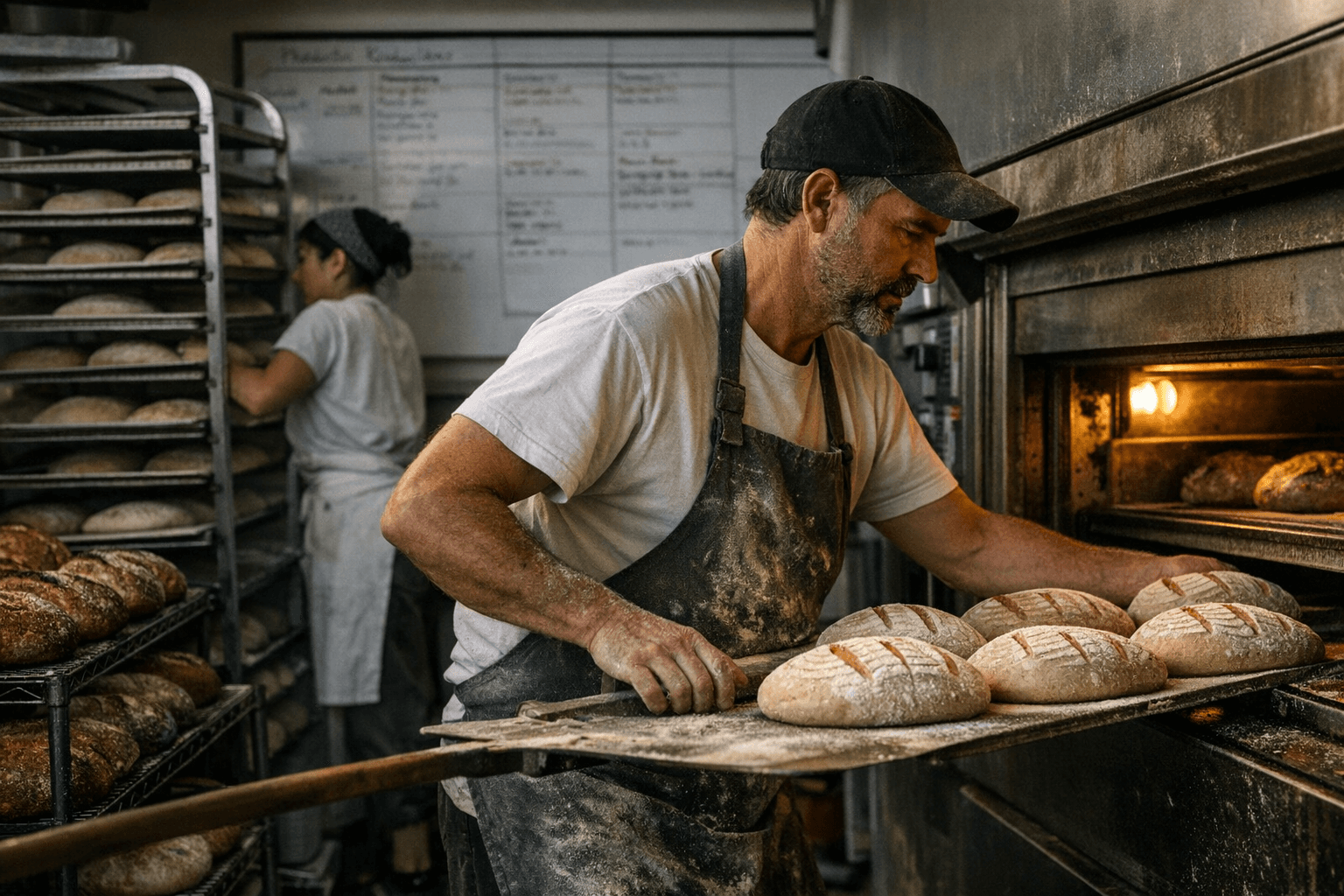
Scoring, or laming, directs oven spring—one clean slash at 1/4–1/2 inch depth after a cold proof often beats ornate patterns for a big ear and predictable rise.

Scoring matters more than many bakers admit. “Scoring (laming) is a small step with a large effect on sourdough appearance and oven spring,” and TheSourdoughJourney’s Tom Cucuzza puts it bluntly: you must “tell the loaf” where to open up or “the loaf will explode at the weakest point.” Those two ideas frame every decision from timing to blade shape.
Timing and handling set up a clean score. Pantrymama recommends a cold proof that produces a “dry skin” so you “can cleanly score your sourdough before you place it in the oven.” CulinaryExploration EU walks through the post-proof sequence: dust the top, turn the dough out gently onto a peel with the loaf positioned lengthways away from you, then cut and “don’t admire it for too long… get it in the oven as quickly as you can!”
Depth and count of cuts resolve into a practical range. Pantrymama advises score depth of “around ¼ to ½ inch” and cautions “score your dough just deep enough so that it opens up, but not so deep that it causes it to collapse.” Pantrymama also argues “less is more,” adding that “one or two slashes is enough” and that “one simple slash will also improve your chance of getting a better sourdough ear.” Sherwood Coffee’s Pro Tip pushes the functional end of the scale: “Make deeper cuts (½ inch) for functional scoring to ensure proper oven spring.” King Arthur adds a safety check: “When finished, take a look at the design. Are there any spots that don’t look like they’re cut sufficiently deep? If so, lightly run the lame (blade) over the same cut line again to ensure spreading in the oven.”
Patterns are a trade-off between function and looks. Sherwood Coffee lists basic functional patterns — Straight Slash for baguettes and batards, Cross Slash for boules, Square Pattern for rustic loaves — and advises prioritizing function for high-hydration rustic breads. King Arthur gives the batard double-score technique in detail: “Start at the side farthest from you and make an angled cut to about the middle of the batard. The beginning of the second cut should overlap the end of the first,” and notes this double score “can also be useful for dough you know won’t spring up high.” King Arthur’s many-small-cuts leaf design recommends a straight blade at 90 degrees for boules, while TheSourdoughJourney warns that “many scoring cuts, such as those used in decorative scoring, can somewhat impede ovenspring.”
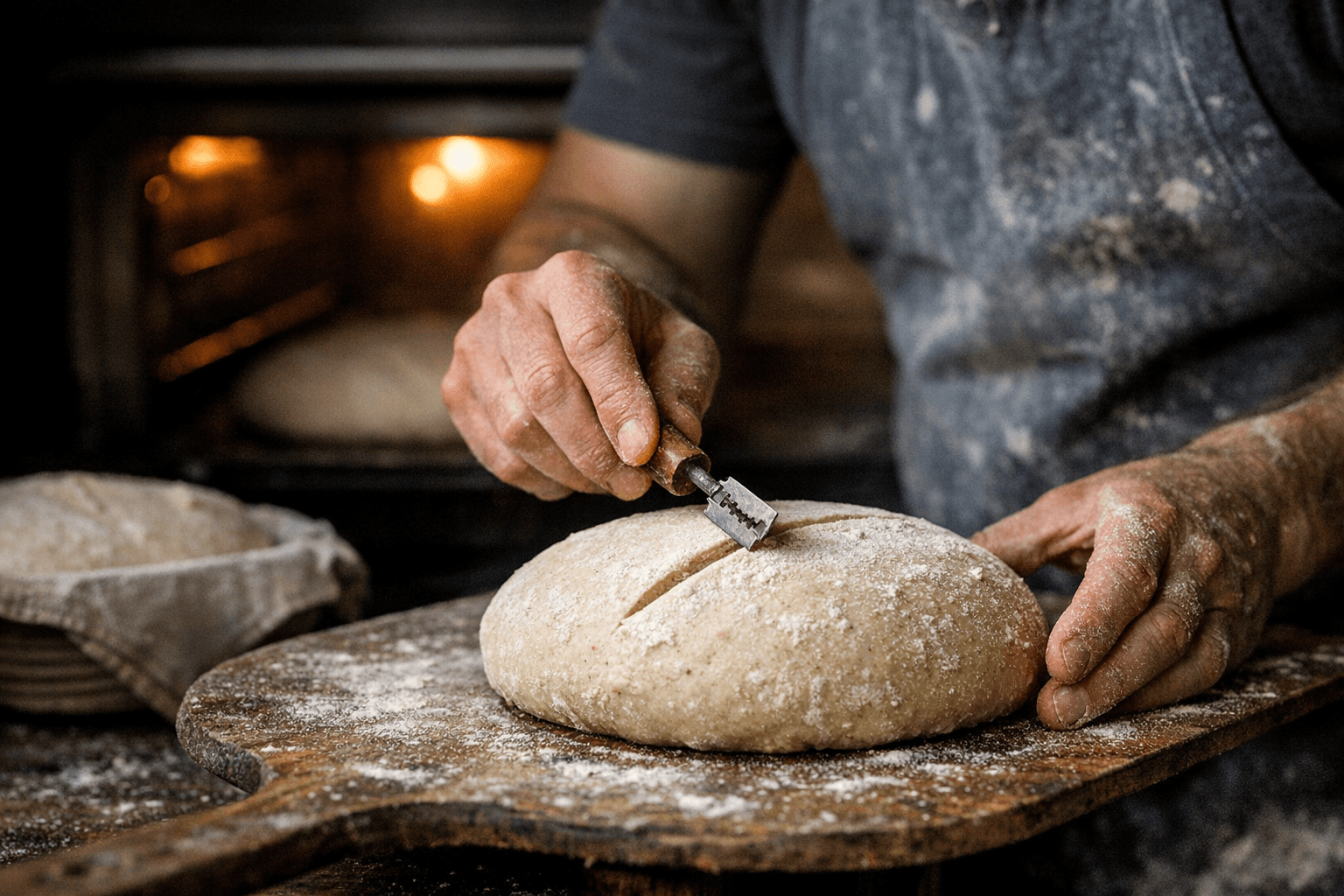
Blade choice matters for the outcome. Sherwood Coffee lists a Bread Lame as a top tool, and King Arthur separates curved and straight blades by purpose: “The preferred scoring implement for this score is a curved blade. The curve helps create a lip at each cut that peels back when the dough is baked,” whereas “a straight blade cuts straight into the dough at a 90° angle, perfect for the straight cut for each leaf.” CulinaryExploration EU and King Arthur both use the term lame and recommend carefully re-running the blade if any cuts look shallow.
Scoring is only one of several prerequisites. Pantrymama stresses shaping to “create lots of surface tension which holds the gas inside your dough,” and TheSourdoughJourney lists ten essentials for ovenspring, including “High Protein Flour, High Hydration, Strong Starter, Strong Gluten Development” and more. Cucuzza details gluten work: “Common techniques for strong gluten development include hand mixing, the slap and fold method and/or the Rubaud method,” and recommends folds to build layers — “four or five rounds of folds during the first 2.5 hours of bulk fermentation.”
Finally, match scoring to your bake environment. Pantrymama swears by a preheated Dutch oven: “After much trial and error, I believe the best oven spring comes from a preheated oven and hot Dutch Oven” and that “there is something magical that happens when you place cold dough into a hot oven.” Combine a clean, correctly deep score, the appropriate blade, rapid transfer to the hot vessel, and the fermentation and shaping steps above, and you’ll control where the loaf opens rather than let it choose its own weak point.
Know something we missed? Have a correction or additional information?
Submit a Tip