Senate Clears Path for DHS Funding Bill as House Delays Action
Seven weeks into a partial DHS shutdown, the Senate passed its funding bill by unanimous consent on April 2, but the House adjourned without a vote, leaving TSA staffing, FEMA readiness, and cybersecurity operations in limbo.

Seven weeks into a partial funding lapse that has left thousands of Department of Homeland Security employees without consistent paychecks, the Senate advanced a deal to fund the Department of Homeland Security, including the Transportation Security Administration, taking a step toward ending the shutdown that had disrupted air travel for much of the last month.
The legislation passed in a pro forma session, a brief meeting of either congressional chamber where legislative business typically does not take place, with Senate Majority Leader John Thune of South Dakota maneuvering to kill the House's competing 60-day stopgap because it had no realistic path in the upper chamber. By clearing that obstacle, Thune pushed the Senate's previously negotiated DHS language directly to the House's doorstep. The House, however, adjourned its own pro forma session on April 2 without taking up the measure, leaving the shutdown's resolution unresolved heading into the weekend.
The Senate bill funds most DHS components through September 30 but does not include the additional Immigration and Customs Enforcement and Customs and Border Protection money sought by House conservatives. That gap remains the central fault line: House Speaker Mike Johnson had signaled discussions with rank-and-file Republicans about accepting the Senate's text, but aides stressed that floor support was uncertain. Lawmakers and senior aides acknowledged the politics of immigration funding remain deeply divisive, and that any amendment by the House to the Senate bill would send it back through the chamber and risk further delay.
The operational stakes have mounted with each passing week. TSA agents began receiving their paychecks after President Donald Trump issued a presidential memorandum directing Homeland Security Secretary Markwayne Mullin and Office of Management and Budget Director Russell Vought to use existing funds to pay TSA officers, a workaround that temporarily eased airport disruptions but left other components exposed. CISA Acting Director Nick Andersen told the House Committee on Homeland Security on March 25 that roughly 60% of agency staffers have been furloughed or are otherwise unable to work. Approximately 800 employees at CISA, roughly 40% of the staff, are "excepted" during the shutdown and have continued to work unpaid over the last 47 days. FEMA, the Coast Guard, and civilian employees at ICE and CBP have similarly gone without pay throughout the lapse, which began in late February when disputes over immigration enforcement and asylum policy prevented Congress from passing a full-year appropriation.
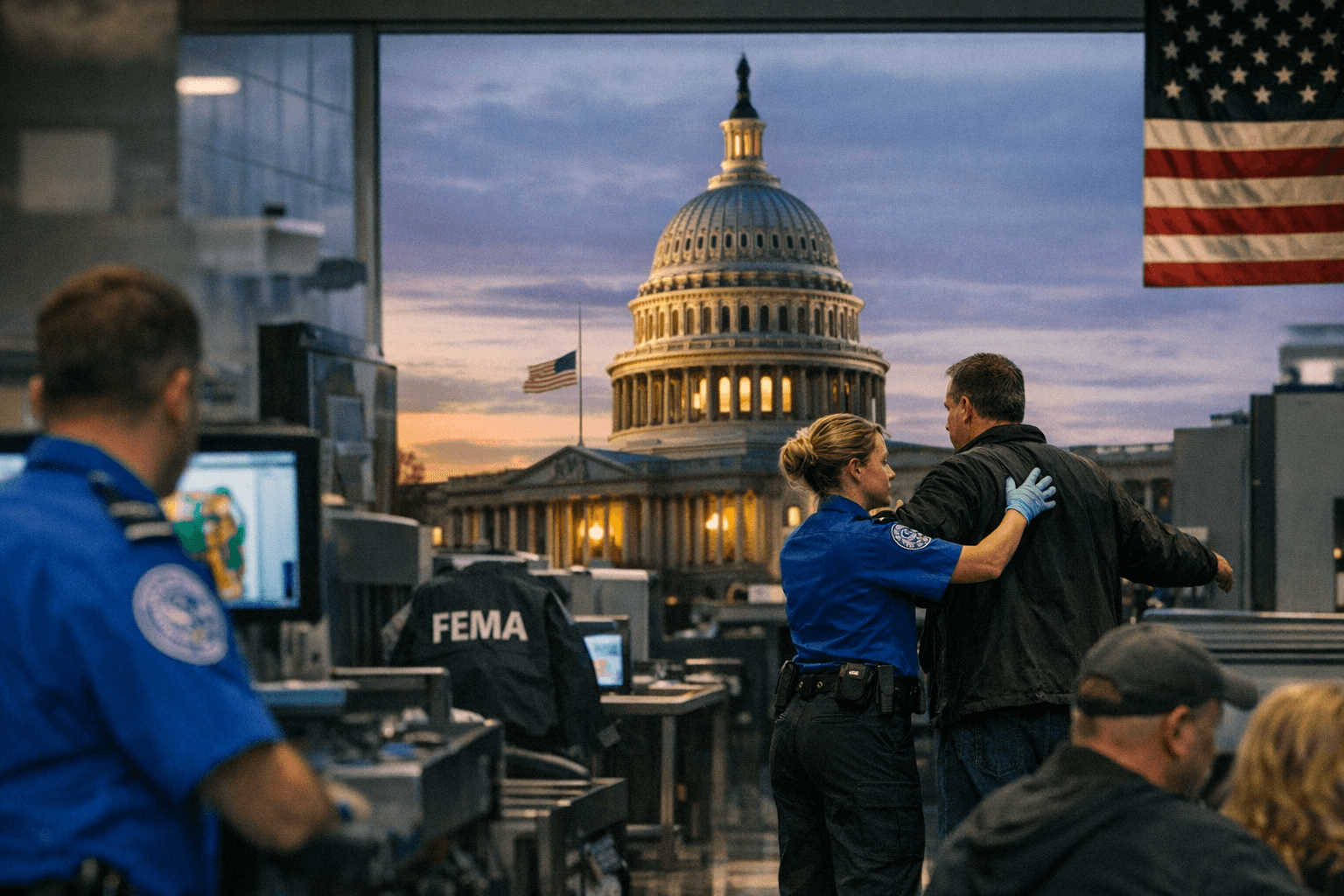
One concern circulating among agency staff: that paying TSA workers through executive action reduces the public pressure that had been accelerating a congressional deal. "There's huge concern that this will go on longer now that TSA is being paid and the public will feel less pain," one CISA employee told Federal News Network, speaking on condition of anonymity.
With hurricane season approaching, FEMA's constrained operational posture adds a dimension beyond the political standoff. Courts and aviation authorities had separately warned that prolonged disruptions carry real operational consequences for airport security infrastructure and border processing capacity.
The White House has signaled it would sign a Senate-passed bill if it reached the president's desk. The immediate question falls to Johnson and whether enough House Republicans will accept a deal that funds most of DHS while leaving ICE and CBP funding to a separate reconciliation package. If the House amends the Senate bill rather than adopting it outright, the clock resets, and a shutdown now stretching toward its eighth week would extend further. Congressional votes in the coming days will determine which path the majority party takes.
This article was produced by Prism’s automated news system from verified source data, official records, and press releases, then run through automated quality and moderation checks before publishing. The system is built and supervised by the people who set the standards it runs under. Read our full AI policy.
Did this article answer your question?