Senate panel advances Kevin Warsh Fed chair nomination after GOP holdout drops block
Warsh's path to the Fed chair opened as the Senate panel advanced him 13-11. His likely confirmation could shape rates, inflation and household borrowing costs.
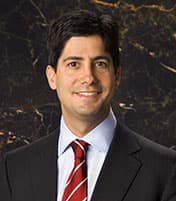
Kevin Warsh moved a major step closer to the Federal Reserve chair at a moment when the cost of mortgages, car loans and business credit remains pinned to the central bank’s next move. The Senate Banking Committee voted 13-11 on Wednesday to send his nomination to the full Senate, with all 13 Republicans backing the former Fed governor and all 11 Democrats opposing him.
The vote followed Sen. Thom Tillis of North Carolina dropping his block after the Justice Department ended a criminal investigation tied to Jerome Powell’s testimony about cost overruns in the Fed’s headquarters renovation. Tillis said he was satisfied the matter had been fully and completely ended, clearing the way for a confirmation fight that now looks headed for a Republican Senate majority.
Warsh, 56, served as a Federal Reserve governor from 2006 to 2011 and has cast himself as a break from the current central bank. He has promised “regime change” at the Fed, a line that has resonated with Donald Trump as the White House pushes for lower interest rates and more influence over the institution. If confirmed, Warsh would replace Powell as chair at a time when the Fed’s policy rate is widely expected to stay unchanged in the 3.50% to 3.75% range at this week’s meeting.
That makes the confirmation more than a personnel change. It is a preview of whether the Fed’s next era will lean toward faster rate cuts, a different approach to inflation, and a narrower buffer between the central bank and the White House. Lower rates would ease borrowing costs for households and companies, but they can also risk reigniting inflation if the Fed moves too quickly.
The battle has also exposed a deeper institutional question. Powell’s term as chair ends May 15, 2026, but his term on the Fed board runs through January 31, 2028, leaving open whether he will step aside completely or stay on as a governor. If he remains and Trump tries to remove him, the fight would almost certainly end up in court.
Democrats pressed those concerns at Warsh’s April 21 hearing. Senator Elizabeth Warren warned that no Republican who cares about Fed independence should back him, and accused him of acting like Trump’s “sock puppet.” She and other Democrats also pointed to Warsh’s answers under questioning, including his refusal to say Trump lost the 2020 election.
Republicans argued that Warsh brings the right kind of experience for a volatile moment, citing his previous service at the Fed and his tenure during the financial crisis. The renovation controversy, meanwhile, has turned into a broader political flashpoint, even though the Fed inspector general had already reviewed the project in 2021 and found no wrongdoing. The cost estimate later climbed from $1.9 billion to $2.5 billion, giving opponents of Powell and allies of Trump fresh ammunition as control of the Fed enters a new, more contested phase.
This article was produced by Prism’s automated news system from verified source data, official records, and press releases, then run through automated quality and moderation checks before publishing. The system is built and supervised by the people who set the standards it runs under. Read our full AI policy.
Did this article answer your question?

