Sherpa guide found alive after six days on Mount Everest
Found crawling alive in the Khumbu Icefall after six days, Hillary Dawa Sherpa was airlifted to Kathmandu as his family had begun funeral rites.

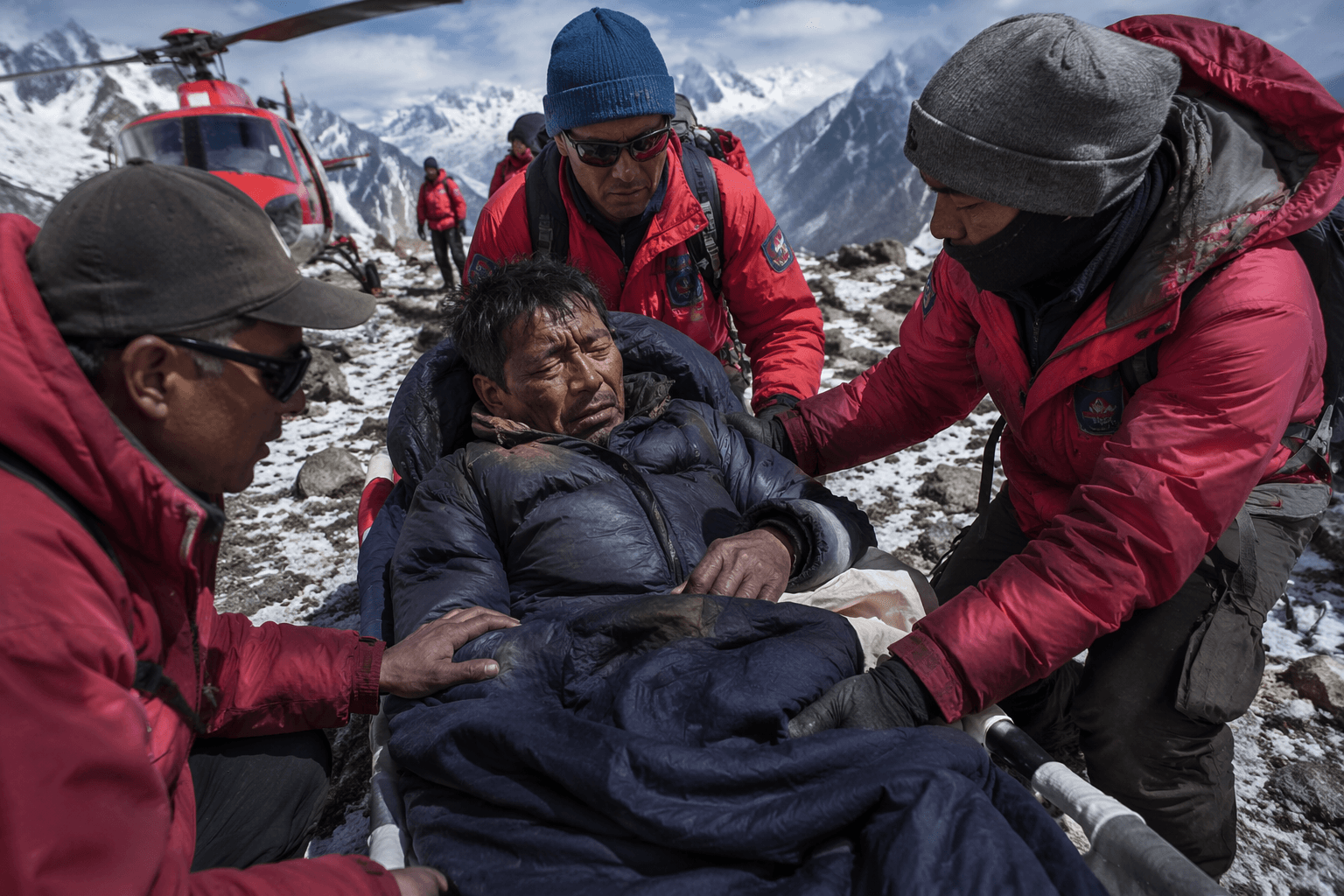
Hillary Dawa Sherpa was found alive after six days missing on Mount Everest, spotted crawling near the foot of the Khumbu Icefall by a cleaning crew working high on the mountain. By the time rescuers reached him, his family had already begun funeral rites. The 57-year-old was frostbitten and exhausted, but he was able to sit up and talk before being airlifted to Kathmandu for treatment.
Sherpa was last seen on May 29, 2026, above Camp 3 while descending with a Polish client, near the end of Nepal’s official spring climbing season. He had been hired originally as a camp cook at Camp 2, but the company says he was shifted into a guiding role after another guide fell sick at Base Camp. That change put him on the front line of one of the world’s most dangerous commercial climbs, leading paying clients up an 8,849-meter peak.
The rescue has drawn attention not only because of Sherpa’s survival, but because it exposed the economics that shape Everest’s south side. Reports say the expedition package cost about $37,500 per client, a price that buys access to the mountain but does not remove the need for Sherpa labor in the Khumbu Icefall and other high-risk terrain. In 2026, Everest’s south-side season was especially crowded, with more than 1,000 climbers summiting and a record 274 summits on May 20, intensifying pressure on guides, logistics and rescue systems as the season wound down.
Sherpa’s family filed a police case against Himalayan Traverse Adventure and lodged a complaint with Nepal’s Department of Tourism, saying the search began too late and alleging negligence. The company has said weather delayed rescue efforts and that its procedures were proper. His family members, including daughter Mendo Lhamu and wife Damu Sherpa, said they could not be sure he was alive until they received photos and later confirmation from the hospital.
At HAMS Hospital in Kathmandu, doctors said he was stable and recovering from frostbite, dehydration and thigh problems. The case has become a stark reminder that Everest’s commercial boom still rests on Sherpa workers who absorb much of the danger, while the industry sells clients the promise of an organized ascent.
This article was produced by Prism’s automated news system from verified source data, official records, and press releases, then run through automated quality and moderation checks before publishing. The system is built and supervised by the people who set the standards it runs under. Read our full AI policy.
Know something we missed? Have a correction or additional information?
Submit a Tip