South Africa unemployment rises to 32.7% as job losses deepen
Unemployment climbed to 32.7% as South Africa lost 345,000 jobs, pushing more than 8.1 million people into worklessness and exposing a deeper structural crisis.
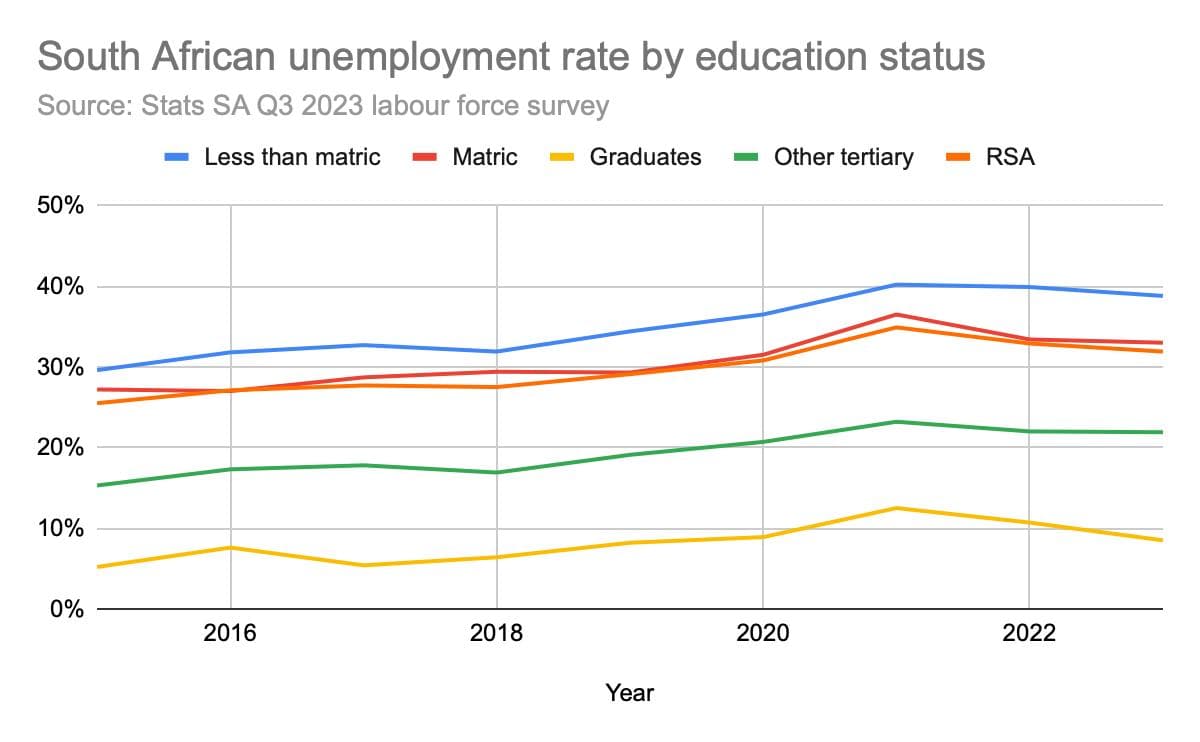
South Africa’s jobs emergency worsened again in the first quarter of 2026, with the official unemployment rate rising to 32.7% as the country shed 345,000 employed people and the number of jobless climbed above 8 million. The increase from 31.4% in the previous quarter left 8.137 million people unemployed, underscoring how little progress the economy has made against one of the world’s highest jobless rates.
Statistics South Africa said the labour force fell by 44,000, or 0.2%, even as unemployment rose, a sign that the labor market is not only failing to create jobs but is also losing attachment to work. The expanded unemployment rate, which includes people who have given up searching, rose to 43.7% from 42.1%. That broader measure points to a much deeper malaise than the headline rate alone, with millions of South Africans effectively locked out of the formal labor market.
The weakness was broad-based across the economy. Statistics South Africa said only three of the 10 sectors it tracks posted job gains in the quarter, while community and social services recorded the biggest losses. Manufacturing, mining and agriculture were the only sectors to add workers, offering little evidence of a durable turnaround in employment. The figures fit a longer pattern: South Africa’s official jobless rate has stayed above 30% for more than five years, a chronic drag on growth, consumer demand and social stability.
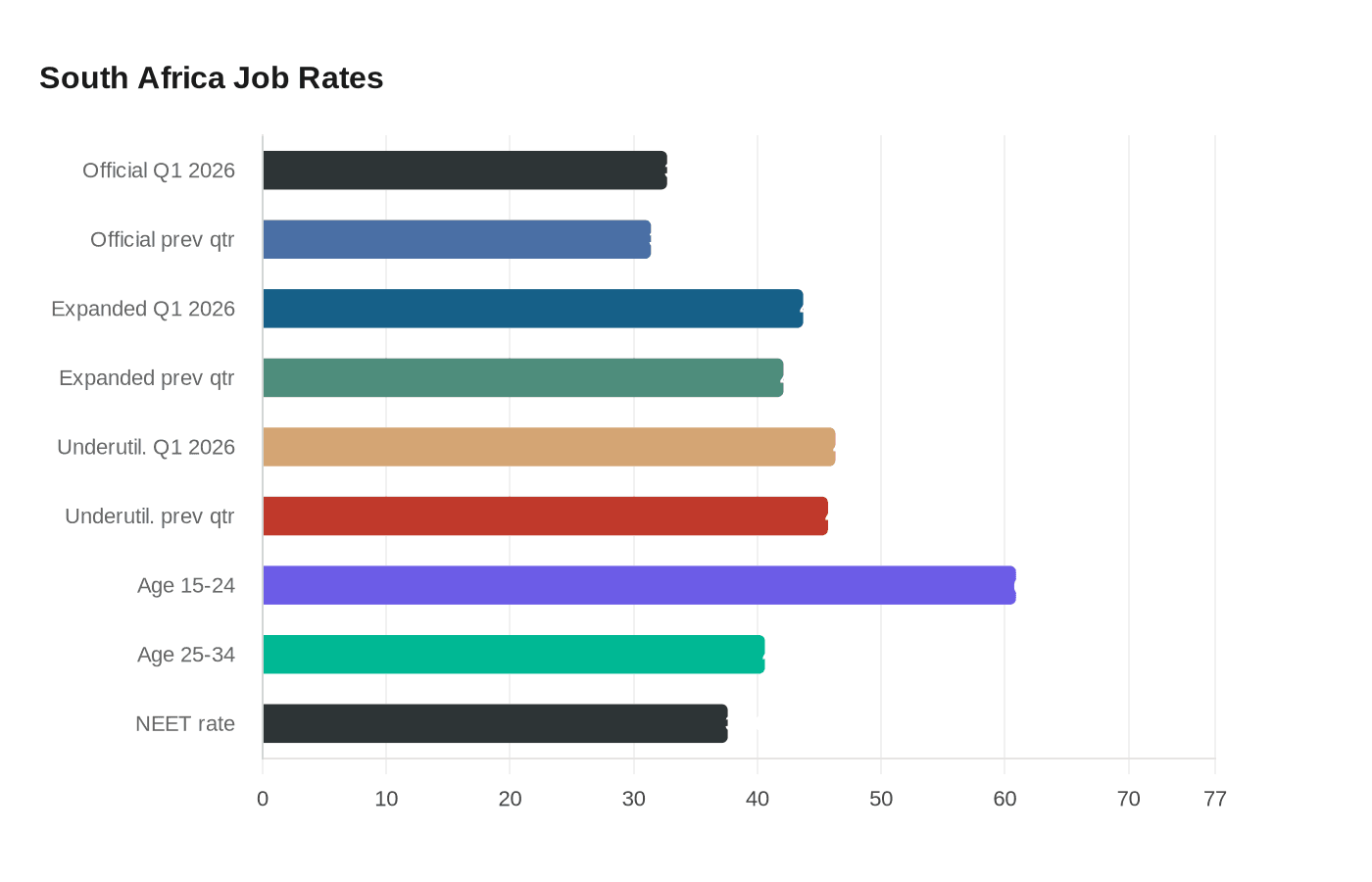
Young South Africans remain the hardest hit. Among people aged 15 to 24, unemployment stood at 60.9% in January-March 2026, while the rate for those aged 25 to 34 was 40.6%. Statistics South Africa said 5.6 million people aged 15 to 34 were employed, 4.7 million were unemployed and 10.6 million were outside the labour force. In a separate youth note, the agency said about 3.9 million of 10.3 million people aged 15 to 24 were not in employment, education or training, a NEET rate of 37.6%.
The data deepens pressure on the coalition government formed in 2024, which has struggled to translate promises of reform into broad-based hiring even as investors have grown more optimistic and growth has improved modestly. The Budget Justice Coalition said the figures reflected wider policy failures and pointed to a broader labour underutilisation rate rising from 45.7% to 46.3%. With more than 8 million people unemployed and youth joblessness still extreme, South Africa’s labor crisis remains structural, not cyclical.
This article was produced by Prism’s automated news system from verified source data, official records, and press releases, then run through automated quality and moderation checks before publishing. The system is built and supervised by the people who set the standards it runs under. Read our full AI policy.
Did this article answer your question?

