Southern California Springs Fire Nears Containment After Overnight Battle
A wind-driven blaze scorched 4,176 acres east of Moreno Valley before reaching 95% containment Saturday, forcing hundreds to flee a city of 200,000.

By Saturday evening, the Springs Fire had consumed 4,176 acres of Riverside County brush and pushed firefighters through a punishing overnight campaign before reaching 95% containment at 6 p.m. The milestone allowed county officials to lift all evacuation orders and warnings by 6:30 p.m., letting residents return to neighborhoods that had been emptied in a matter of hours the day before.
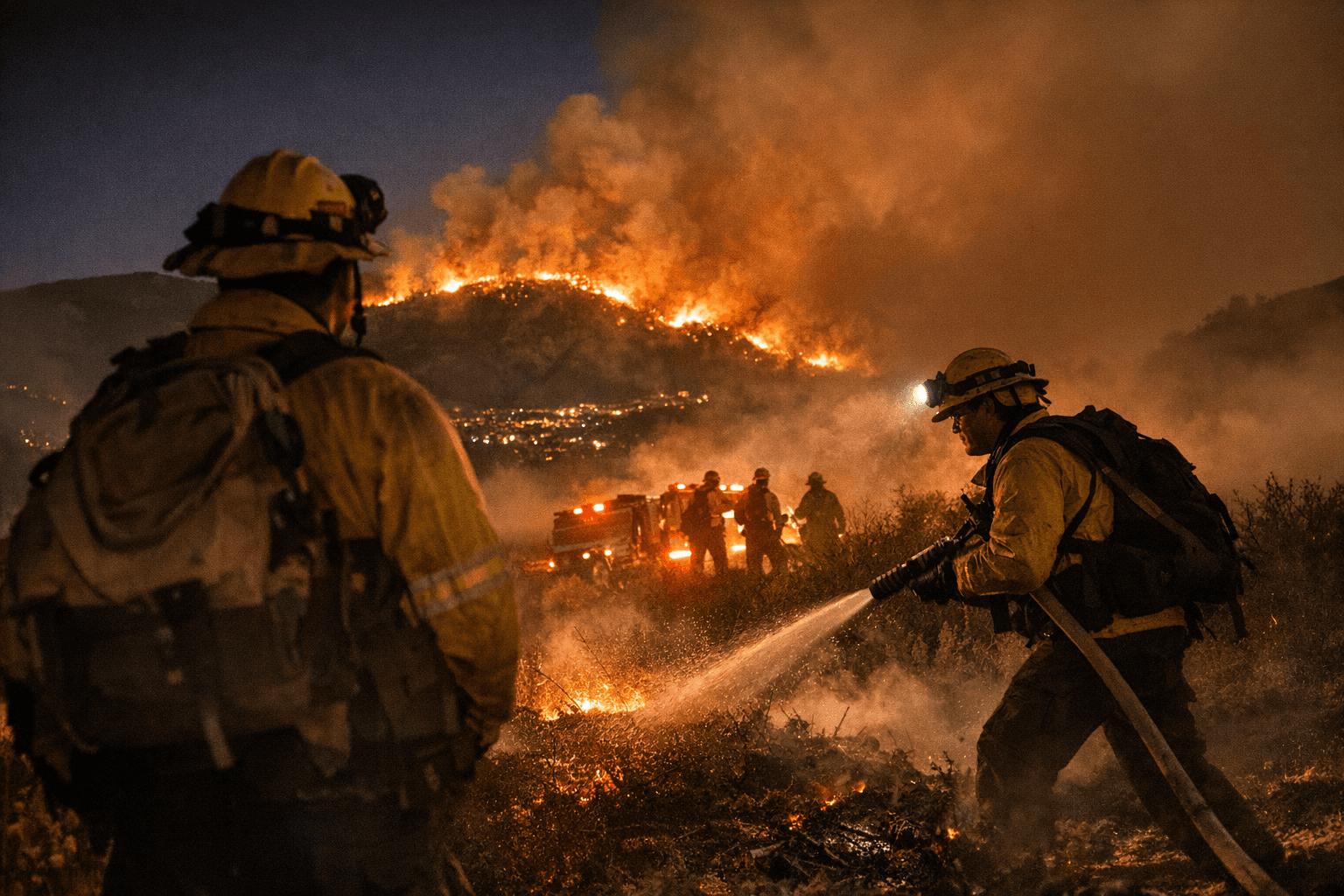
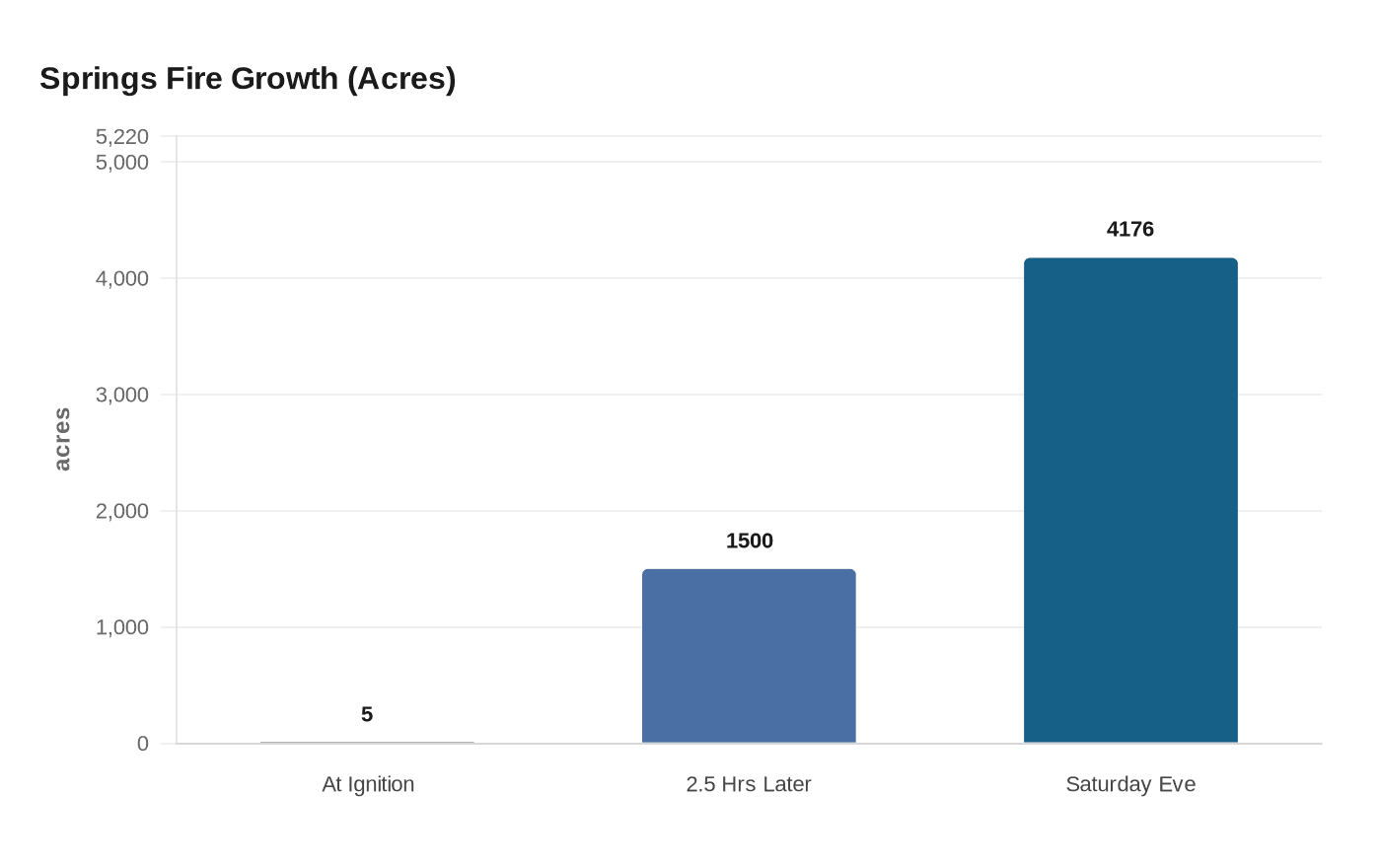
The blaze ignited Friday morning at approximately 11 a.m. in the 15900 block of Gilman Springs Road, east of Moreno Valley, a city of roughly 200,000 residents wedged against steep, brush-covered hills. What started as an estimated 5-acre spot fire exploded to 1,500 acres within two and a half hours, driven by Santa Ana wind gusts touching 55 mph under a High Wind Warning that the National Weather Service extended into Saturday afternoon. The fire burned northward past Gilman Hot Springs, threatened campgrounds along the shore of Lake Perris and jumped Davis Road before crews managed to slow its advance. The simultaneously active Crown Fire elsewhere in Southern California stretched regional air and ground resources further.
More than 300 personnel were deployed at peak operations, supported by 23 engines and multiple air tankers dropping water and retardant through the night. Cal Fire's Riverside Unit reported 75% containment by 11:15 Saturday morning, crediting improved overnight humidity, a modest wind shift and aggressive line construction by hand crews. A county official acknowledged the progress while urging caution: "we're not out of the woods yet," a warning directed at residents tempted to return before mop-up operations finished and utility lines could be inspected. An evacuation shelter that had been opened at Valley View High School on Nason Street in Moreno Valley began winding down as the repopulation clearances moved through zone by zone.
For the households within the evacuation perimeter, the immediate concerns going into Sunday centered on air quality from residual smoke and smoldering vegetation, localized power outages tied to the 55-mph gusts, and access along Gilman Springs Road while crews completed suppression. Officials said fuel and supply lines to nearby communities were being prioritized for restoration. The cause of the fire remained under investigation.
Resident Sadie Higuera captured what thousands experienced in the first frantic hour: "It was scary, just rushing and taking all of our stuff and packing it up." Her neighborhood, like several others on the fire's western flank, had time to wet down structures before mandatory orders forced a full departure.
The Springs Fire arrived six weeks before California's historically peak fire danger period, underscoring a widening pattern that fire managers have tracked for years. The frequency of late-winter and early-spring ignitions has climbed as episodic offshore wind events collide with vegetation dried by prolonged drought stress and shifting seasonal moisture. Officials said a single event cannot be attributed to any single cause, but the Gilman Springs corridor sits squarely in the wildland-urban interface that has concentrated fire risk and insurance exposure across the Inland Empire.
Local emergency managers said in the aftermath they would evaluate whether defensible-space enforcement and pre-season vegetation management programs need to be accelerated for the months ahead. With rebuilding costs and insurance availability already strained across Southern California following previous fire years, any delay in those reviews carries direct financial consequences for communities that exist at the edge of the chaparral.
This article was produced by Prism’s automated news system from verified source data, official records, and press releases, then run through automated quality and moderation checks before publishing. The system is built and supervised by the people who set the standards it runs under. Read our full AI policy.
Did this article answer your question?