SpaceX Files Confidentially for IPO, Targeting Massive Market Debut
SpaceX filed confidentially with the SEC for an IPO targeting a $1.75 trillion valuation and a June debut that would shatter every listing record in history.

The company that launches NASA astronauts, deploys Pentagon payloads, and delivers broadband to 10 million households filed confidentially with the U.S. Securities and Exchange Commission on April 1 for an initial public offering targeting a $1.75 trillion valuation. A June debut on the Nasdaq at that figure would be the largest stock market listing in history, placing SpaceX above every U.S. company in market capitalization except Nvidia, Apple, Alphabet, Microsoft, and Amazon.
SpaceX has assembled a 21-bank underwriting syndicate for the deal, internally codenamed Project Apex. Morgan Stanley, Goldman Sachs, JPMorgan Chase, Bank of America, and Citigroup are serving as lead managers. The offering is expected to raise as much as $75 billion.
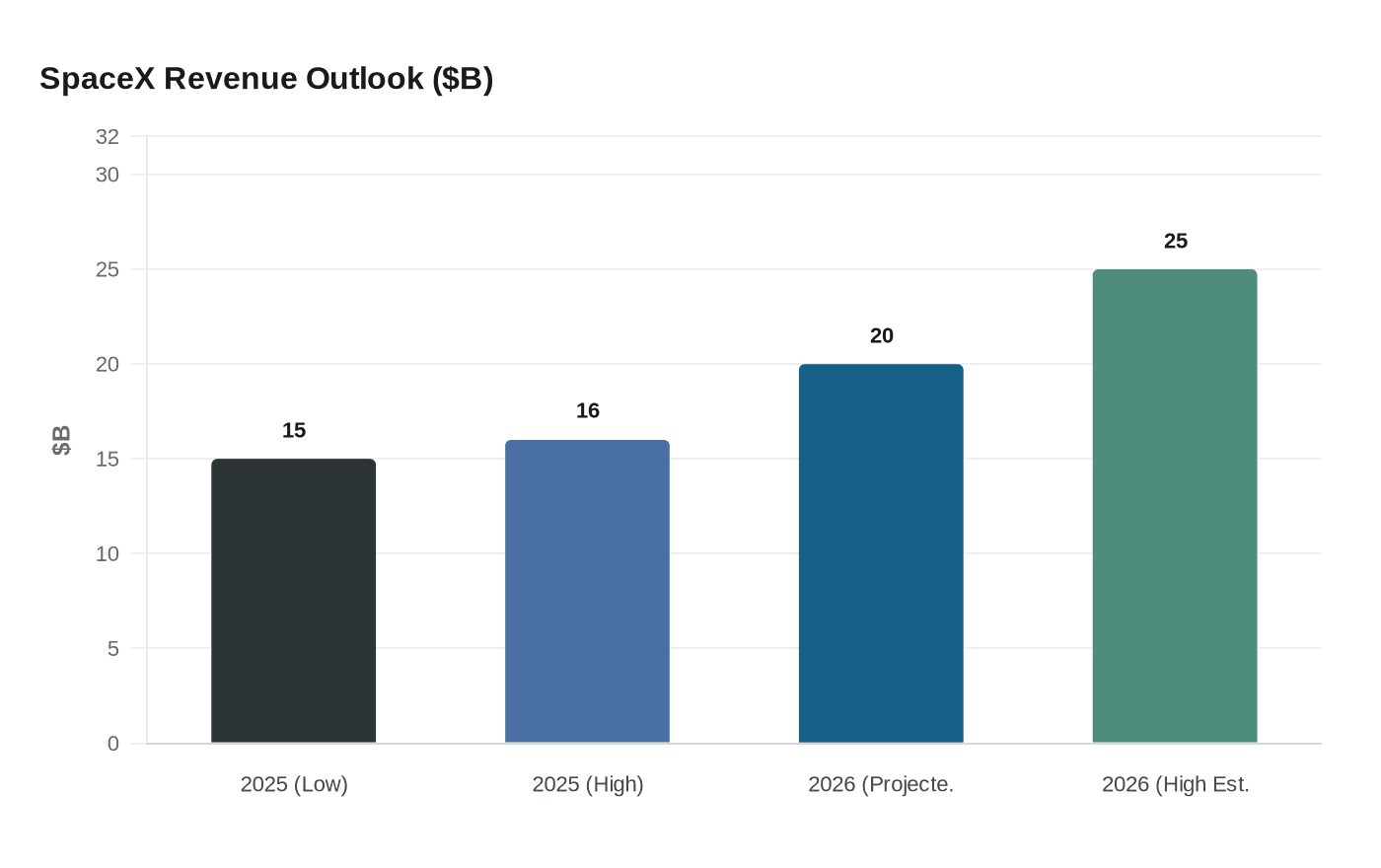
The valuation case rests primarily on Starlink, the satellite internet service running on a constellation of roughly 10,000 low-Earth orbit satellites. Starlink crossed 10 million active subscribers in February 2026, adding the most recent million in just 53 days. Analysts estimate the service accounts for between 50% and 80% of SpaceX's total revenue, which reached approximately $15 billion to $16 billion in 2025 and generated roughly $8 billion in operating profit. Revenue is projected to reach $20 billion in 2026, with some forecasts ranging as high as $25 billion as subscriber growth accelerates globally. The rocket launch business provides the second pillar: SpaceX commands more than 60% of the global commercial launch market, and in March 2026 set its initial commercial pricing for Starship at $90 million per dedicated mission, with a payload capacity of up to 100 metric tons to low Earth orbit.
For the U.S. government, a publicly listed SpaceX changes the calculus around national security. The company operates under a $2.89 billion firm-fixed-price NASA contract for the Human Landing System and holds substantial Department of Defense launch agreements that currently generate revenue with minimal public financial disclosure. A listed SpaceX would face quarterly reporting requirements that bring those government arrangements into public view, forcing a reckoning with a central tension: critical national infrastructure increasingly depends on a company controlled by a single executive whose political profile and government role have drawn sustained regulatory and congressional scrutiny.
The deal's complexity also reflects SpaceX's rapid corporate evolution. In February 2026, Musk merged SpaceX with xAI, his artificial intelligence venture, in an all-stock transaction that valued SpaceX at $1 trillion and xAI at $250 billion, creating the $1.25 trillion combined entity now approaching public markets. The xAI segment currently contributes less than $1 billion in annual revenue, and sources familiar with the transaction said its $17.5 billion in debt is expected to be fully repaid before the offering closes. Whether SpaceX adopts a dual-class share structure giving Musk at least 25% voting control, mirroring the governance frameworks used by Meta and Alphabet, is among the open questions he has scheduled an April investor briefing to address.
Institutional investors will also scrutinize the role of Gwynne Shotwell, SpaceX's President and COO, who has spent years building the compliance systems and financial reporting infrastructure required of a public company. Her steadying presence in the corporate structure has been cited as a key factor in whether large asset managers accept the governance trade-offs a Musk-controlled listing demands.
"Any investment banker or analyst who thought they didn't have to look at the space sector, they have to look at it now or lose their job," said Roettgen, a space industry analyst at Via Satellite, capturing the breadth of the shift a SpaceX listing would trigger across Wall Street and Washington alike.
Know something we missed? Have a correction or additional information?
Submit a Tip