Starmer Holds Firm Against Trump's Fury Over Iran Strike Decision
Trump compared Starmer to "not Winston Churchill" after Britain sat out initial Iran strikes; Starmer fired back he does not believe in "regime change from the skies."
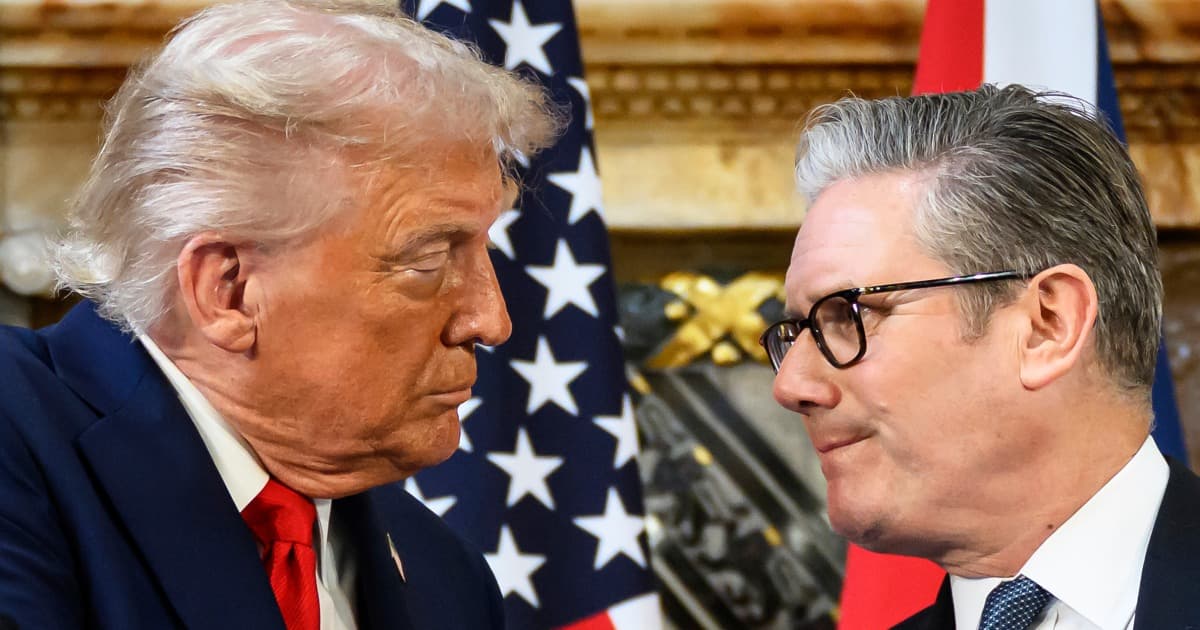
When the United States and Israel launched strikes on Iran on February 28, 2026, the United Kingdom was not involved. That decision was deliberate. Prime Minister Keir Starmer held that line publicly and privately, and people close to him say he is unlikely to respond to Donald Trump's personal barbs in kind.
Citing legal concerns, the UK did not initially permit the United States to use Diego Garcia or any other British air base to strike Iran, a refusal that fueled Trump's desire to press the matter. On March 1, Starmer announced that the U.S. could use UK military bases for a "specific and limited defensive purpose," which he described as to "destroy the [Iranian] missiles at source." Trump was not satisfied. On Friday, Trump said Starmer "should have acted a lot faster" in green-lighting the use of Diego Garcia, adding, "It's been a very late response from the UK."
The complaint from Washington centered on one specific piece of geography. Trump has marked Diego Garcia as critical to U.S. foreign policy because of the joint U.S.-UK military base on the Chagos Archipelago's largest island, which has acted as a staging ground for deployments to the Middle East and East Africa since the Cold War era. In October 2024, Starmer's newly elected Labour government reached a political agreement with Mauritius granting it full sovereignty over the archipelago, while allowing the UK to continue exercising authority over Diego Garcia for an initial 99-year period. Trump previously labeled that sovereignty move "an act of great stupidity."
The president made his frustration plain from the Oval Office. "He ruins relationships. We are very surprised. This is not Winston Churchill that we're dealing with," Trump said of Starmer during a press briefing on Tuesday. In a separate interview with the Telegraph, Trump said he was "very disappointed" that Starmer had hindered use of Diego Garcia and that the prime minister "took far too long" to change his mind. On the logistics alone, Trump said: "It's taken three or four days for us to work out where we can land. It would have been much more convenient landing there, as opposed to flying many extra hours."
Starmer addressed the House of Commons on Monday, March 2, defending the UK's initial decision to stay out of offensive operations, emphasizing a preference for diplomacy and a negotiated end to Iran's nuclear ambitions, while announcing limited approval for U.S. use of British bases solely for defensive actions to neutralize Iranian missile and drone threats at their source. He opened his statement by acknowledging the disagreement directly. "President Trump has expressed his disagreement with our decision not to join the initial strikes. But it is my duty to judge what is in Britain's national interest, and that is the judgement I made. I stand by it," Starmer told MPs.
His most pointed rebuttal came in the form of a principle Starmer has stated consistently since the war began: "This government does not believe in regime change from the skies." He told lawmakers the UK was not involved in the initial strikes and would not join offensive U.S. strikes, but that in the face of Iran's dangerous escalation, Britain would defend its nationals and support the collective self-defense of its allies.
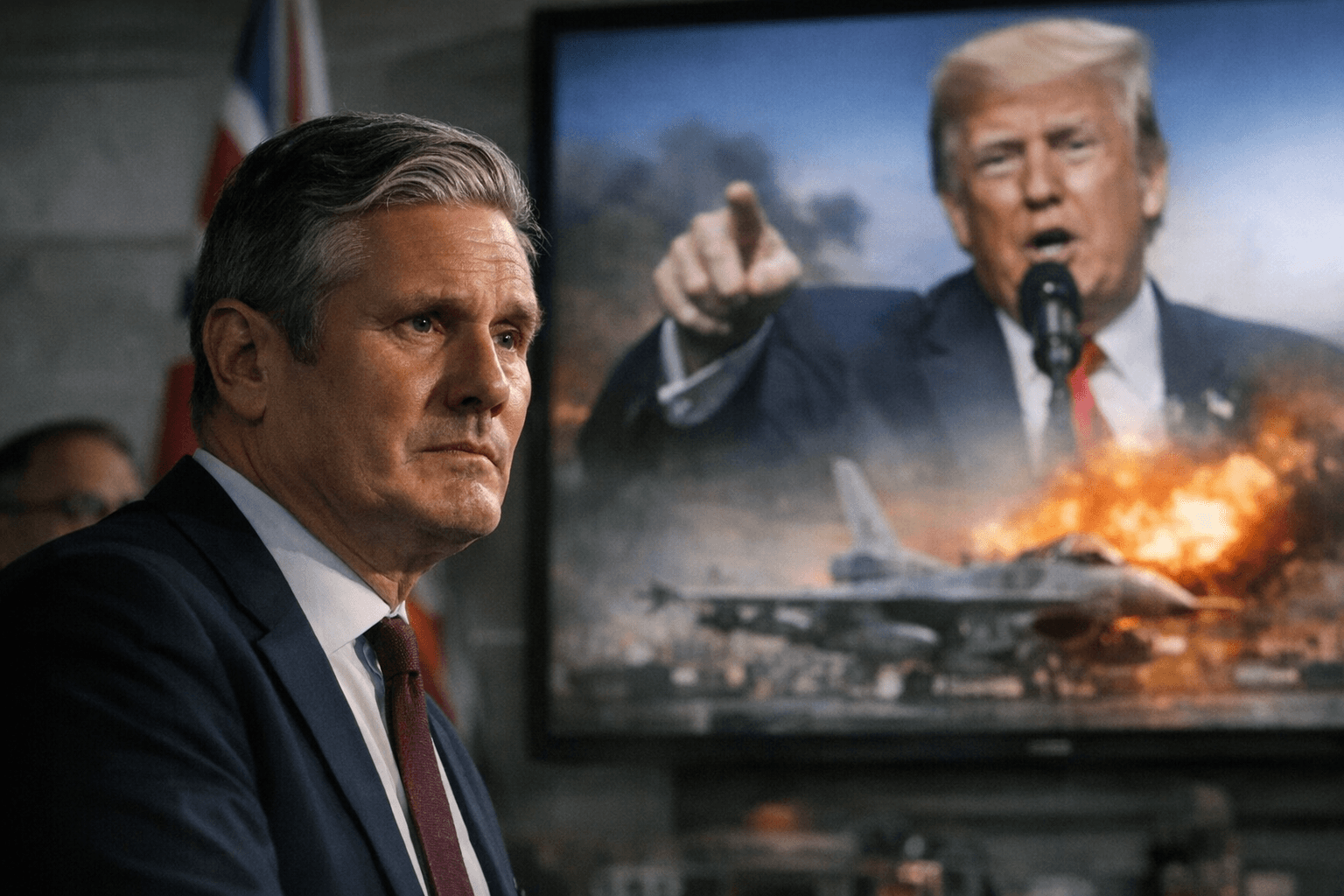
Trump has lashed out at European allies broadly for not joining the war on Iran, and called Western allies "cowards" after NATO nations refused to join the conflict, which has caused a global spike in energy costs. Starmer chaired an emergency Cobra meeting as UK natural gas prices spiked by more than 20% in a single morning, while Brent crude rose around 8%.
Iran's Foreign Minister Abbas Araghchi accused Starmer of putting British lives at risk by allowing the U.S. to use British bases to launch attacks in the Middle East. The stakes of the base decision became viscerally clear when Iran launched two ballistic missiles toward the Chagos Islands shortly after Starmer granted the U.S. permission to use Diego Garcia, with U.S. officials confirming the two missiles were fired at the base, representing the longest-range attack by Iran since the start of Operation Epic Fury.
Domestically, Starmer faced sharp criticism from his own parliament. Conservative leader Kemi Badenoch accused him of being "too scared" to do anything except "watch others," claiming the government's concern about international law "does not hold." Starmer, for his part, told a parliamentary committee: "This is not our war, and we are not getting dragged into this war."
The UK-U.S. friction has played out against a backdrop of intense military and diplomatic activity. Trump authorized Operation Epic Fury as a "precise, overwhelming military campaign to eliminate the imminent nuclear threat posed by the Iranian regime," executed in partnership with regional allies following what the White House described as exhaustive diplomatic efforts after 47 years of Iranian aggression. Israeli Prime Minister Benjamin Netanyahu told Iranians they have a "once in a generation chance" to oust the regime that has held power since the Islamic Revolution of 1979.
Trump subsequently said the U.S. was pausing its attacks on Iranian power plants, following what he called "very good and productive conversations" regarding a complete resolution of hostilities, instructing the Pentagon to postpone such strikes for five days. Iran denied any negotiations had taken place. Whether that pause holds, and whether Britain's carefully drawn line between defensive and offensive action remains credible, will define the next chapter of Starmer's most consequential foreign policy test.
Know something we missed? Have a correction or additional information?
Submit a Tip

