Starmer to announce ban on harmful social media for under-16s
Keir Starmer is moving toward age-based social media limits for under-16s, but the real test is whether Britain can enforce them without new privacy costs.

Keir Starmer is preparing to set out restrictions on harmful social media use by children under 16, but the sharpest question is not political momentum. It is whether Britain can actually enforce age-based limits on apps that sit on nearly every teenager’s phone without creating a new system of intrusive verification and loophole-ridden compliance.
The prime minister is expected to frame the move as a targeted ban on harmful platforms rather than a blanket shutdown, leaving room for safer forms of access. That matters because Britain already has the Online Safety Act, which places legal duties on social media companies and search services to protect users from illegal content and material harmful to children. Ofcom tightened that regime in April 2025 with rules requiring safer feeds, stronger age checks and better controls for children online, and it separately ordered pornography services to introduce highly effective age checks by July 2025 at the latest.
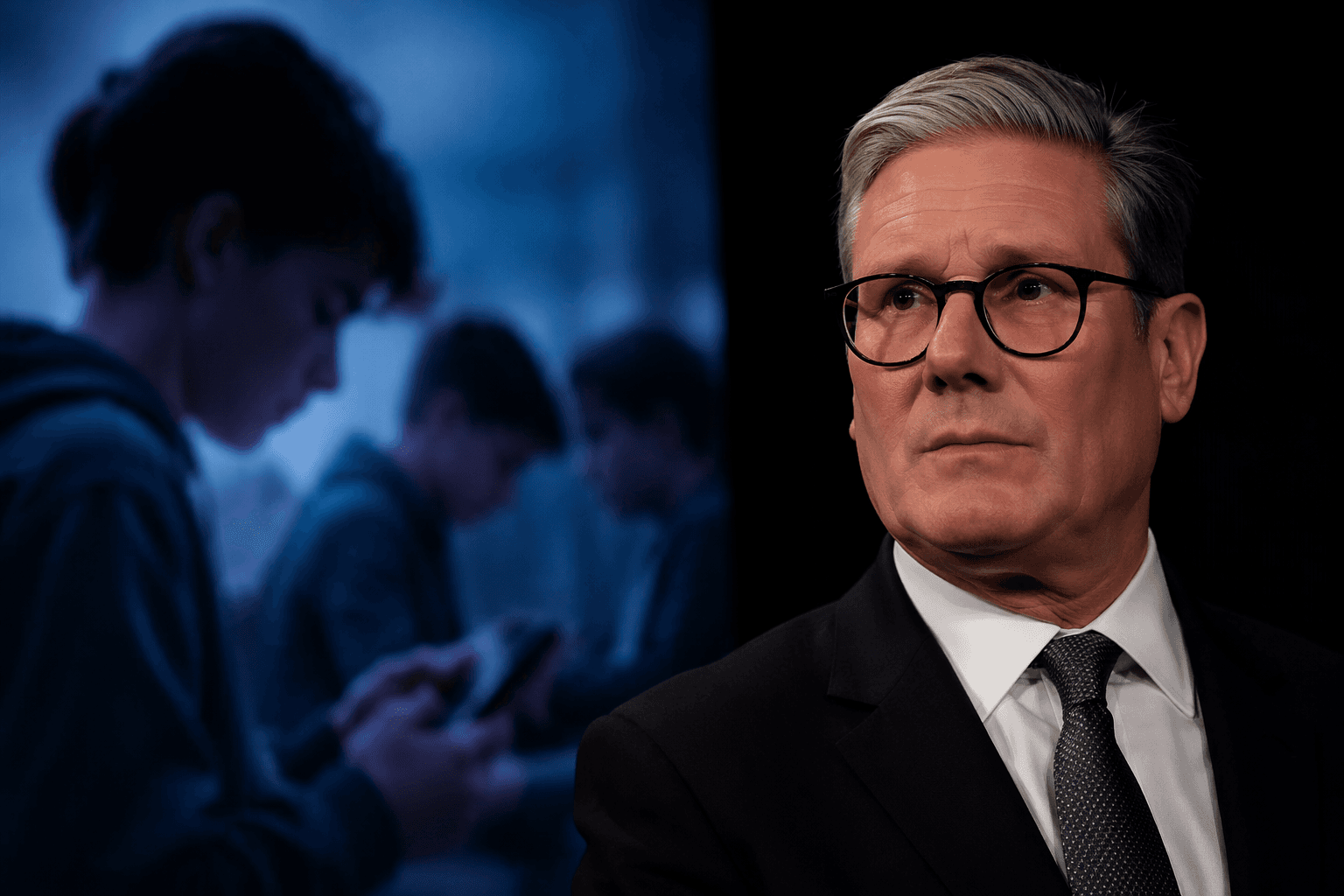
The scale of the problem is one reason the government is going further. Ofcom’s 2025 media report found that 55% of children aged 3 to 12 use social media apps or sites, while 96% of 13 to 17-year-olds do. Ofcom also said 95% of 13- to 15-year-olds use social media, with YouTube, WhatsApp and TikTok among the most-used services. That means any restriction aimed at under-16s would touch a large share of British families, not a narrow edge case.
Enforcement is where the policy gets difficult. A workable ban would require platforms to verify age more reliably, and possibly push device makers such as Apple and Google to build detection and blocking tools into phones and tablets sold in Britain. That raises obvious privacy tradeoffs, because the more accurate the age checks, the more data companies may need to collect or infer. It also raises the risk that determined teenagers simply move to less visible corners of the internet while compliant firms absorb the cost.
Britain is not moving in isolation. Australia’s under-16 social media restrictions took effect on December 10, 2025, and platforms there can face fines of up to A$49.5 million if they fail to take responsible steps. Greece announced on April 8, 2026, that it will ban social media access for under-15s from January 1, 2027. At home, the House of Commons Library says Part 3 of the Children’s Wellbeing and Schools Act 2026 will require some form of age or functionality restrictions for children under 16, even though MPs rejected an outright ban in March 2026.
The debate now is less about whether ministers want to act than whether they can write rules that work. The Academy of Medical Royal Colleges said on May 26, 2026, that social media ranks alongside smoking as a danger to children, while Children’s Commissioner Rachel de Souza has said thousands of children have described harmful online content. Starmer’s next step will show whether Britain is heading toward a genuine access regime, or another child-safety promise that is easier to announce than to police.
This article was produced by Prism’s automated news system from verified source data, official records, and press releases, then run through automated quality and moderation checks before publishing. The system is built and supervised by the people who set the standards it runs under. Read our full AI policy.
Know something we missed? Have a correction or additional information?
Submit a Tip