Strait of Hormuz Reopens After U.S.-Iran Ceasefire Ends Operation Epic Fury
Two vessels transited the Strait of Hormuz after Tuesday's ceasefire, against a pre-war baseline of 138 daily transits, while Iran demands coordination for all passage.
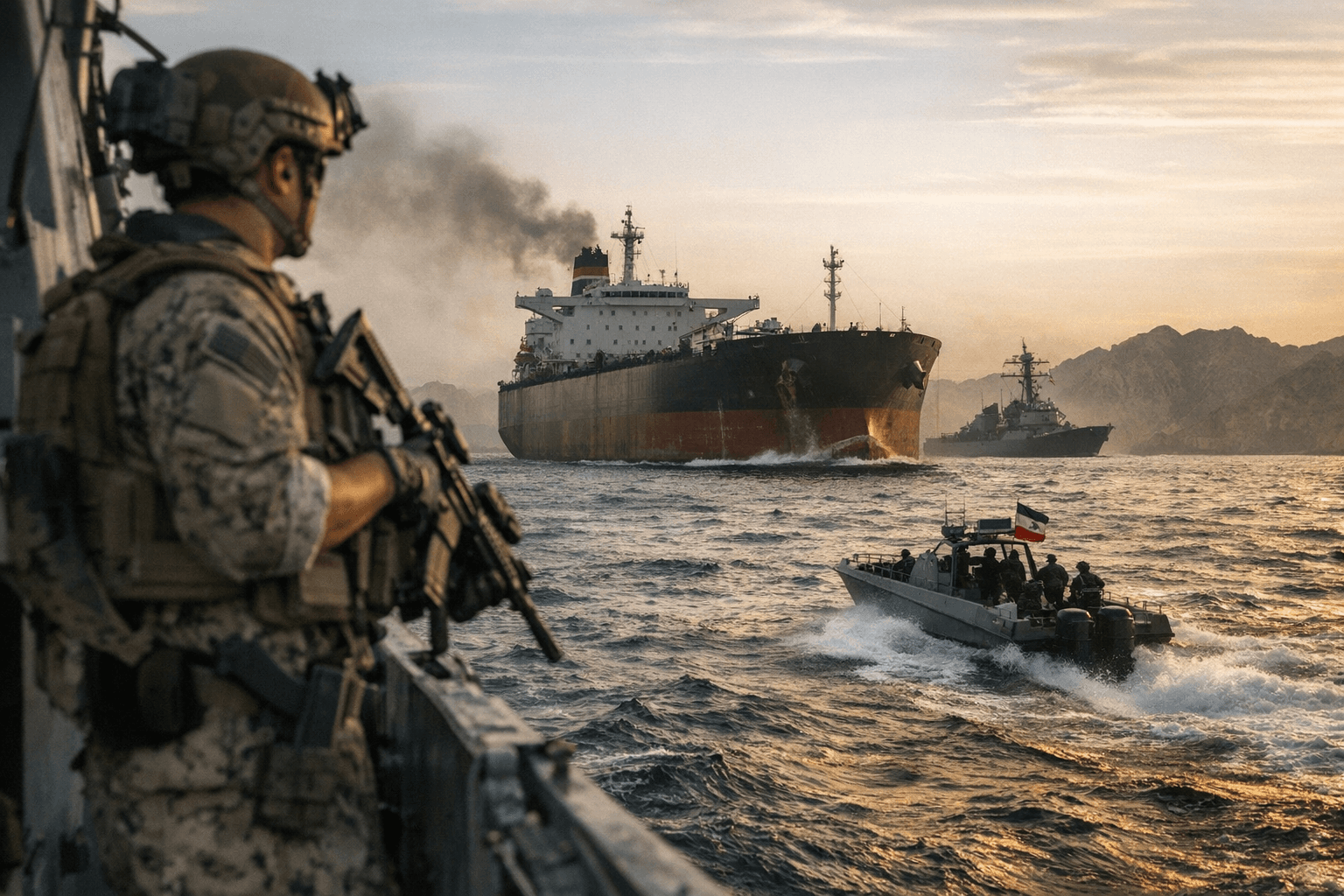
Two vessels safely transited the Strait of Hormuz in the hours following Tuesday night's ceasefire, according to MarineTraffic data cited by CNN. Before Operation Epic Fury began on February 28, 138 ships made that same passage every single day. The gap between those numbers is the real story behind Wednesday's Pentagon declaration that the world's most critical maritime energy chokepoint is "open."
Secretary of Defense Pete Hegseth and Gen. Dan Caine, the 22nd Chairman of the Joint Chiefs of Staff, stood before reporters at the Pentagon on April 8 to announce what Hegseth called a "historic and overwhelming victory." Hegseth said ships "will be sailing" through Hormuz and called on other nations to help keep the strait open, declaring: "It's time for the rest of the world to step up and ensure that that stays open, after President Trump and the War Department brought Iran to the place where they are voluntarily opening it right now." He confirmed U.S. forces will remain in the region and are ready to "restart at a moment's notice."
Caine was measurably more precise about what "open" actually means. He said he "believes" the strait is open and acknowledged that access is based on "diplomatic negotiations" as part of the two-week ceasefire. "A ceasefire is a pause," Caine said, "and the Joint Force remains ready if called upon to resume combat operations with the same speed and precision." That language matters to commercial operators who need underwriters, not assurances, before routing a supertanker through the corridor.
Those operators are right to read carefully. Iranian Foreign Minister Abbas Araghchi stated that "safe passage through the Strait of Hormuz will be possible via coordination with Iran's Armed Forces and with due consideration of technical limitations." Kpler oil analyst Matt Smith estimated that traffic may reach only 10 to 15 vessels given that Iran is still vetting who transits. Hundreds of vessels remain anchored in the region waiting for clarity that the insurance market has not yet provided. War-risk premiums for Hormuz transits surged from 0.125% to between 0.2% and 0.4% of ship insurance value per transit during the conflict, adding up to $250,000 in costs per voyage for large oil tankers.
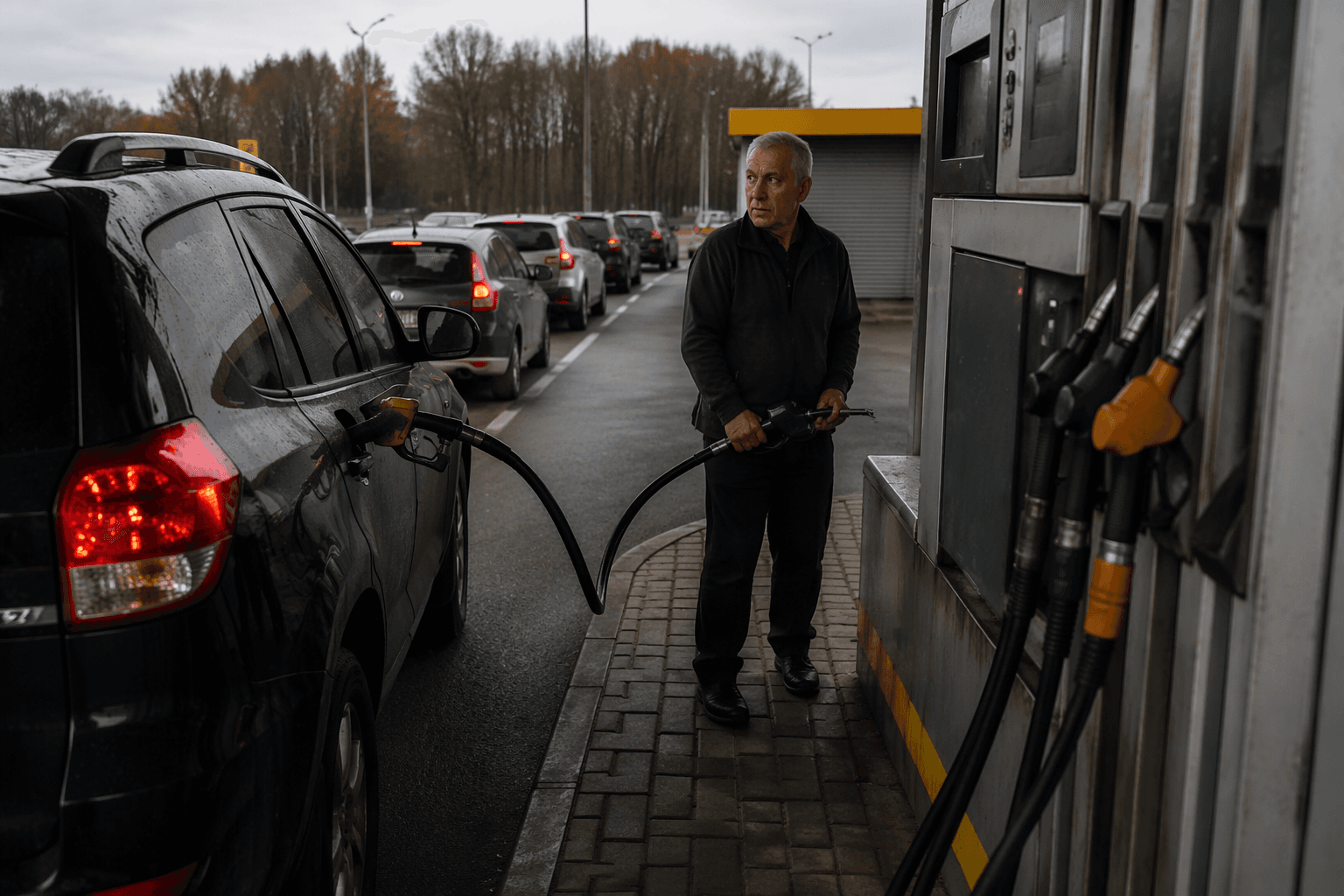
The market consequences of that calculus are already embedded in everyday life. U.S. regular gasoline prices reached $4.14 per gallon at the time of the ceasefire, the highest level since 2022, according to AAA. Asian nations heavily dependent on Persian Gulf energy have enacted emergency fuel conservation measures, and even with shipping resuming, new supplies would take days to weeks to reach them. The International Energy Agency's 32 member states voted unanimously on March 11 to release 400 million barrels from emergency reserves, roughly four days of global oil consumption, as a stopgap. The strait carries approximately 20% of global liquefied natural gas and 25% of seaborne oil trade annually. Saudi Arabia alone accounts for 38% of total Hormuz crude flows, at 5.5 million barrels per day.
Iranian state media further complicated the picture Wednesday by reporting that tanker traffic through the strait had halted again following Israeli strikes on Hezbollah in Lebanon. White House press secretary Karoline Leavitt disputed that account, saying, "We have seen an uptick in the strait today, and I will reiterate the president's expectation and demand that the Strait of Hormuz is reopened." The competing claims reflect a verification problem that official briefings cannot resolve: AIS transponder data and allied naval tracking, not press conferences, will ultimately determine whether the corridor is functionally open.
Operation Epic Fury targeted Iranian command and control centers, IRGC headquarters, ballistic missile and drone sites, naval vessels, anti-ship missile positions, air defense systems, and military airfields. CENTCOM Commander Admiral Brad Cooper reported at least 17 Iranian ships destroyed as of March 3, stating that "there's not a single Iranian ship underway in the Arabian Gulf, Strait of Hormuz, or Gulf of Oman." Caine said the operation achieved all three military objectives set by President Trump: the destruction of Iran's ballistic missile and drone capabilities, its navy, and its defense industrial base. Thirteen American service members were killed. Caine honored them Wednesday: "Their names and their bravery will never be forgotten."
The ceasefire itself arrived with less than two hours to spare before Trump's 8 p.m. ET Tuesday deadline, after he threatened to bomb every bridge and power plant in Iran if Tehran did not act. Pakistani Prime Minister Shehbaz Sharif and Field Marshal Asim Munir were credited with brokering the pause. Trump posted on Truth Social that a 10-point Iranian proposal "will serve as ground to negotiate for a permanent deal." On April 2, the United Kingdom had hosted a virtual summit with more than three dozen countries to coordinate a reopening framework, signaling how diplomatically isolated the problem had become before any shots stopped firing.
Caine's presence at the podium carried its own historical weight. He is the first Joint Chiefs chairman who never served at the four-star rank before assuming the position, the first to have been retired at the time of his Senate confirmation in April 2025, and the first Air National Guardsman to hold the role. His own biography once described him, between 2009 and 2016, as "a part-time member of the National Guard and a serial entrepreneur and investor." Whether his next chapter includes a return to combat operations over Iran depends not on what was said at the Pentagon on Wednesday, but on what MarineTraffic logs show in the days ahead.
This article was produced by Prism’s automated news system from verified source data, official records, and press releases, then run through automated quality and moderation checks before publishing. The system is built and supervised by the people who set the standards it runs under. Read our full AI policy.
Did this article answer your question?