Supreme Court allows California’s Prop. 50 map to stand for 2026
Supreme Court declined to block California’s voter-approved congressional map, clearing a path that could add up to five Democratic seats in 2026.
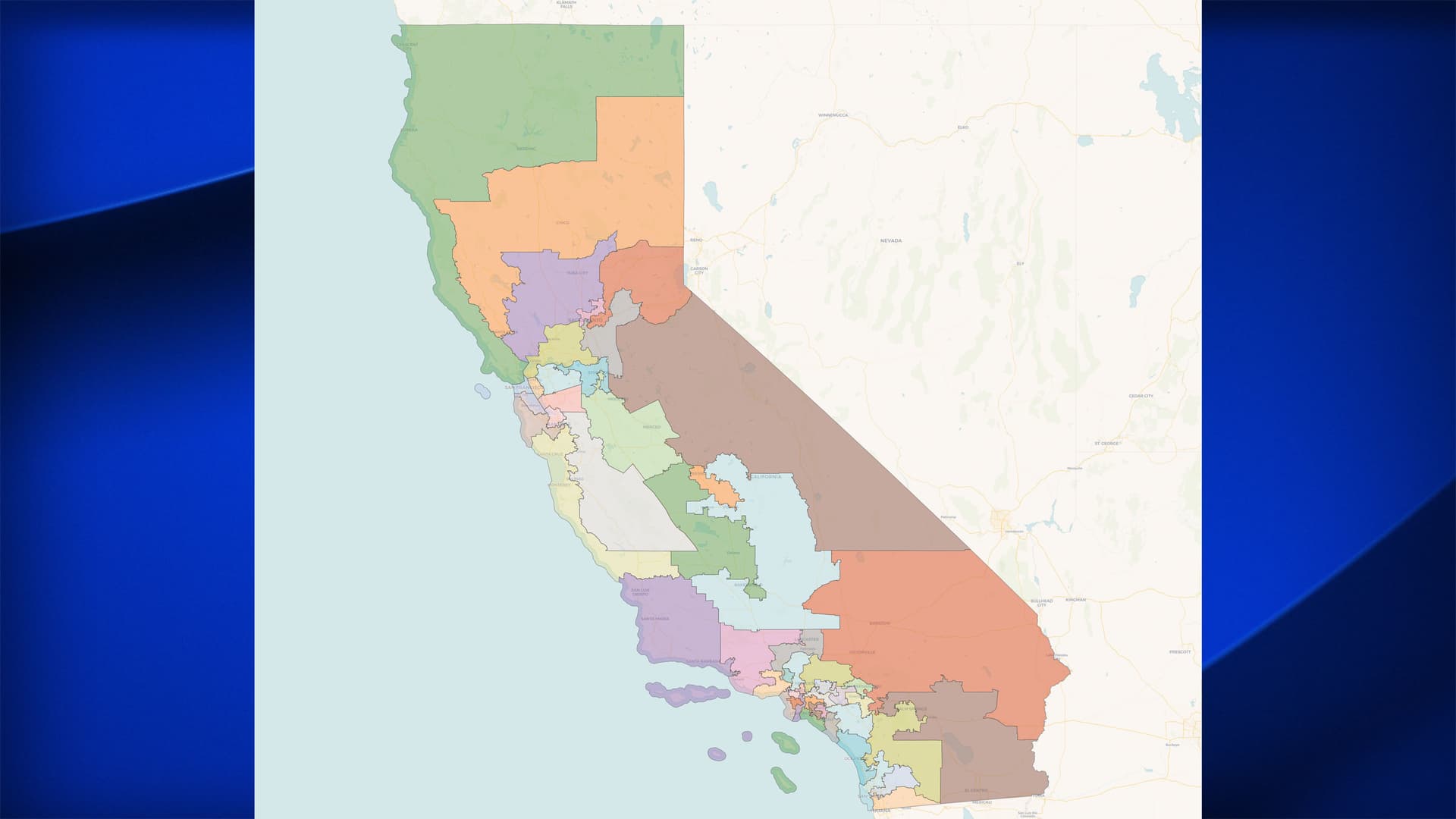
The U.S. Supreme Court issued a one-sentence emergency order declining to block California’s new congressional map, denying requests to set aside a 2-1 lower court decision that had allowed the state to implement the voter-approved plan for the 2026 midterm elections. The order leaves in place a map passed by Proposition 50 that analysts say could yield Democrats as many as five additional U.S. House seats and reshape the fight for control of Congress.
A federal three-judge panel first allowed the map to be used in a Jan. 14 ruling, finding the districts were drawn for partisan advantage and rejecting claims that the lines constituted an unlawful racial gerrymander. The panel’s majority described evidence of partisan motivations for the lines as “overwhelming” and characterized proof that the map favored Hispanic and Latino communities as “exceptionally weak.” Challengers appealed to the Supreme Court on Jan. 20 in the case captioned Tangipa v. Newsom; the high court acted with its brief emergency denial in early February.
The challenge to the map was brought by the state Republican Party and Republican state officials, and the Justice Department joined some of the claims that the districts were racially motivated. They pointed to testimony and social media posts by a private consultant who drew the plan, saying he “boasted publicly and on social media” that the new map “would maintain, if not expand, Latino voting power in California.” The challengers asked the justices for a “narrow injunction” requiring the state to revert to the congressional map used for the prior two federal election cycles while litigation continued.
California defended the initiative in filings to the Supreme Court, arguing that partisan objectives are part of ordinary politics and that federal intervention would itself be partisan. Deputy Solicitor General Christopher Hu framed the challengers’ motives as political when he told the court Republicans’ desire to retain a House majority was a “natural political objective.” State lawyers further told the justices it would be “deeply unnatural” for challengers “to step into the political fray, granting one political party a sizeable advantage by enjoining California’s partisan gerrymander after having allowed” a similar map in Texas.
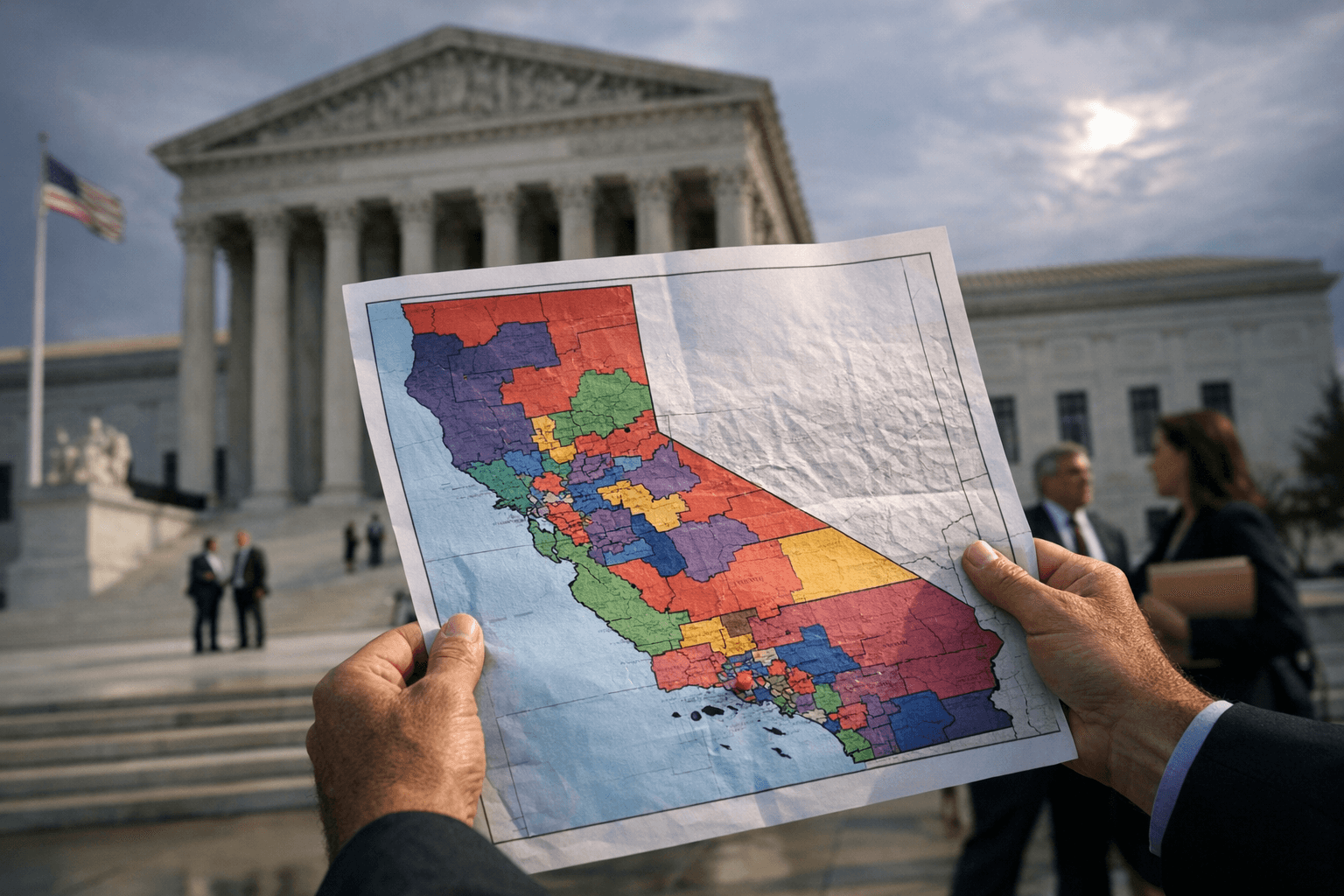
The California litigation sits inside a broader national dispute over mid-decade redistricting. The state’s map followed a wave of partisan redraws elsewhere and came after voters approved Prop. 50 in November, a ballot initiative that implemented districts the Democrat-controlled legislature had advanced after overriding the state’s nonpartisan redistricting commission. Opponents and supporters alike have framed the map as pivotal in targeting seats held by five Republicans and potentially altering the arithmetic of the U.S. House in 2026.
The Supreme Court’s one-line order does not resolve the underlying constitutional claims and was not accompanied by a signed opinion addressing the merits. The decision echoes the court’s December action allowing Texas to use its newly drawn map, a move Justice Samuel A. Alito Jr. characterized in a concurrence as rooted in partisan calculation: “The impetus for the adoption of the Texas map (like the map subsequently adopted in California), was partisan advantage pure and simple.”
Key factual details remain for further reporting: the full text of the high court’s emergency order, the private consultant’s identity and testimony, and the specific legal precedents the lower court applied in deeming partisan considerations permissible under Supreme Court doctrine. For now, California appears set to use the Prop. 50 map in the 2026 midterms while litigation over its legality proceeds.
This article was produced by Prism’s automated news system from verified source data, official records, and press releases, then run through automated quality and moderation checks before publishing. The system is built and supervised by the people who set the standards it runs under. Read our full AI policy.
Did this article answer your question?

