Supreme Court faces key gun and transgender athlete rulings near term's end
The justices still have gun and transgender-athlete cases on their docket, and the rulings could reset state rules the day they land.

The Supreme Court is down to its final stretch of a nine-month term, and the remaining decisions could redraw rules in two of the country’s most combustible policy fights. Pending rulings on guns and transgender athletes would immediately matter to state officials, school districts, gun owners and families, not just to Washington lawyers.
One of the biggest gun cases is Wolford v. Lopez, docket 24-1046, which centers on Hawaii’s rule that a licensed concealed-carry permit holder cannot bring a handgun onto private property open to the public unless the owner gives express authorization. The court heard argument on January 20, 2026, and the case has drawn attention because the rule has been nicknamed the “vampire rule,” since property owners must affirmatively opt in to guns. The Trump administration backed the challenge, and the outcome could define how far states can go in limiting firearms on property that is open to customers but still privately owned.
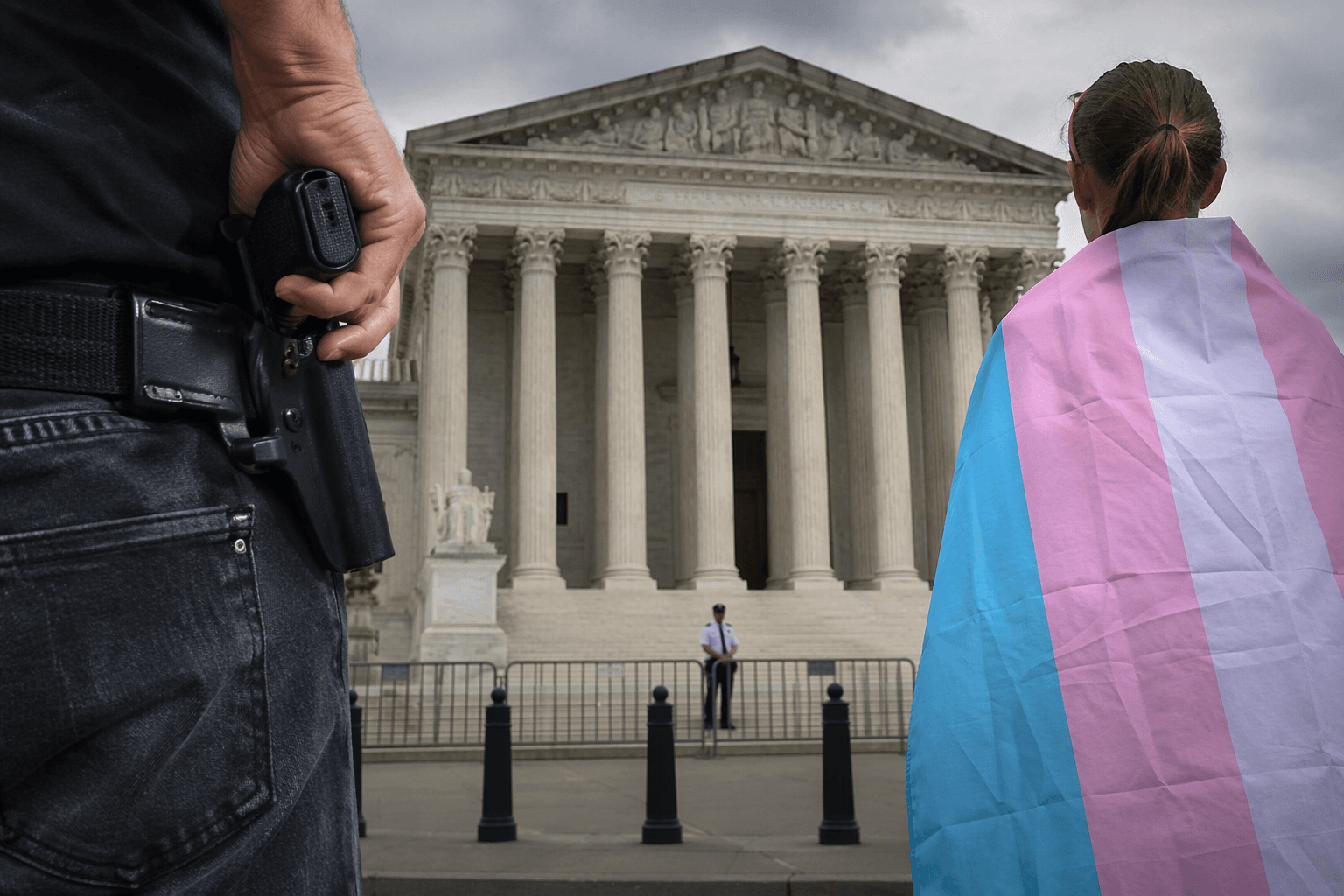
A separate firearms case concerns 18 U.S.C. § 922(g)(3), the federal law that bars unlawful users of controlled substances from possessing guns. Together, the two disputes could clarify the reach of both state and federal gun regulation after years of Second Amendment litigation. For Hawaii, the question is whether its approach survives a conservative Supreme Court that has repeatedly been skeptical of broad gun restrictions.
The other major set of cases is Little v. Hecox and West Virginia v. B.P.J., which ask whether Idaho and West Virginia can bar transgender athletes from girls’ and women’s sports teams. The court agreed to hear both cases in July 2025 and held oral arguments on January 13, 2026. Idaho’s Fairness in Women’s Sports Act, passed in 2020, was the first law of its kind in the United States. In West Virginia, B.P.J. is challenging the state law under Title IX and the Equal Protection Clause.
Those cases carry consequences well beyond the two states directly involved. School districts will be looking for a national signal on team eligibility, while advocates on both sides are treating the rulings as a test of how far states can regulate sex-based participation in sports. The 2024 Supreme Court decision upholding Tennessee’s ban on certain gender-affirming medical care for minors is already the backdrop for the dispute, and the court’s 6-3 conservative majority has shifted the legal landscape rightward in recent years.
LGBTQ-rights groups including the ACLU and Lambda Legal argue the bans exclude transgender youth from ordinary educational opportunities. State officials and some conservative advocates say the laws preserve fairness in girls’ and women’s sports. In West Virginia, the fight has become even more visible after the state solicitor general pointed to B.P.J.’s performance at a state track championship, underscoring how quickly a Supreme Court ruling could ripple through classrooms, athletic programs and statehouses nationwide.
This article was produced by Prism’s automated news system from verified source data, official records, and press releases, then run through automated quality and moderation checks before publishing. The system is built and supervised by the people who set the standards it runs under. Read our full AI policy.
Know something we missed? Have a correction or additional information?
Submit a Tip