Supreme Court strikes down gun ban for habitual drug users
The Supreme Court said the government cannot bar a Texas man from guns solely because he used marijuana every other day, tightening the test for disarming whole categories of people.
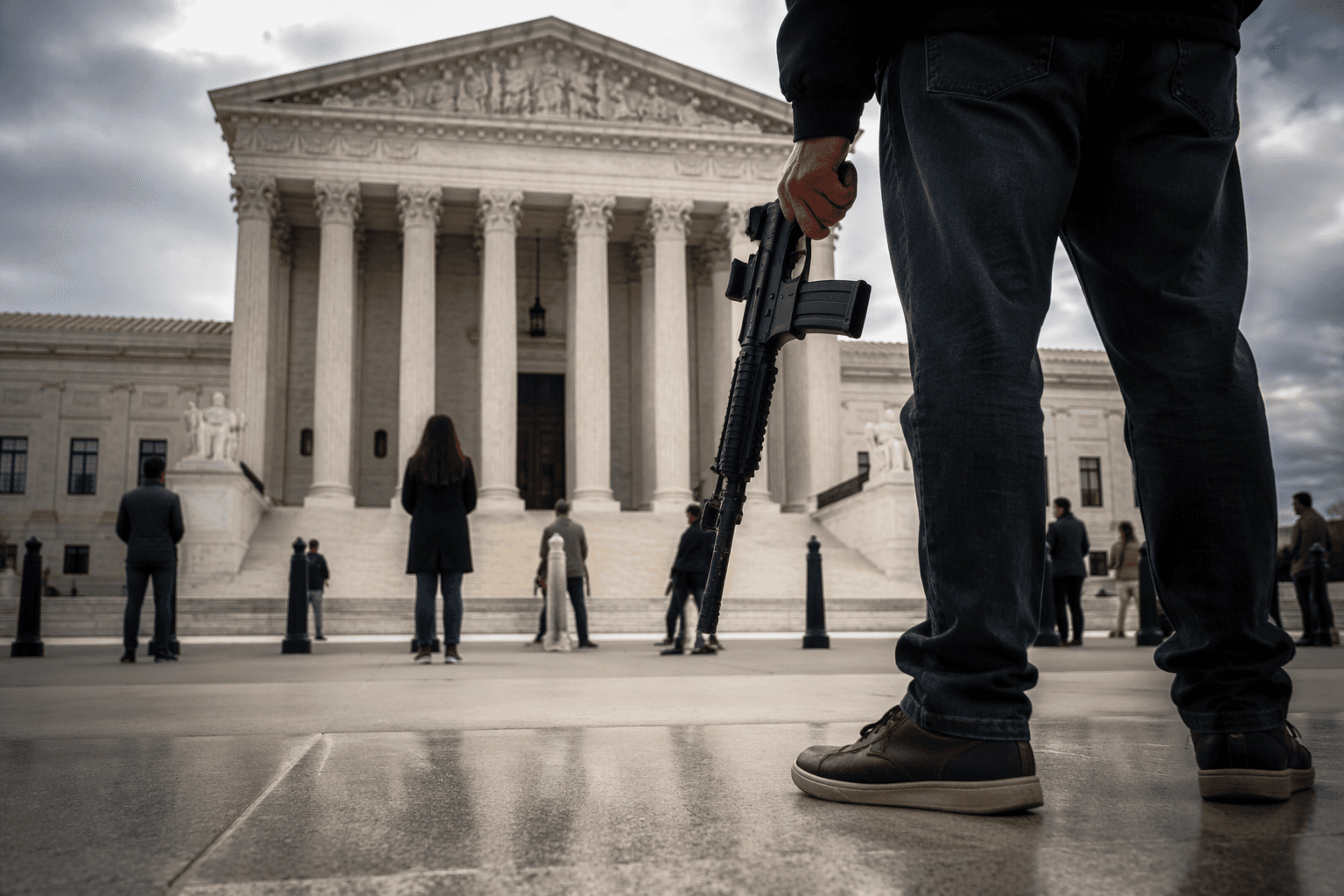
The Supreme Court narrowed the government’s power to disarm people based on broad status alone, ruling that federal prosecutors cannot rely on habitual marijuana use to strip gun rights without a stronger historical fit under the Second Amendment. In United States v. Hemani, the justices unanimously rejected the government’s case against Ali Danial Hemani under 18 U.S.C. § 922(g)(3), a statute that bars unlawful users of controlled substances and people addicted to them from possessing firearms.
Hemani is a dual citizen of the United States and Pakistan who was born in Texas and lived most of his life in the Dallas area. Federal agents searched the family home in 2022, and Hemani cooperated with them, surrendered a gun he kept in the house, pointed them to marijuana on the property, and said he used marijuana about every other day. More than six months later, prosecutors charged him solely on the basis of that admitted drug use. The Court held that was not enough to justify a lifetime disqualification from gun ownership.
The decision turns on the post-Bruen framework the Court has used to evaluate gun laws since 2022. Under that test, the government must show that a challenged restriction is consistent with the nation’s historical tradition of firearm regulation. The justices said the government does not need a historical twin, but it must identify regulations that are relevantly similar. In Hemani’s case, the government argued that habitual drug users resemble founding-era drunkards and that lawmakers have restricted drug users’ gun possession for more than a century. The Court was not persuaded.
The ruling is a loss for the Justice Department and the Trump administration, which defended the 1968 law. It also leaves open a wider fight over how far the government can go in keeping guns away from people it says are risky. The Court said nothing in the opinion decides whether people who are intoxicated, addicted, or otherwise shown through individualized proof to be dangerous can be disarmed, and it left room for other gun restrictions rooted in historical tradition.
Before the ruling, the American Civil Liberties Union warned that the statute could expose millions of marijuana users, including lawful state users, to felony prosecution, even if they keep a locked firearm at home for self-defense. The case drew support from across the ideological spectrum, including the Drug Policy Alliance, NORML, the Cato Institute and the National Rifle Association. Coming after Bruen and Rahimi, the decision signals that the Court is still willing to police gun laws that sweep too broadly, even when Congress has long treated drug use as a basis for disarmament.
This article was produced by Prism’s automated news system from verified source data, official records, and press releases, then run through automated quality and moderation checks before publishing. The system is built and supervised by the people who set the standards it runs under. Read our full AI policy.
Know something we missed? Have a correction or additional information?
Submit a Tip