Syria opens first Assad-era trial, marking tentative step toward justice
Atef Najib sat in a Damascus dock in handcuffs as Syria began its first public Assad-era trial, a fragile test of whether justice will outlast symbolism.
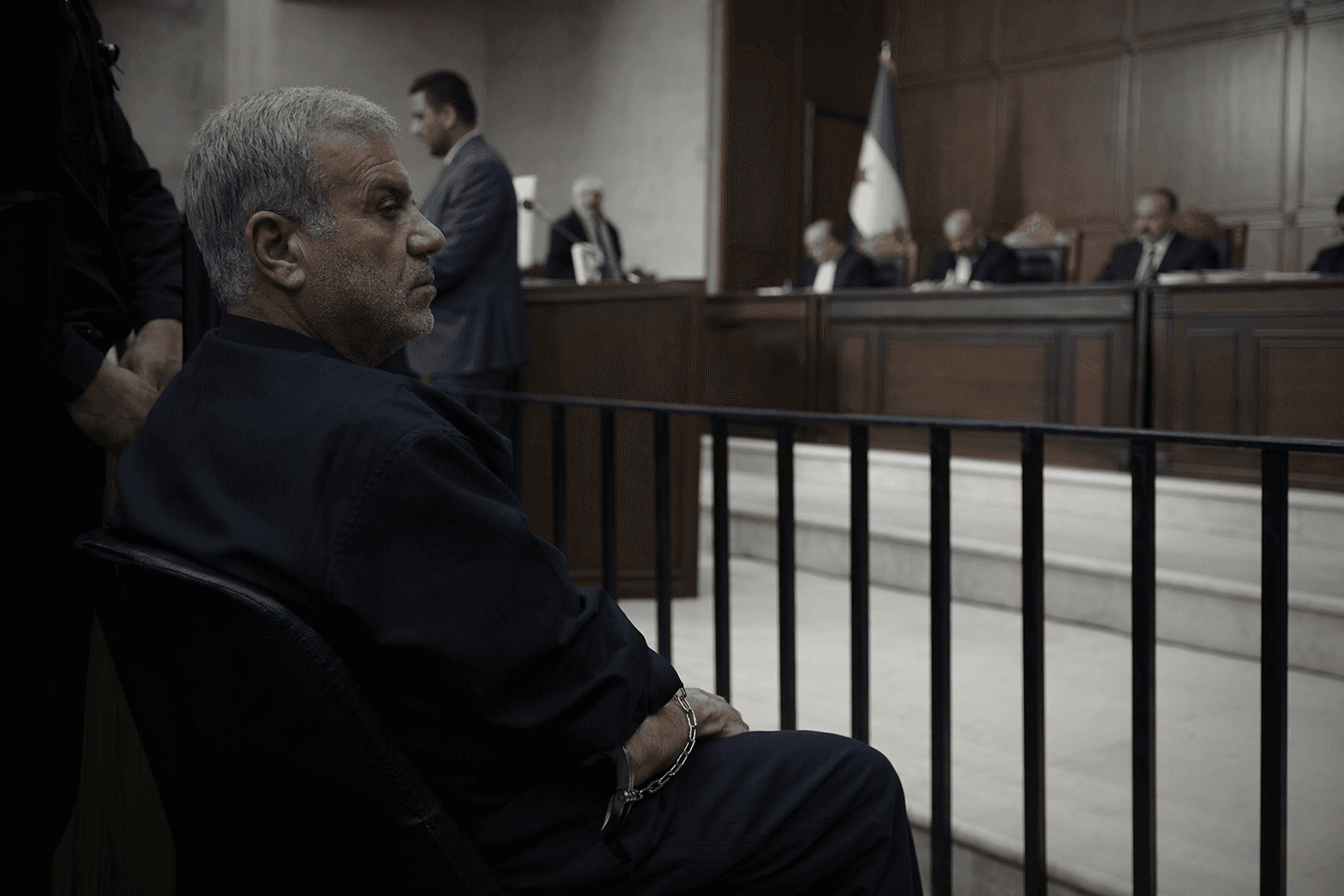
A former Syrian brigadier general sat in handcuffs in a Damascus courtroom as the country opened its first public trial of an official tied to Bashar Assad’s rule, a moment many Syrians have long waited for and one that now tests whether the post-Assad state can build real accountability.
Atef Najib, once head of political security in Daraa and a cousin of Bashar Assad, appeared in person for the first hearing at the Palace of Justice. Bashar Assad and his brother Maher were reported to be tried in absentia. Najib is accused of repression and arrests in Daraa, the southern province where Syria’s uprising erupted in 2011 after teenagers were detained over anti-government graffiti, an incident widely seen as one of the spark points of the revolt.
The hearing was described as preparatory, and a second session was set for May 10. A judge called the case the beginning of Syria’s first trials of transitional justice, underscoring how much weight has been placed on a single courtroom proceeding. Outside, crowds celebrated the opening of the case, while families of victims chanted inside the Palace of Justice, a sign that the trial carried emotional force well beyond its immediate legal scope.
That emotion is anchored in a catastrophe that has defined Syria for more than 13 years. The war has killed more than 528,500 people, according to conflict monitors, displaced more than 12 million Syrians and left around 16 million in urgent need of assistance by the end of 2024. Human rights groups say the missing-persons crisis remains enormous. The Syrian Network for Human Rights said at least 112,414 people were still forcibly disappeared as of late 2024, even after prisons and detention centers were opened following Assad’s fall.
The trial also reflects a broader effort by Syria’s interim authorities to present justice as part of state-building rather than an afterthought. In 2025, they established a National Commission for Transitional Justice and a National Commission for the Missing, institutions meant to document abuses and address mass disappearances. President Ahmed al-Sharaa has said justice remains a major goal of the state and its institutions.
For victims’ families and legal observers, the central question is whether this case becomes the start of a credible reckoning or a narrow performance with little reach. Many of the most powerful figures are outside the country, and Syria’s legal system remains fragile after years of war. Still, bringing an Assad-era official into a public dock in Damascus marks a break with the past that Syrians once could hardly imagine.
This article was produced by Prism’s automated news system from verified source data, official records, and press releases, then run through automated quality and moderation checks before publishing. The system is built and supervised by the people who set the standards it runs under. Read our full AI policy.
Did this article answer your question?


