Takaichi to meet BOJ governor in first post-election bilateral at prime minister’s office
Prime Minister Sanae Takaichi will meet Bank of Japan Governor Kazuo Ueda at 5 p.m. to discuss inflation, the yen and policy amid market sensitivity and a fresh political mandate.

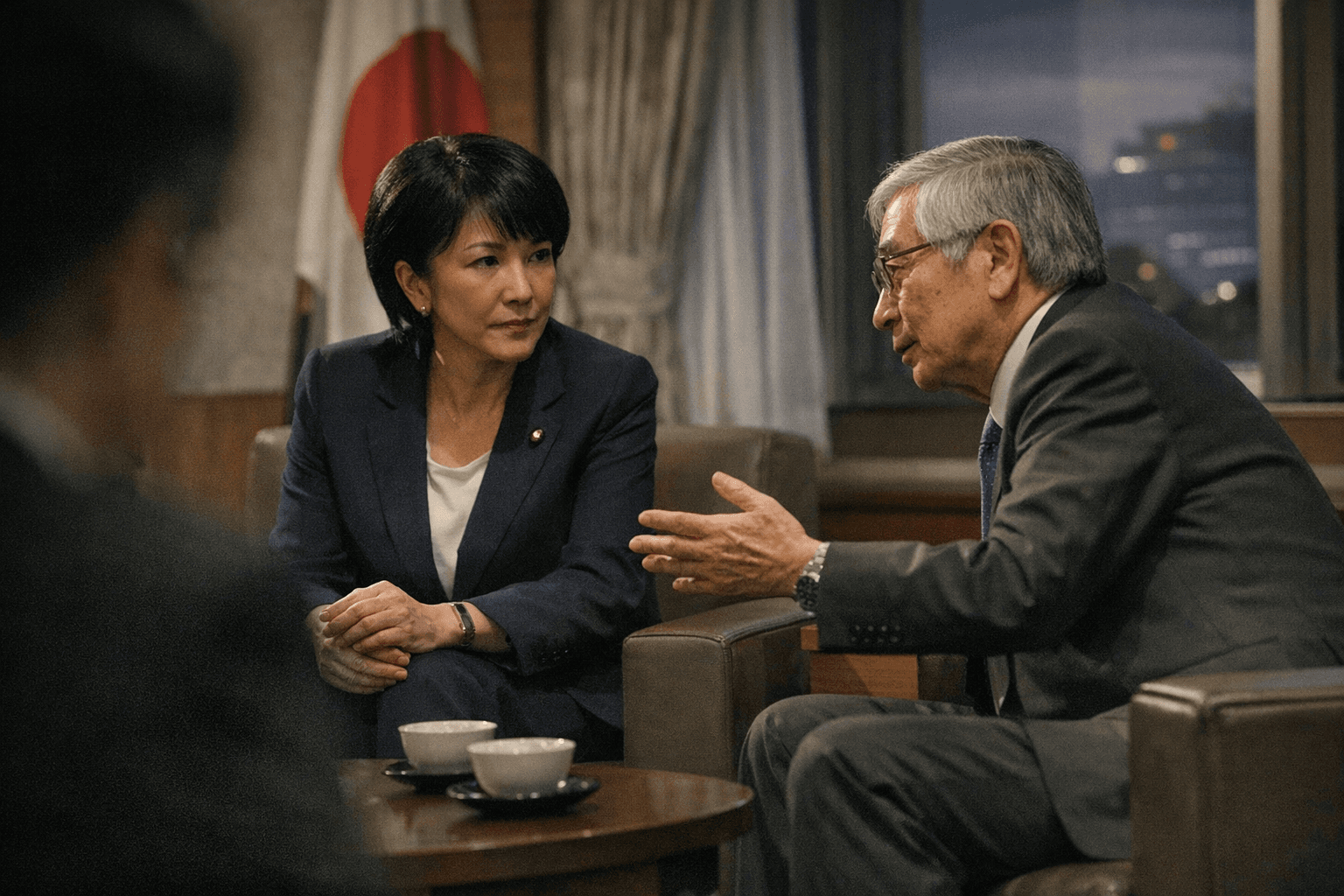
Prime Minister Sanae Takaichi will hold a bilateral meeting with Bank of Japan Governor Kazuo Ueda at 5 p.m. at the prime minister’s office, their first face-to-face since her ruling Liberal Democratic Party secured a landslide in the lower house. The session is being watched closely by markets for signals on the central bank’s reaction to a weaker yen, elevated inflation and the government’s plans for aggressive fiscal stimulus.
The meeting follows a November encounter between the two that preceded a December decision by the central bank to lift its short-term policy rate to 0.75 percent, a level that reflects the most pronounced tightening in decades. That December decision split the board, with two members having pressed for the hike. Inflation has run above the central bank’s 2 percent target for an extended period, a dynamic that has increased pressure on policymakers to explain the path for further tightening.
Ueda has indicated continuity in the central bank’s approach. After the November talks he said the prime minister “seemed to have acknowledged” his explanation that the BOJ is gradually raising rates to secure a smooth landing toward its inflation target. Takaichi, who has long emphasised coordination between monetary and fiscal authorities, said on Oct. 21 that “what’s most important is for the BOJ and government to coordinate policy and communicate closely.”
Markets have been volatile around the yen and Japanese government bond yields, complicating both the BOJ’s calculations and the government’s desire to stimulate growth. Analysts expect the central bank to consider further moves in the coming months, with Naomi Muguruma of Mitsubishi UFJ Morgan Stanley Securities saying, “The BOJ probably wants to raise rates again around April, June or July. The exact timing will depend on how the yen moves.” Otani, a managing director at Goldman Sachs Japan, argued that muted government comment on rate hikes could be read as a green light: “If government executives don't give negative comments about rate hikes and instead say they are leaving monetary policy up to the BOJ, that could be a sign the government and BOJ have laid the groundwork for pushing up rates.”
Political stakes are substantial. Takaichi’s victory secured the LDP a supermajority in the lower house, giving her a firmer hand on fiscal policy and the opportunity to shape appointments at the central bank. Two BOJ board seats will open later this year when terms end for sitting members in March and June, a timetable that will test how much the government seeks to influence the bank’s trajectory. One incumbent was once viewed as dovish yet has supported recent rate hikes, underscoring shifting dynamics inside the BOJ.
Household strains from stubborn food-price inflation and earlier sharp yen moves have undercut public support for incumbents and sharpened political focus on prices. Takaichi has at times criticised the BOJ’s tightening drive, even using the word “stupid” in past comments, but her post-election posture and this meeting will be read for signs of either restraint or pressure on the central bank.
Investors will also track the BOJ’s policy calendar: the next policy meeting is scheduled for mid-March with a review of growth and price forecasts slated for late April. Markets will be looking for any immediate readout from Monday’s talks and for cues on nominations and communication strategies that could shape Japan’s economic course.
This article was produced by Prism’s automated news system from verified source data, official records, and press releases, then run through automated quality and moderation checks before publishing. The system is built and supervised by the people who set the standards it runs under. Read our full AI policy.
Did this article answer your question?


