Ten Essential Inspections Before Buying a Used Catamaran Yacht
This practical buyer’s guide walks prospective owners through the ten inspection areas to evaluate when considering a pre-owned yacht, with emphasis on catamaran-specific risks and checks. Follow these steps to identify hidden damage, verify systems and documentation, and decide when to call a professional surveyor before committing to a purchase.
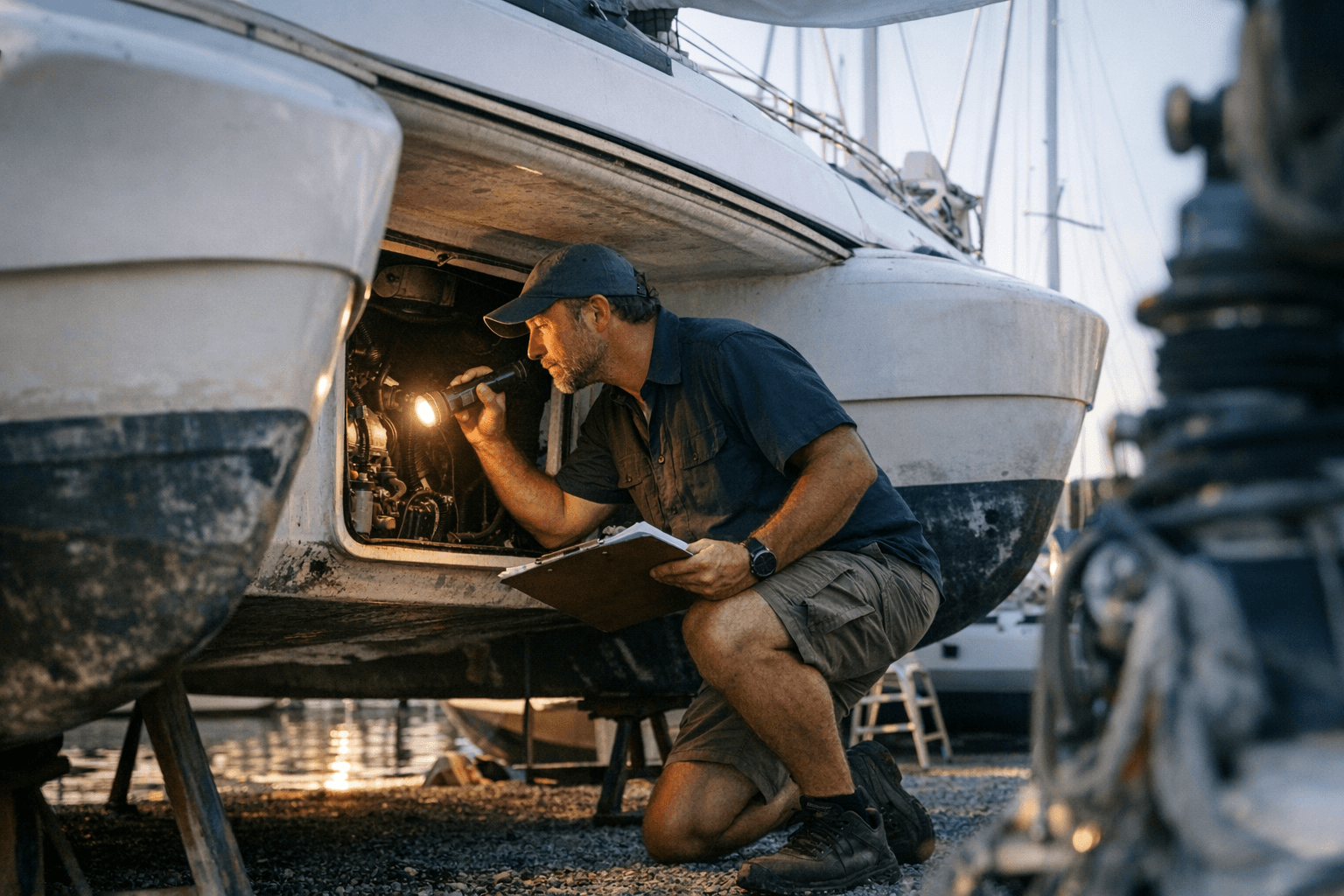
Buying a used catamaran demands a systematic, hands-on inspection. Begin with the hull structure: examine both hulls for signs of hidden cracks, soft spots, or previous repairs. Tap test the gelcoat and laminate to detect delamination and use a moisture meter to map elevated readings around chainplates, window corners, and through-hull fittings. Pay special attention to the bridgedeck and crossbeams where load distribution on twin hulls concentrates stress.
Next, check the hull bottoms and propellers. Look for osmosis blisters, repaired impact areas, and condition of antifouling. Inspect propeller blades and shafts for dents, pitting, or misalignment and verify shaft couplings and seals. For catamarans with drive legs or saildrives, confirm seals are intact and look for corrosive wear around gear housings.
Engine and engine-room inspection is critical on multihulls with twin powerplants. Review engine hours and maintenance records and inspect mounts, hoses, belts, and coolant condition. Smell for exhaust or fuel odors in the engine room and examine bilge cleanliness. On a sea trial, check that each engine idles smoothly, accelerates without smoke or hesitation, and that temperature and oil pressure stay within normal ranges.
Evaluate electrical and navigation systems, remembering that larger multihulls often use distributed battery banks. Test battery state of charge and verify wiring neatness and proper fusing. Power up instruments, autopilot, chartplotter, and radar to confirm reliable startup and accurate readings. Check for shore power integrity and inverter/charger function.
Steering and handling merits focused testing. Inspect rudders, bearings, linkages, and steering cylinders for play or corrosion. Conduct low-speed steering tests during a sea trial to detect unusual drag, delayed response, or asymmetrical handling caused by twin-hull balance issues.
Interior and comfort checks protect livability. Scan for moisture, musty odors, and soft spots in cabinetry and flooring. Test HVAC, refrigeration, and galley appliances and verify freshwater system pressures and heater operation.
Safety equipment must be compliant and serviceable. Verify presence and condition of PFDs, up-to-date flares, accessible fire extinguishers, and a functioning EPIRB. Confirm life-raft service dates where applicable.
Documentation and history determine legal and financial risk. Obtain title, check for liens, and review service logs and any accident or insurance claims. Confirm registrations and any required certifications are in order.
Inspect piping and fuel/water systems for leaks, contamination, and corrosion. Open filters, run diesel through fuel polishing or sampling procedures if available, and verify water tanks for odor and sediment.
Finally, treat a sea trial as the decisive verification. Use the trial to exercise engines, steering, systems, and hull behavior under way. For higher-value purchases, hire a qualified marine surveyor experienced with multihulls to perform a full survey and provide a professional assessment. Following this checklist will reduce surprises and help you negotiate confidently when purchasing a used catamaran yacht.
Know something we missed? Have a correction or additional information?
Submit a Tip