Ten essential tips to sharpen your sourdough baking results
A concise checklist of ten practical techniques to improve sourdough consistency, flavor, and oven spring for home bakers. Implement these steps to troubleshoot loaves and repeat successes.

Consistency in sourdough starts long before the oven heats up. These ten essential tips focus on predictable starter management, controlled fermentation, and clear handling techniques so you can bake repeatable loaves with better crumb, crust, and flavor.
Begin with a predictable feeding schedule for your starter and keep records of time, temperature, and flour type. Noting each feed helps you spot shifts in activity and makes it easier to time builds and bulk fermentation. Use the same flour for a multi-day build to stabilise microbial behaviour; switching flours mid-build can change acidity and rise rate and complicate timing.
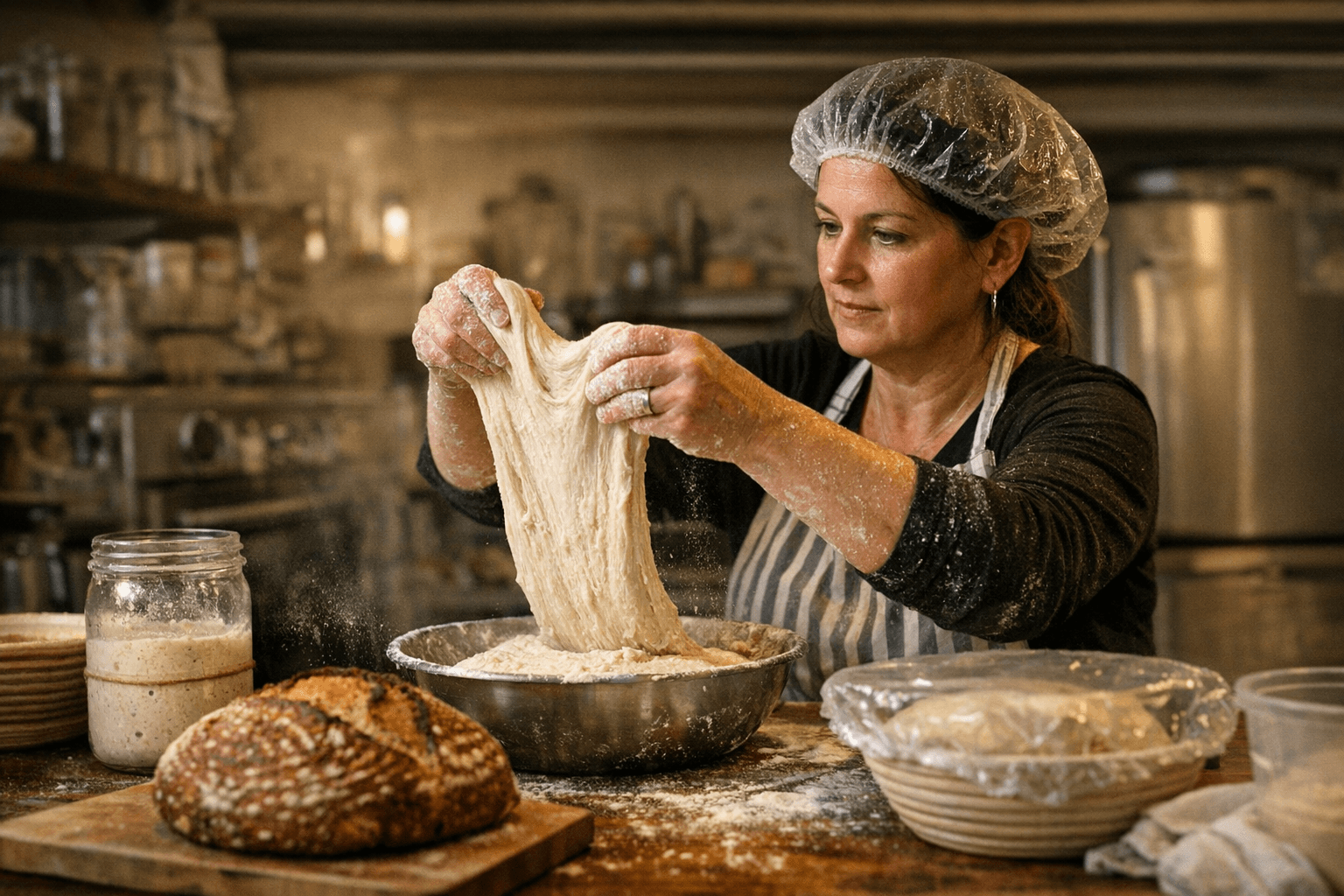
Aim for bulk fermentation at a slightly higher temperature, around 25-28°C, to encourage stronger gluten development. After this warmer bulk, cool proof to build flavor without overproofing. During bulk, replace aggressive kneading with gentle stretch-and-folds. That motion preserves gas and structure while developing dough strength; folded dough retains more open crumb than heavily worked dough.
Measure dough maturity with the poke test rather than relying on the clock alone. A dough that springs back slowly and leaves a small indentation is generally ready; times vary by starter, flour, and temperature. Control hydration in steps, raise hydration by 2-3% increments to test how the dough handles before making large jumps. Gradual increases let you adapt techniques and avoid sticky, unmanageable dough.

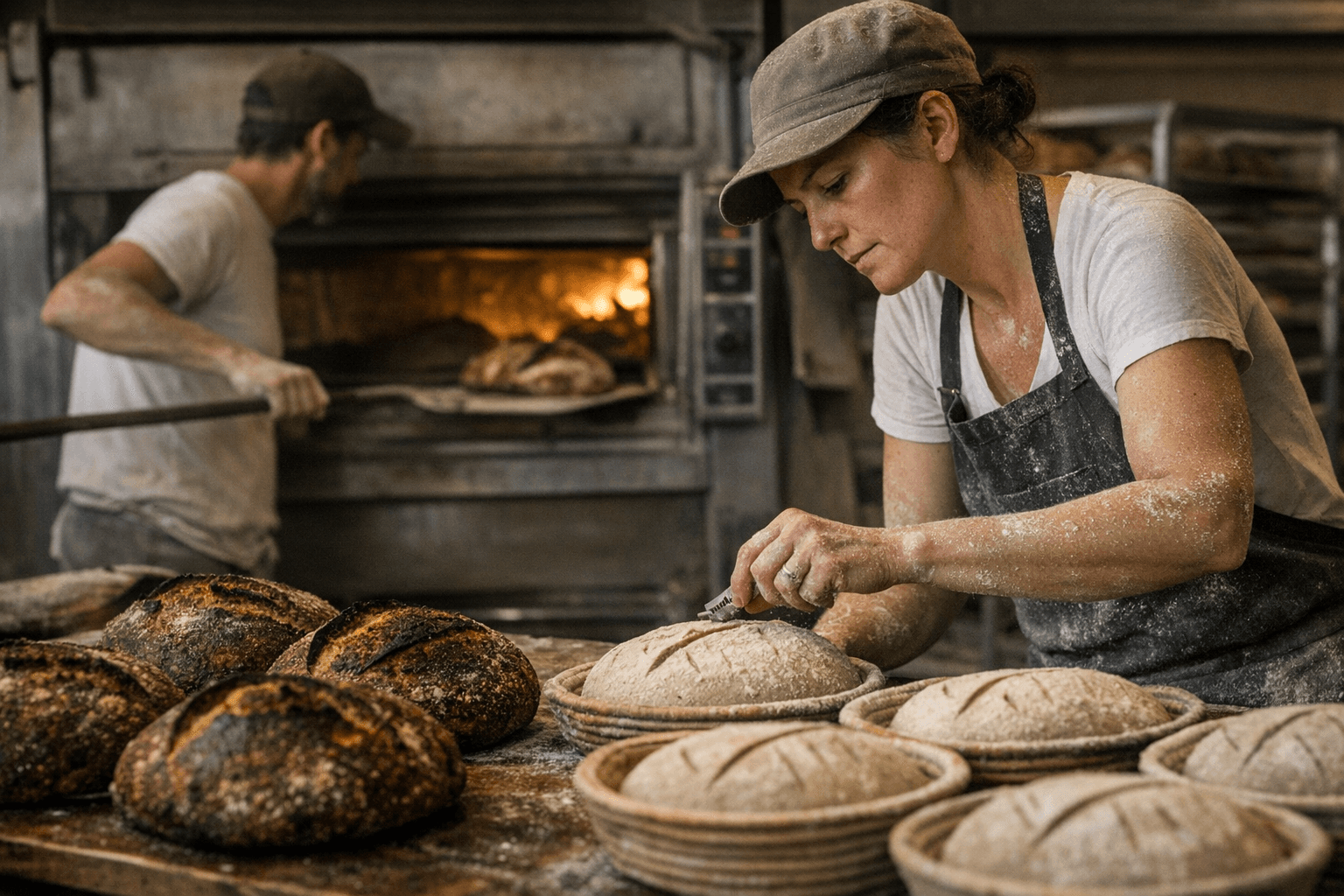
Master bench-rest shaping to create surface tension that encourages good oven spring. A tight skin on the loaf helps direct expansion upward instead of sideways. When it comes to scoring, use a fresh razor at a 30-45° angle and commit to a single decisive motion. Angle and depth directly change how the bloom opens; shallow or hesitant cuts often lead to muted ears.
Use steam in the first 10-15 minutes of the bake for better crust formation. A covered Dutch oven offers a simple, reliable steam environment; if you bake on a hearth, introduce tray steam or steaming methods that keep the surface moist early on. Finally, keep a baker’s log with starter feed details, bulk time, ambient temperature, loaf weight, and oven settings. That record is the simplest route to repeating successes and diagnosing failures.
These practices bring practical value to every bake cycle: fewer surprises, clearer adjustments, and a pathway to consistent improvements. Track the variables, make one change at a time, and watch your crumb, crust, and confidence rise.
Know something we missed? Have a correction or additional information?
Submit a Tip