Tesla Draws Down Model S and X Stock, Shifts Focus to Affordable SUV
Musk confirmed only "a few hundred" Model S and X units remain as Tesla raises prices $15,000 and pivots Fremont to Optimus robots and a Chevy Bolt-sized SUV.
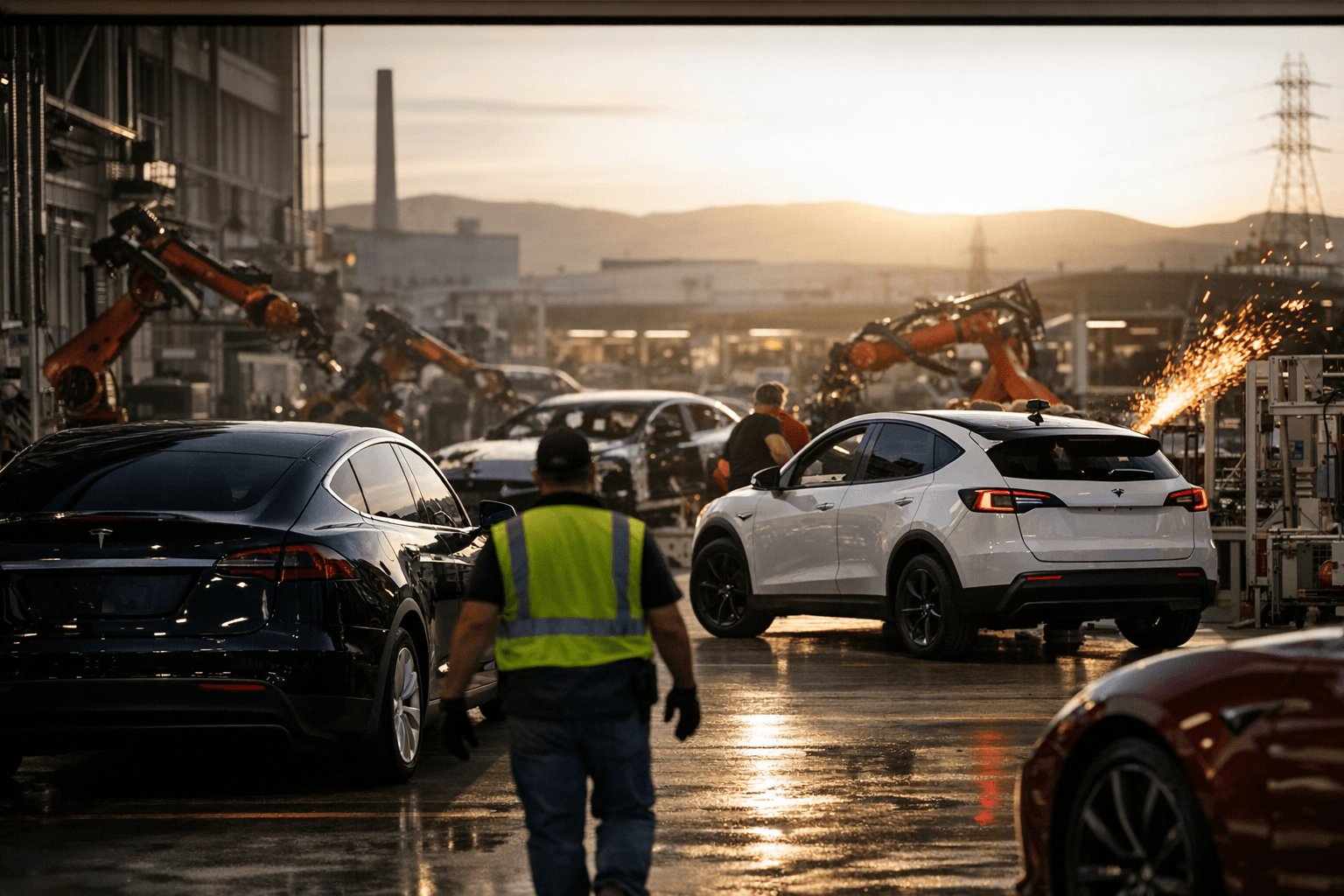
Elon Musk confirmed this week that Tesla's two flagship models are nearly gone, posting that there are "only a few hundred Tesla Model S & X cars left in inventory" and urging potential buyers to order now. The announcement came alongside a $15,000 price hike across all remaining inventory trims, pushing the Model S AWD to $109,990 and the Plaid variant to $124,900, a steep final premium on vehicles that have anchored Tesla's lineup since the Model S launched in 2012.
Custom orders for both models were quietly halted in early April, and production has already ceased. Musk first signaled the end during Tesla's Q4 2025 earnings call in January, disclosing that the company would discontinue both the Model S and Model X in the second quarter of 2026 to free up capacity at its Fremont, California factory for an entirely different purpose: manufacturing Optimus humanoid robots at a stated target of up to one million units annually. The retooling represents one of the sharpest strategic redirections in Tesla's history, clearing the floor once occupied by its most storied vehicles to make room for autonomous hardware.
At the same time, a Reuters report published April 9 revealed that Tesla is developing a compact electric SUV approximately 4.28 meters, or 168 inches, in length. That places it nearly identical in footprint to the new Chevrolet Bolt and roughly 20 inches shorter than the current Model Y, a meaningful step toward the lower price brackets the Bolt has historically occupied. Tesla intends to produce the vehicle across its factories in the United States, China, and Europe, targeting a price point closer to the Model 3 and Model Y rather than the six-figure territory the Model S and X now occupy. The compact SUV project effectively revives ambitions Tesla shelved when Musk scrapped the long-rumored "Model 2" program years earlier.
The strategic pivot carries obvious financial stakes. Some investors see the move toward volume, lower-cost models as the clearest path to defending market share as competitors, from BYD to Hyundai, continue launching affordable EVs globally. Others are less sanguine: engineering an entirely new compact platform introduces margin pressure at a moment when Tesla is already managing cost-reduction programs across its existing lineup.
The FSD software roadmap runs parallel to all of this. Musk posted optimistic signals about an upcoming FSD v15 shortly after praising incremental improvements in v14, though independent reviewers noted that similar capability claims have preceded delays in prior cycles. Any transition away from Model S and X production will also raise questions about long-term parts supply and software support commitments for existing owners, areas regulators are expected to watch closely.
For now, the concrete milestones ahead are an official product announcement for the compact SUV, revised production guidance, and any regulatory filings that would set a binding timeline for the new platform. The remaining Model S and X inventory, scattered across Tesla's service and delivery network, represents a closing chapter for the models that proved battery-electric vehicles could compete at the premium end of the market; what replaces them will be built for a very different buyer.
This article was produced by Prism’s automated news system from verified source data, official records, and press releases, then run through automated quality and moderation checks before publishing. The system is built and supervised by the people who set the standards it runs under. Read our full AI policy.
Did this article answer your question?

