Thousands of Civilian Sailors Stranded Over a Month Amid U.S.-Israeli War on Iran
Some 20,000 civilian sailors remain trapped on hundreds of ships in the Persian Gulf as Iran's closure of the Strait of Hormuz enters its second month, with at least seven dead.
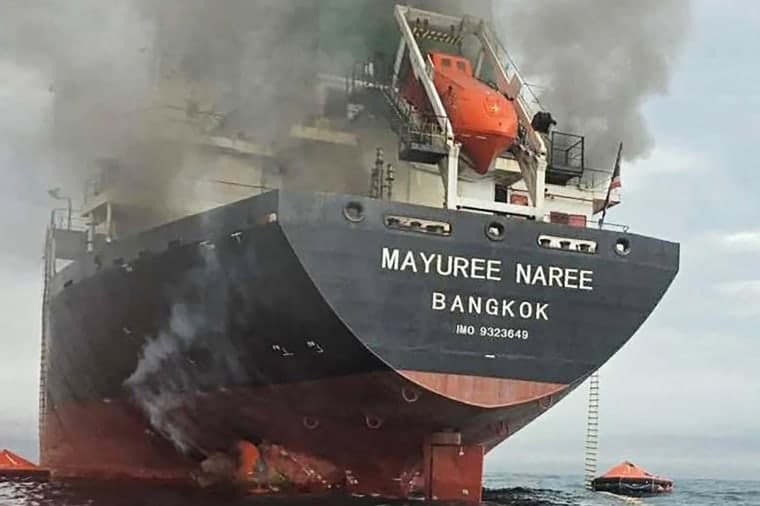
Some 20,000 civilian sailors remained trapped on hundreds of ships inside the Persian Gulf more than a month after Iran effectively shut down the Strait of Hormuz in response to the U.S.-Israeli campaign of strikes that began February 28, 2026, creating what United Nations officials described as an unprecedented maritime humanitarian crisis in the post-World War II era.
The sailors stranded on boats inside the Persian Gulf faced drone attacks, mental strain, and were in need of basic provisions such as food and water. At least seven seafarers were killed in attacks on vessels in the Gulf since the war began. An IMO spokesperson verified that 18 commercial ships in the Persian Gulf near the Strait of Hormuz had been targeted in strikes, killing seven seafarers and one port worker.
IMO Secretary-General Arsenio Dominguez declared: "Around 20,000 seafarers remain stranded in the Persian Gulf, on board ships under heightened risk and considerable mental strain. This is unacceptable and unsustainable." The UN's International Maritime Organization identified the specific vessels whose crews paid the ultimate price: at least seven known seafarer fatalities, one from the Safesea Vishnu, four from the Mussafah 2, one on the MKD Vyom, and one on the Skylight. Three mariners remained missing from the Mayuree Naree and one seafarer was missing from the Skylight.
He and three other crew members on a small oil vessel were among 20,000 sailors stranded on hundreds of ships in the Persian Gulf, after Iran effectively shut down the Strait of Hormuz in response to U.S.-Israeli strikes. The blockade of the crucial shipping route, which sent global energy prices soaring, also trapped the largely invisible workforce that keeps the world's maritime trade afloat, prolonging their time away from families and putting their lives at risk.
The contrast was stark: while normally about 130 ships pass through the Strait of Hormuz daily, virtually none were able to get through. On March 27, the IRGC formally announced the strait was closed to vessels bound "to and from" the ports of the U.S., Israel, or their allies. The IRGC subsequently opened a tolled passageway, with the past week seeing the IRGC create a tollbooth, allowing Iran to decide whether it would grant safe passage to ships for a price, using Iranian territorial waters. The toll was reported at $2 million per approved transit, payable in yuan.
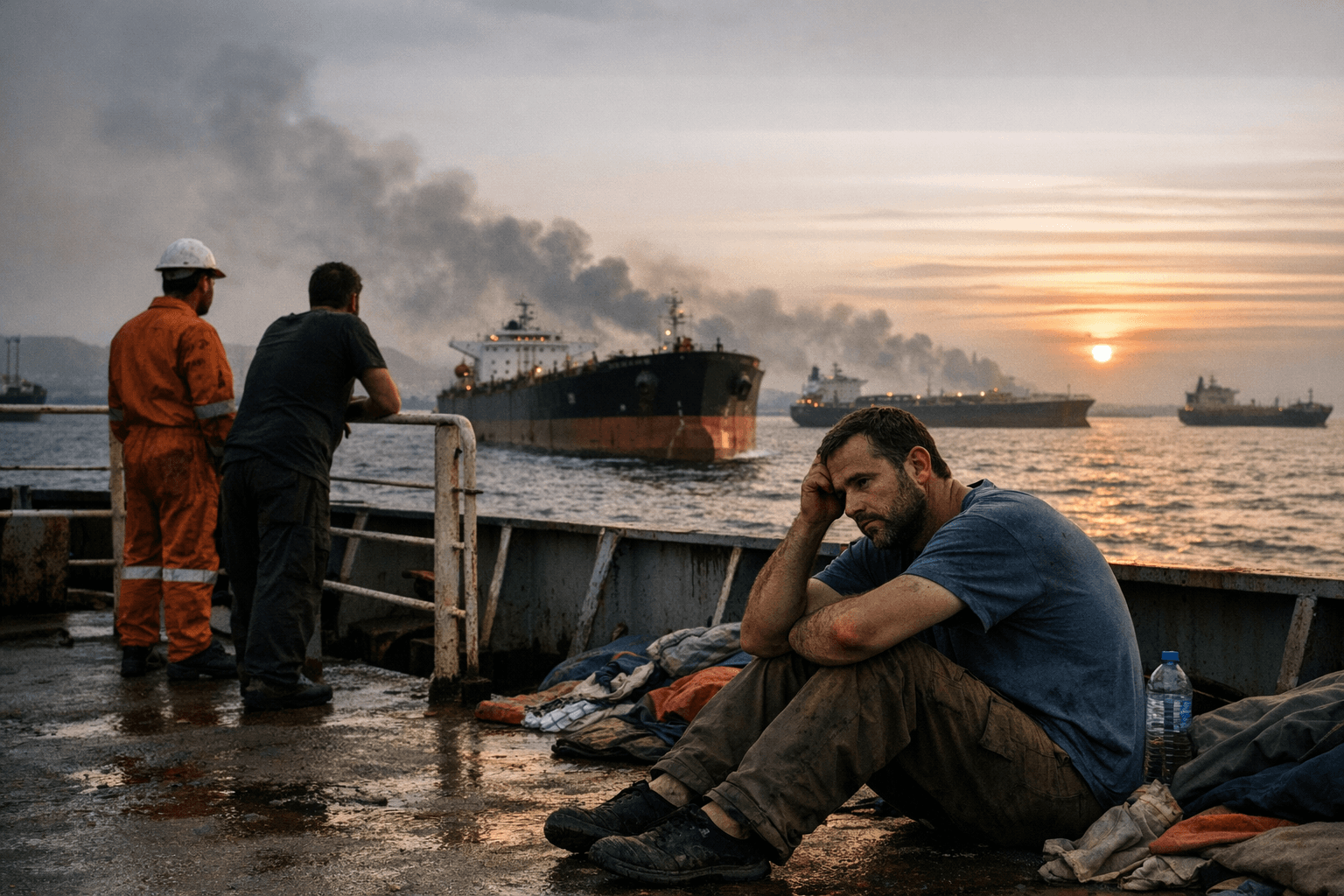
As the stranded seafarers struggled to keep their spirits up, Fleet Management executive Banga said his firm had been conducting regular check-ins with crew members who tried to maintain a routine that included leisure activities and maintenance work. "When the routine breaks down is when people start to unravel," he said. "The sun goes down, and that's when the fear comes because most of the attacks happen in the dark."
The 2,000 vessels in the Persian Gulf were being resupplied with food, water, and fuel by companies operating out of Saudi Arabia and Oman, with Saudi authorities working with the IMO to provide information to the industry about how to contact those resupply companies. The International Chamber of Shipping and the International Transport Workers' Federation held urgent talks with Gulf State representatives as the maritime crisis entered its fifth week, with thousands of seafarers still stranded in high-risk conditions, under the framework of the International Maritime Organization.
"The best solution is for those vessels to be able to pass to safety through the Strait of Hormuz, but that would require a cessation of hostilities," a UN official said. The IMO said it would start negotiating with countries to establish a humanitarian corridor to free the approximately 20,000 seafarers stranded in the Gulf. With no ceasefire in sight and the IRGC's tolled passage offering only a trickle of relief, the sailors remained at the mercy of a conflict they had no part in starting.
Know something we missed? Have a correction or additional information?
Submit a Tip