Thousands of Precise Dots Shape Geometric and Mandala Tattoos
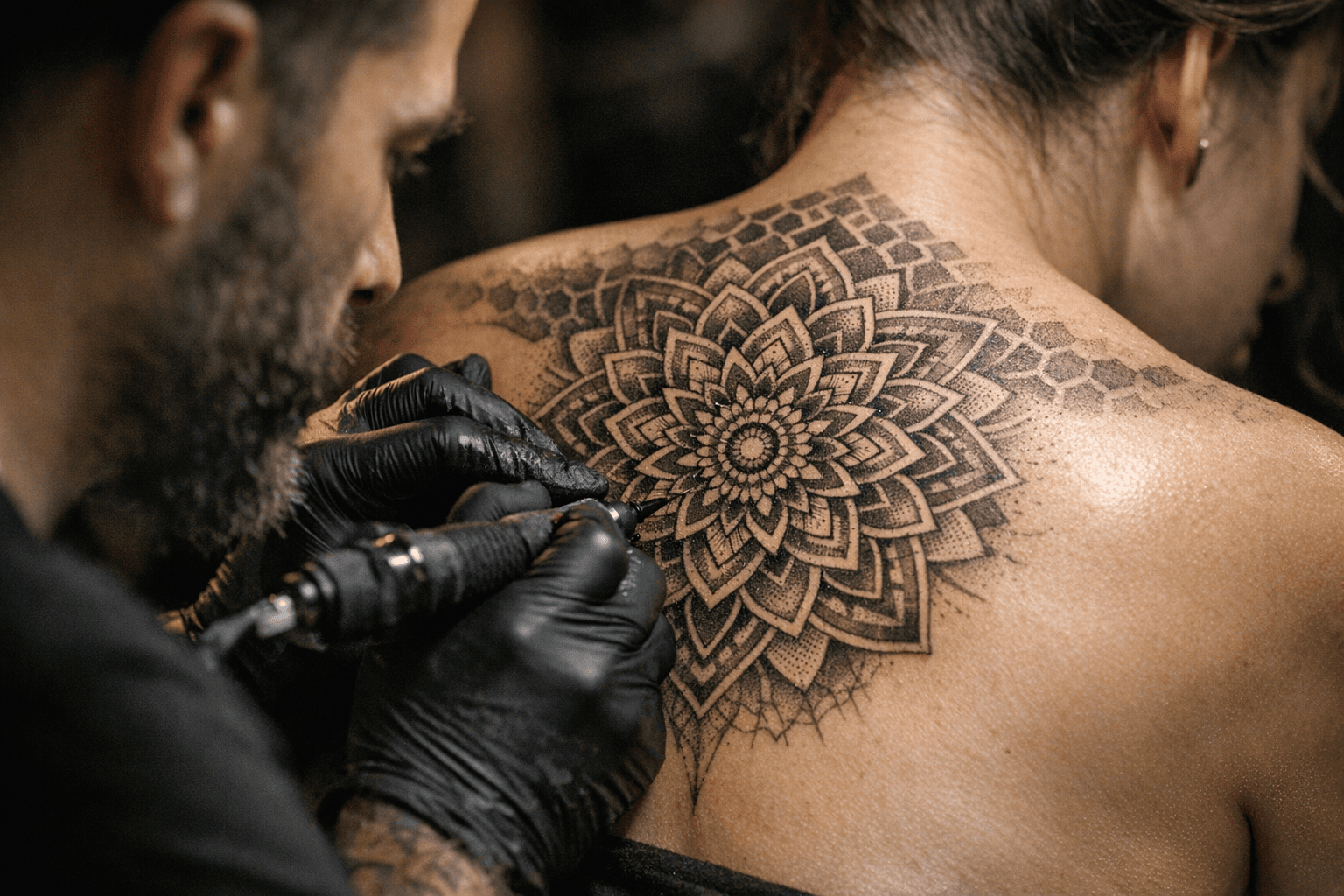
Thousands of tiny dots create the soft gradients and precise symmetry of geometric and mandala tattoos, using hand‑poke or pen machines and typically clean black/grey inks.
Georges Seurat and Paul Signac's pointillism informs what you see on skin today: thousands of small marks arranged to build mandalas, sacred geometry, and optical illusions. Dotwork—also called pointillism in tattoo terms—turns density into tone, patience into texture, and repetition into a visual language.
1. What dotwork (pointillism) tattooing is
Dotwork tattoos—also known as Pointillism tattoos—use thousands of tiny dots to build shapes, gradients, and patterns, a definition Dark Crow Tattoo puts front and center. At its core the method replaces broad shaded fills and solid blocks with individually placed points that, en masse, form lines, gradients, and full compositions. Vladblad sums the approach as intentional: "Each dot is a precise choice, building up a design layer by layer in a meditative, almost ritualistic process."
2. How tone and shading are created
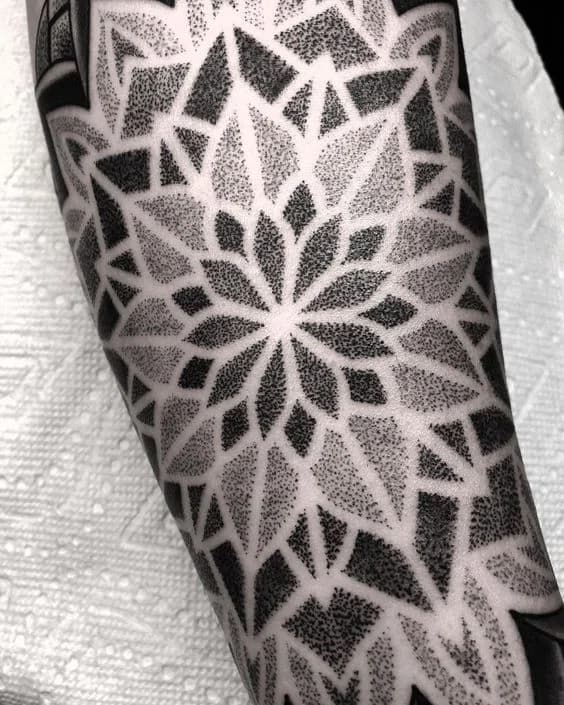
Dotwork creates light and shadow through spacing and density rather than blended pigment: the closer dots are placed, the darker the area appears; the more spaced out they are, the lighter the tone. This principle allows for incredibly smooth gradients and subtle textures—results that read as soft, almost three‑dimensional surfaces on the skin. Dark Crow Tattoo emphasizes that "gradients and shadows are achieved by varying dot spacing—not blending pigment," which is the practical rule artists follow when planning tonal maps.
3. Tools and methods: hand‑poke versus machines
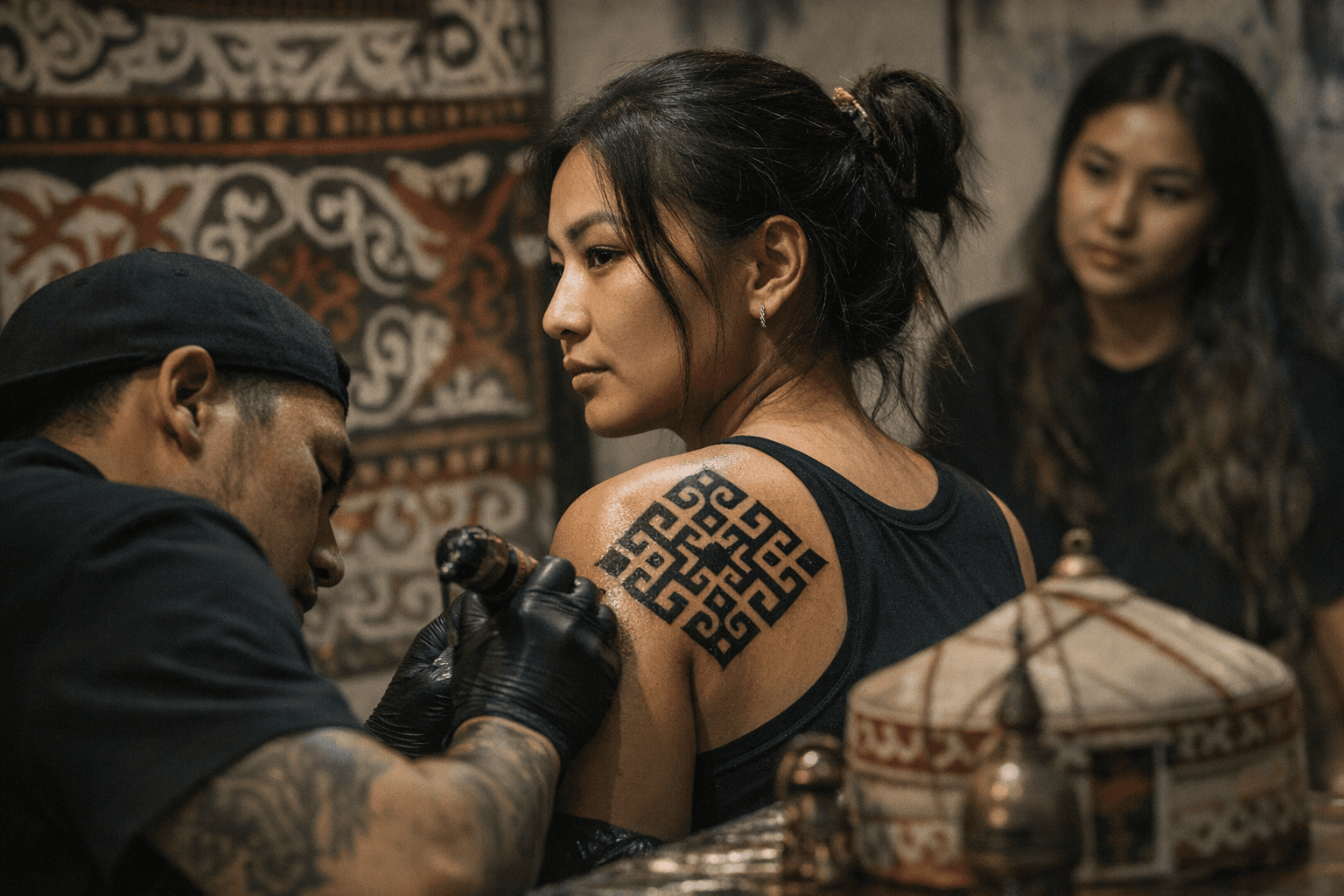
Artists use two primary approaches: the ultra‑traditional hand‑poke and modern rotary or pen‑style tattoo machines fitted with fine or single‑needle cartridges. Vladblad notes hand‑poking as an "ultra‑traditional" route while observing most contemporary specialists prefer pen‑style machines for control and efficiency during long sessions. Magnum's primer underscores the tradeoffs: dotwork "demands incredible patience and precision from the artist," and pen machines help maintain consistency over time, whereas hand‑poking preserves a measured, ritualistic pace.
4. Visual results and common motifs
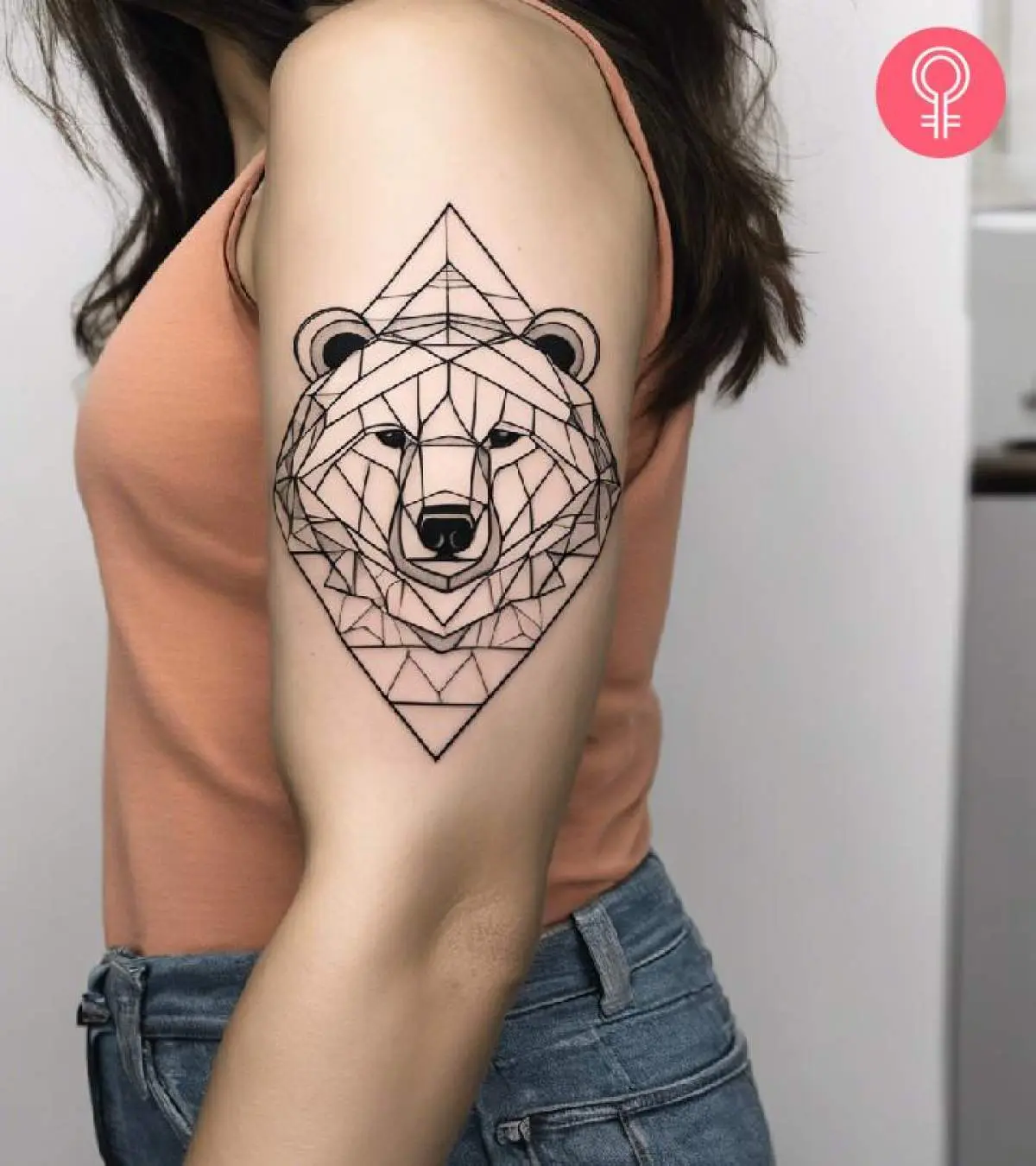
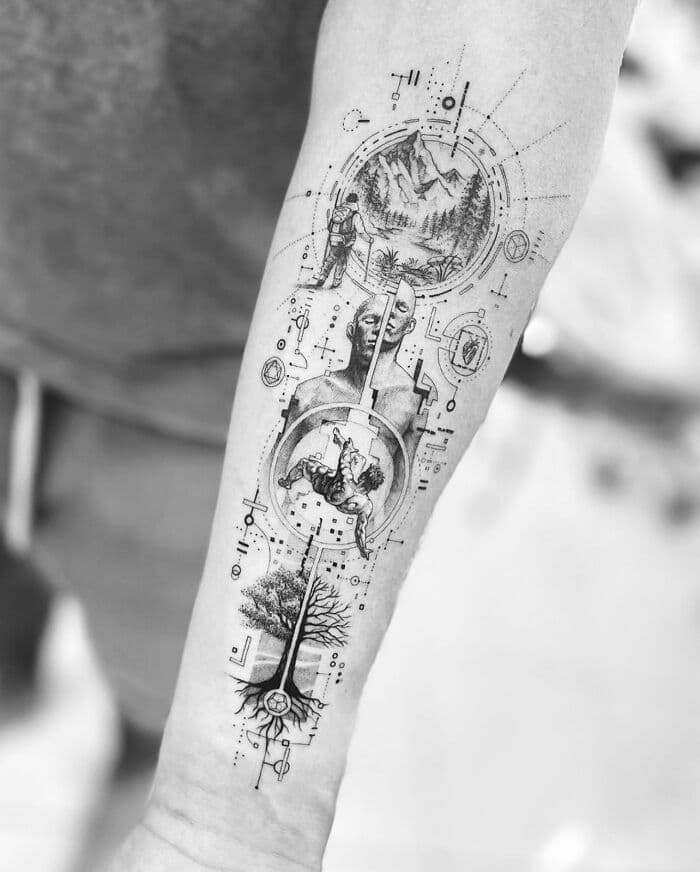
Dotwork naturally suits mandalas, sacred geometry, optical illusions, and nature‑inspired or surreal abstract designs because those compositions reward precision and repetition. The technique produces a sense of depth, flow, and texture without broad shading, yielding "smooth gradients, subtle textures, and a soft, almost three‑dimensional look," as Vladblad describes. That visual language scales from minimal ornamental bands to expansive back pieces and lends itself to both intricate micro‑work and large layered structures.
5. Historical roots and artistic lineage
Dotwork sits at a crossroads between ancient ritual and 19th‑century fine art. Sources trace the style back to tribal practices and forward to pointillism: "Fast forward to the 19th century, the fine art movement known as pointillism laid the groundwork for dotwork’s modern aesthetic. Artists like Georges Seurat and Paul Signac used thousands of individual dots to form intricate paintings — an approach that has since crossed over into tattooing," Vladblad writes. That blend of ritual and art fuels the style's symbolic weight and enduring appeal: "This blend of historical ritual and modern artistry gives dotwork a timeless appeal. It’s not just a style — it’s a language made of dots, each one placed with purpose."
6. Planning placement: body topology and symmetry
Dotwork designs benefit from space and flatness on the body for clean, crisp application and repetitive patterns, so placement planning is crucial. Dark Crow Tattoo recommends aligning pieces with the body's symmetry, movement, and skin condition, noting, "We plan each tattoo to align with your body’s symmetry, movement, and skin condition—never rushed, always thoughtful." Typical recommendations include upper arms and shoulders for visible mandalas and wristbands; thighs and calves for vertical gradients and larger panels; and back, chest, and ribs for symmetrical or layered compositions.
7. Session intensity, pain, and client expectations
Because dotwork is built point by point and often layered to achieve the desired density, sessions can be longer and more intense than conventional shading methods. Magnum warns that "this method demands incredible patience and precision from the artist and a high tolerance for pain from clients, as the process can be more intense and time‑consuming than traditional tattooing." Expect a deliberate workflow—artists will often work methodically across sections, building tone incrementally rather than rushing toward a filled area.
8. Pigment choices and longevity
The dotwork tradition as presented by studio sources centers on black and grey inks. Dark Crow Tattoo labels this approach "Clean, Timeless Black Ink," explaining that monochrome work is "perfect for long‑term readability and healing." That restraint in pigment keeps contrast crisp over time and supports the fine‑detail aesthetic that dotwork depends on, avoiding early loss of nuance that can come with color fading in tightly detailed pieces.
9. Studio practice and a working example
Shops framing dotwork as a specialty typically emphasize custom design, patience, and technical skill. "At Dark Crow Tattoo in Copenhaguen, we specialize in creating custom dotwork pieces that feel timeless, technical, and beautifully personal," the shop states, and its marketing page pitches careful planning under the header "WHY CHOOSE DARK CROW FOR YOUR pointillism TATTOO?" This illustrates a common studio approach: bespoke composition, mapped to anatomy, executed with a focus on long‑term clarity.
- Choose placement with flat, spacious canvases for repeatable geometry and crisp repetition—upper arm, thigh, back, chest and calf are frequent choices.
- Discuss technique openly: confirm whether your artist plans hand‑poke work or a pen‑style machine and why that choice suits your design and pain tolerance.
- Expect methodical, session‑by‑session builds: dotwork is layered point by point and requires time to develop density and gradients properly.
- Plan for black/grey only unless your artist explains a reason to introduce color; studios emphasize monochrome for long‑term readability and healing.
- Treat the process as part of the piece’s meaning—Vladblad captures this by saying, "But dotwork isn't just about aesthetics — it’s about intention."
10. Practical tips for artists and clients
Conclusion Thousands of precise dots do more than imitate shading; they encode rhythm, symmetry, and intent into geometric and mandala tattoos. Whether executed with an ultra‑traditional hand‑poke or a controlled pen machine, dotwork rewards planning, patience, and a monochrome palette—outcomes that contemporary studios like Dark Crow Tattoo in Copenhaguen use to position pieces as technical, timeless, and deeply personal. As the style continues to bridge ancient practice and pointillist fine art, it remains distinct: a deliberate language of marks that maps design to body and ritual to skin.
Know something we missed? Have a correction or additional information?
Submit a Tip