Trump Administration Fast-Tracks Psychedelic Drugs for Mental Illness Treatment
Trump’s April 18 order fast-tracked psychedelic research for serious mental illness, a sharp break from decades of GOP drug politics. Veterans and bipartisan pressure helped drive the pivot.
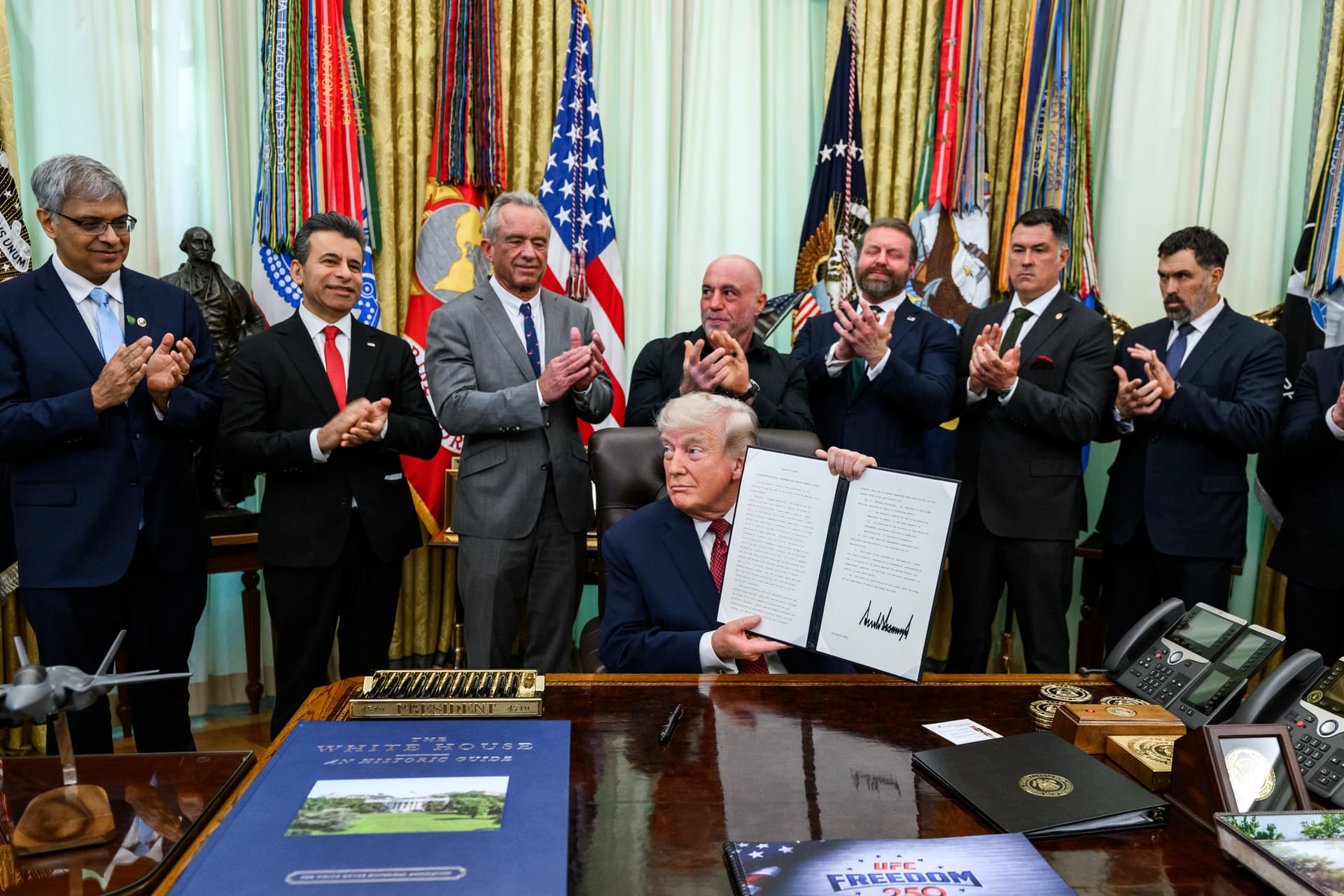
A president who inherited the politics of the War on Drugs has now told federal agencies to clear a faster path for psychedelic medicines. Donald Trump signed an executive order on April 18, 2026, titled Accelerating Medical Treatments for Serious Mental Illness, directing the government to speed research, review and approval of psychedelic drugs for serious mental illness.
The White House said the order was meant to remove barriers to psychedelics as potential treatments for serious mental illness. The Food and Drug Administration followed with its own regulatory actions to support development of serotonin-2A agonists and related products, a category that includes perception-altering psychedelic medications. The agency then issued Commissioner’s National Priority Vouchers and other fast-track measures for studies of psilocybin for treatment-resistant depression, psilocybin for major depressive disorder and methylone for post-traumatic stress disorder.

The administration’s move marks a striking reversal for a party that spent decades treating psychedelics as political poison. Psilocybin and LSD were folded into the broader anti-drug politics of the 1960s and later the War on Drugs, reinforced by counterculture associations, media sensationalization, legislative restrictions and scientific criticism. That history made the current Republican embrace especially notable, because the new policy is not simply a nod to medical innovation. It is also a break with a long conservative orthodoxy that once treated these compounds as symbols of social disorder.
Veterans’ politics helped push the issue into the mainstream. On April 4, 2025, Reps. Lou Correa, D-Calif., and Jack Bergman, R-Mich., introduced the Innovative Therapies Centers of Excellence Act of 2025, which would require the Department of Veterans Affairs to create five centers of excellence to study psychedelic therapies. In July 2025, Congress advanced language directing the VA to research MDMA, ibogaine, ketamine and psilocybin for veterans with anxiety, bipolar disorder, chronic pain, depression, Parkinson’s disease, PTSD and substance use disorder.
The VA has already widened its footprint. As of July 2025, the department said it had 12 clinical research studies on psychedelic treatment underway at 9 VA medical centers. The pressure continued into 2026, when Sens. Ruben Gallego, D-Ariz., and David McCormick, R-Pa., introduced bipartisan legislation on March 9 to expand federally funded research into innovative therapies for veterans with PTSD, substance use disorder and depression.
The shift is unfolding inside a broader policy surge. In 2025, more than three dozen psychedelics-related bills were introduced across more than a dozen states, even after setbacks in 2024, including Massachusetts’ Question 4 and local opt-outs from Oregon’s regulated psychedelic program. The FDA stressed that its actions do not mean psychedelic drugs are approved or proven safe and effective, but the federal endorsement has given a once-radioactive field its strongest support yet.
This article was produced by Prism’s automated news system from verified source data, official records, and press releases, then run through automated quality and moderation checks before publishing. The system is built and supervised by the people who set the standards it runs under. Read our full AI policy.
Did this article answer your question?

