Trump Claims Victory in Iran While Sending More Troops to Middle East
Within hours Friday, Trump posted about winding down the Iran war while his administration confirmed new troop deployments and lifted oil sanctions for the first time in decades.
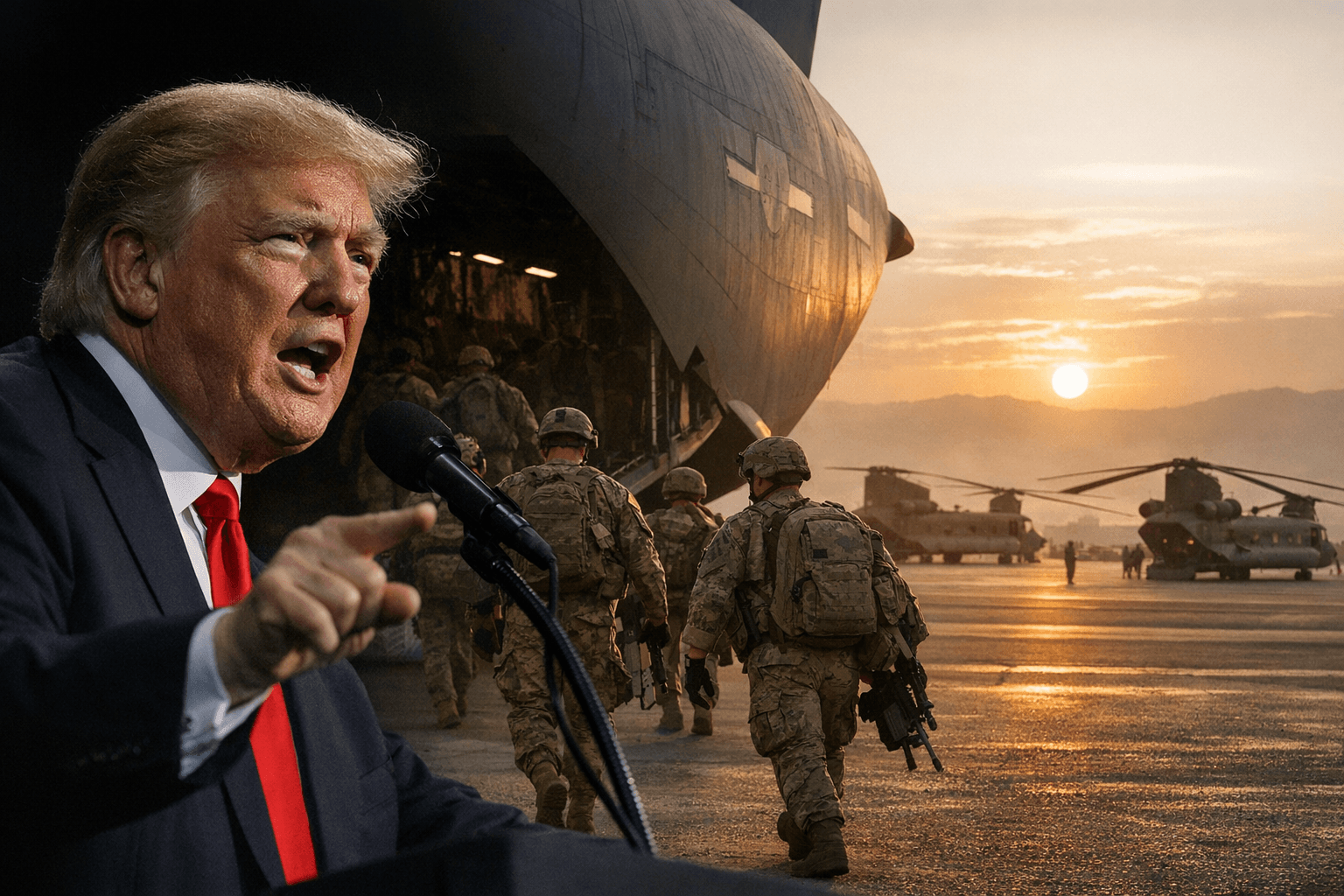
The war in Iran was nearly won, Trump said Friday. His administration also confirmed, on the same day, that it was sending more troops to the Middle East.
Within the space of a few hours Friday afternoon, Trump posted on his social media network that he was considering "winding down" military efforts, the Pentagon confirmed additional deployments to the region, and Washington lifted sanctions on some Iranian oil for the first time in decades, a step taken to ease pressure on global energy markets. The compressed sequence captured what critics have characterized as an absence of coherent long-term strategy for a conflict now in its fourth week, with the endgame still unclear.
"We are getting very close to meeting our objectives as we consider winding down our great Military efforts in the Middle East," Trump wrote on his social media platform Friday afternoon, following another rough day in the financial markets.
The statement arrived against a backdrop of sharply escalating rhetoric Trump had deployed in the weeks prior. On March 6, he demanded "no deal with Iran except UNCONDITIONAL SURRENDER!" and predicted Iran would "have a great future" under new leadership. Three days later, addressing the Strait of Hormuz, through which about one-fifth of the world's oil supply travels, he warned: "We will hit them so hard it will not be possible for them or anybody else helping them ever recover that section of the world."
On that same Friday, Trump also suggested the U.S. could exit the conflict without first stabilizing the Strait, a position that appeared to contradict his March 9 pledge to keep it safe. The strait has been battered by Iranian missile, drone and mine attacks during the war.
The administration's stated military objectives, articulated on March 2, remained formally in place. Defense Secretary Hegseth described a "clear, devastating, decisive mission: destroy the missile threat, destroy the navy, no nukes." Joint Chiefs of Staff Chair Gen. Dan Caine said the goal was to "prevent Iran from the ability to project power outside of its borders." Vice President JD Vance was direct: "Iran can never be allowed to obtain a nuclear weapon. That is the goal of this operation and President Trump will see it through to completion."
Trump separately contended the U.S. had adequately degraded Iranian naval, missile and industrial capacity and prevented Tehran from acquiring a nuclear weapon, though no independent public assessment has corroborated the degree of that degradation.
The sanctions move added another contradictory layer. By lifting restrictions on some Iranian oil, Washington relieved a form of economic pressure it has traditionally used as leverage, even as military operations continued. Trump initially said major combat operations would likely conclude in four to five weeks. Since then, he has described the war as "already won" while also insisting the U.S. still needs to "finish the job" and that operations may need to go "further."
The endgame of a war that Trump declared won, continued to fight, and began winding down all within the same afternoon remains, by the administration's own accounting, unclear.
Know something we missed? Have a correction or additional information?
Submit a Tip

