Trump Gives Iran 48-Hour Ultimatum Amid Missing Pilot Search
Trump gave Iran a 48-hour deadline to open the Strait of Hormuz or face "all Hell," as the closure hammers oil markets and a missing F-15 crew member remains unaccounted for inside Iran.
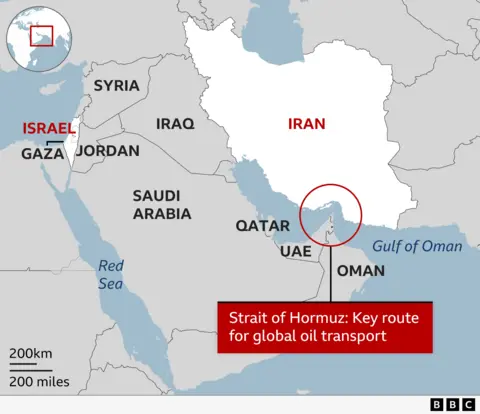
The 21-mile-wide chokepoint at the Strait of Hormuz has become the hinge on which the global economy now turns, and President Donald Trump gave Iran until Monday to swing it open or face what he called "all Hell."
In a three-sentence post Saturday on Truth Social, Trump invoked a 10-day deadline he had set on March 26 and compressed it to a final countdown: "Time is running out — 48 hours before all Hell will reign down on them. Glory be to God!" The ultimatum arrived on the 35th day of Operation Epic Fury, the joint U.S.-Israeli campaign launched on February 28, and with an American F-15E Strike Eagle crew member still missing in Iranian territory.
The economics behind the threat are severe. The strait handles roughly 20 percent of the world's daily oil and LNG supply, and its disruption caused Brent crude prices to jump 10 to 13 percent in early trading, with analysts warning prices could reach $100 per barrel or higher if disruptions persist. Wall Street analysts and U.S. government officials have begun considering the prospect that oil could surge to an unprecedented $200 a barrel. Bloomberg Economics has modeled scenarios where oil around $170 a barrel roughly doubles the impact on inflation and growth, a stagflationary shock that could shift the path ahead for central banks.
The toll on shipping is already measurable. War-risk insurance premiums for the strait quadrupled before the strikes even began, climbing from 0.125 percent to between 0.2 and 0.4 percent of a vessel's insured value per transit, an added cost of roughly a quarter of a million dollars per supertanker voyage. Major carriers suspended transits and rerouted vessels around the Cape of Good Hope, driving up both tanker and container shipping costs well beyond the Gulf region, with elevated freight rates likely to persist across multiple trade lanes as long as instability continues.
For U.S. consumers, the damage is indirect but compounding. Federal Reserve Bank of Chicago President Austan Goolsbee warned the Iran war risks fueling inflation, which would make it harder for the central bank to ease interest rates in 2026. The 10-year Treasury yield has risen roughly half a point over the course of the war to 4.4 percent, reflecting worries about inflation and the prospect that the Fed may not cut interest rates as it had hoped.
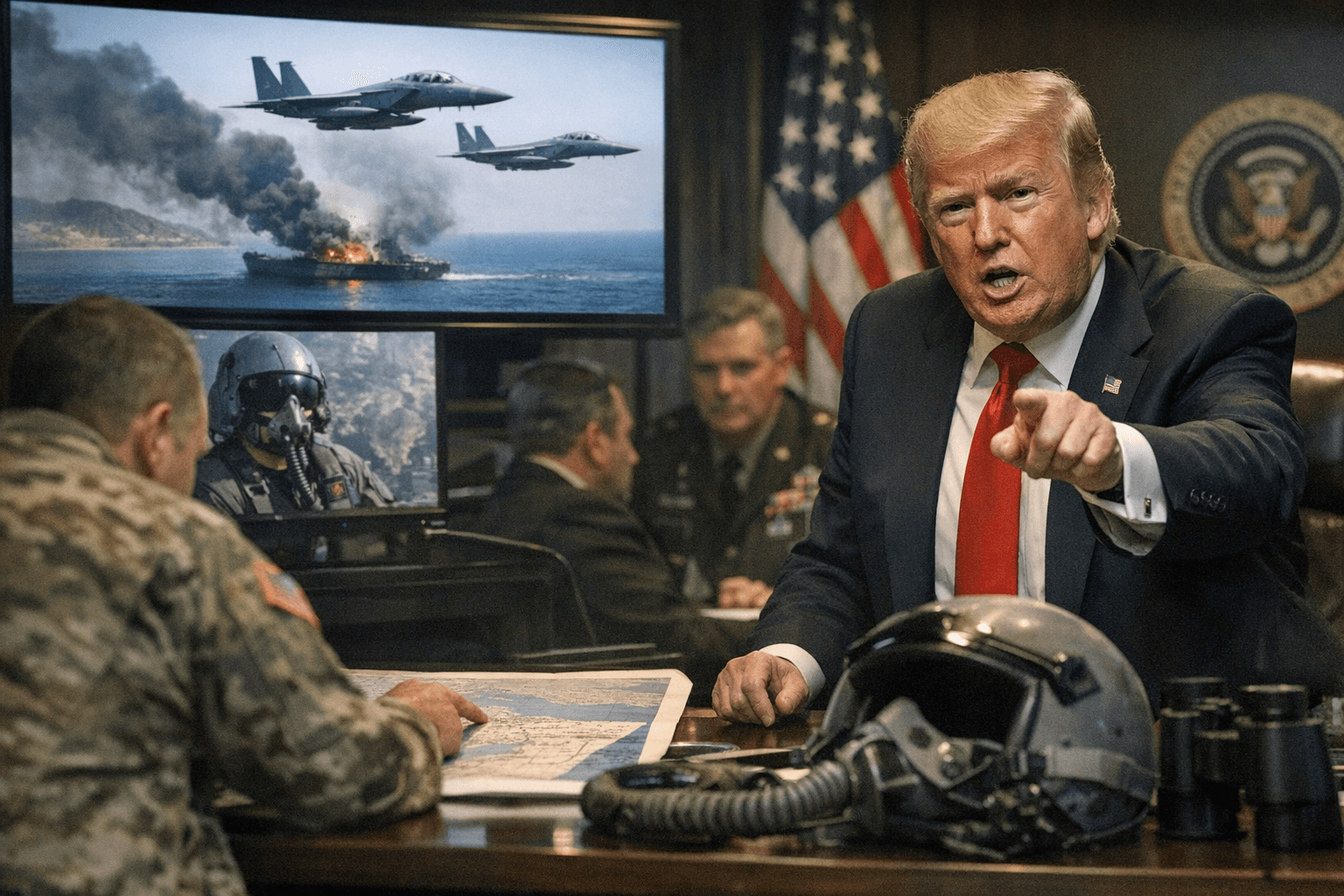
Trump's primary stated lever is military force against Iranian infrastructure. On Thursday he threatened to strike more of Iran's bridges and electrical infrastructure, and a strike hit the B1 bridge in Karaj, a city near Tehran, that same night. Senator Lindsey Graham backed the ultimatum without reservation Saturday, writing that after speaking with Trump he was "completely convinced that he will use overwhelming military force against the regime if they continue to impede the Strait of Hormuz and refuse a diplomatic solution."
The diplomatic lane is narrow and moving slowly. Italian Prime Minister Giorgia Meloni traveled to Doha to meet Qatar's Emir Sheikh Tamim bin Hamad Al-Thani, with both leaders reaffirming the necessity of opening the strait. Iran said it will grant permission for vessels carrying "essential goods" through the strait but has not provided specific terms. Meanwhile, Iran threatened "devastating strikes" against U.S. and Israeli assets ahead of the April 6 deadline, with spokesman Ebrahim Zolfaghari saying Iran's armed forces would respond with "overwhelming force" to any further escalation.
The missing F-15E crew member sharpens every calculation. One service member was rescued and at least one remains missing after Iran shot down two U.S. military planes in separate attacks. Two Black Hawk helicopters involved in the search were struck by Iranian fire before managing to leave Iran. Iran's Revolutionary Guard said it was searching an area in south-western Iran where the jet came down, while a local official offered a reward for anyone who captures or kills "enemy forces."
Marina Miron, a researcher at King's College London, said the shooting down of the F-15 undercuts statements from Trump and Pentagon chief Pete Hegseth that the U.S. has established complete control over Iranian airspace. She added that Iran's man-portable air defenses are "much more difficult to locate," a reality that complicates any rescue effort and, with it, the pressure calculus behind Monday's hard deadline.
Sources:
Know something we missed? Have a correction or additional information?
Submit a Tip