Trump presses Congress to ban lawmaker stock trades as committee advances reform
President Trump urged passage of a congressional stock-trading ban and singled out Nancy Pelosi; the Senate committee advanced the Honest Act amid sharp partisan splits.
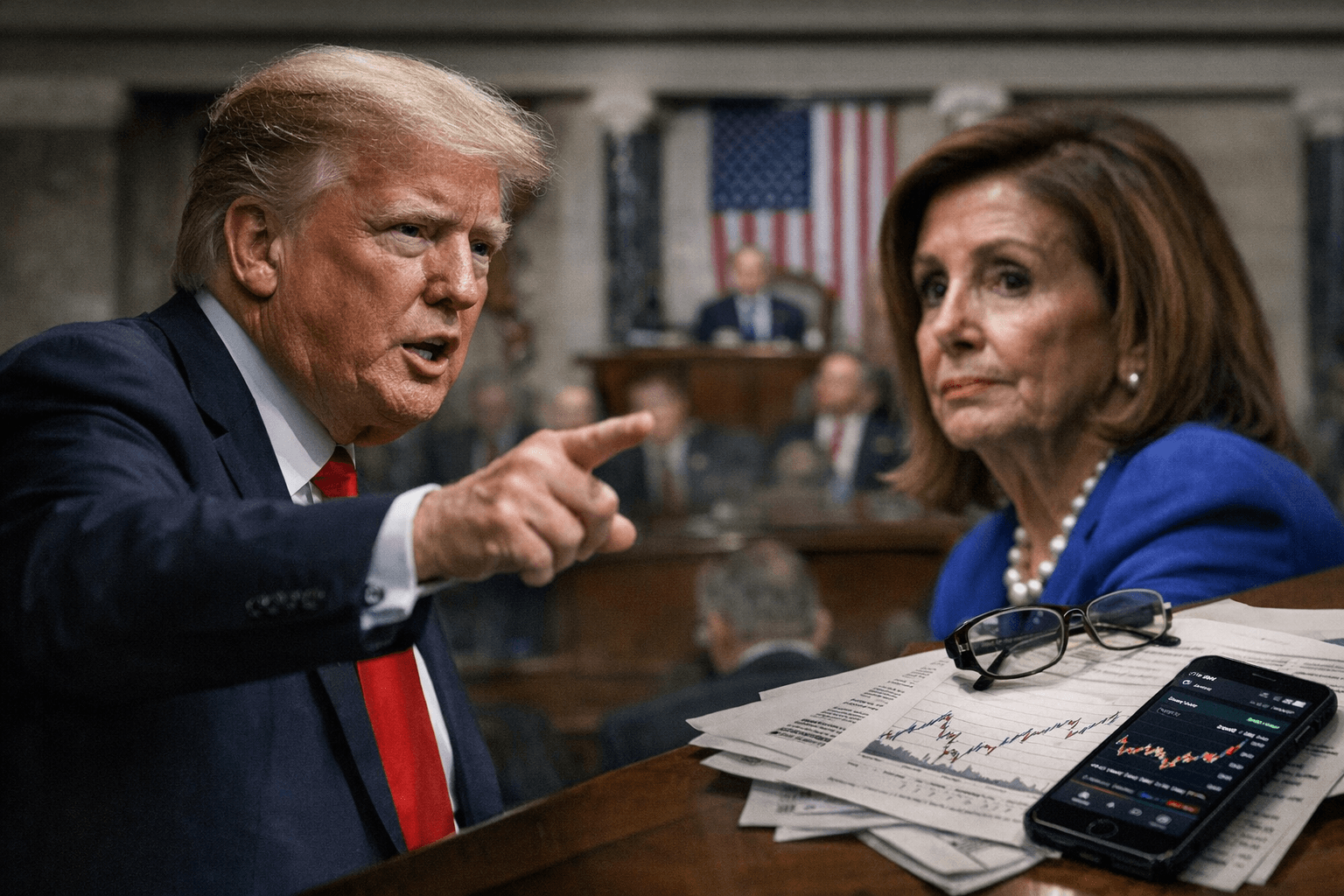
President Donald Trump used his address to press Congress to outlaw stock trading by members and to spotlight former House Speaker Nancy Pelosi, urging lawmakers to move quickly and naming specific reforms that could reshape ethics rules on Capitol Hill. “Let’s also ensure that members of Congress cannot corruptly profit from using insider information,” he said, and he urged lawmakers to “pass the Stop Insider Trading Act without delay.” Trump also ad-libbed a direct challenge to Pelosi: “They stood up for that. I can’t believe it. I can’t believe it. Did Nancy Pelosi stand up, if she’s here? Doubt it.”
The remarks came as the Senate Homeland Security and Governmental Affairs Committee advanced a measure known as the Honest Act on Wednesday, an early procedural step that supporters hailed as progress and opponents said still faces steep hurdles. Sen. Josh Hawley, who has championed a parallel bill originally titled the PELOSI Act, was the only Republican on the committee to back the measure, underscoring a partisan split that could block floor consideration. “I had a good chat with the president earlier this evening and he reiterated to me he wants to see a ban on stock trading by people like Nancy Pelosi and members of Congress,” Hawley said.
Legislative proposals in play differ in scope. A House bill styled the Stop Insider Trading Act would prohibit members, their spouses and dependent children from purchasing publicly traded stocks and would require advance public notice before any sale, aiming to go beyond the STOCK Act disclosure regime. Hawley’s Preventing Elected Leaders from Owning Securities and Investments Act would bar members and spouses from trading while in office. The Honest Act further expands language to cover the White House, though its sponsors say it would not apply to the president or to J.D. Vance until they leave office. An aggregated briefing accompanying the speech also identified J.D. Vance as a point person to lead anti-fraud efforts, and Trump proposed additional measures including using tariff revenue to supplant the income tax and limiting investment firms from buying housing.
The push to tighten rules was fueled by recurring scrutiny of members’ investments. Disclosure filings have shown that Paul Pelosi purchased more than $1 million in Nvidia shares in 2022 before Congress voted on semiconductor subsidies, a transaction critics have cited as emblematic of a broader problem. At a White House briefing, press secretary Karoline Leavitt framed the issue around Pelosi’s finances, saying, “She’s the reason Congress is eyeing a measure to ban all lawmakers from trading stocks.” Leavitt added, “I mean, she is rightfully criticized because she makes $174,000 a year. Yet she has a net worth of approximately $413 million. In 2024, Nancy Pelosi's stock portfolio, this was a fascinating statistic to me, grew 70% in one year in 2024.”
Pelosi pushed back, saying she supports ending trading by members and denying improper conduct. “I very much support stopping the trading of members of Congress,” she told CNN. “Not that I think anyone is doing anything wrong, if they are, they should be prosecuted. But it instills confidence in the American people.” She added, “I’m not into it. My husband is, but it isn’t anything to do with anything insider.”
Republican committee members signaled skepticism about new legislation. Sen. Ron Johnson called the proposal “obnoxious” and pointed to existing insider-trading laws and disclosure rules, saying “if I were to start trading stocks, you'd know about it right away.” Senate Republican leadership framed the partisan calculus bluntly: Sen. John Thune said he doubted “we put anything on the floor that just had one Republican on it.”
The political and procedural fight now shifts to exact text, floor strategy and enforcement mechanisms. Trump also announced a retirement-savings plan to match worker contributions up to $1,000 a year for employees without employer matches, a separate policy pitch that could intersect with broader legislative negotiations. Key follow-ups will include release of bill text, committee vote tallies, and confirmation of any White House assignments tied to the anti-fraud effort.
This article was produced by Prism’s automated news system from verified source data, official records, and press releases, then run through automated quality and moderation checks before publishing. The system is built and supervised by the people who set the standards it runs under. Read our full AI policy.
Did this article answer your question?

