Trump taps Erica Schwartz to lead CDC amid vaccine policy clash
Trump chose Erica Schwartz to run the CDC, but her real test will be whether she can steer vaccine policy under Robert F. Kennedy Jr.'s control.
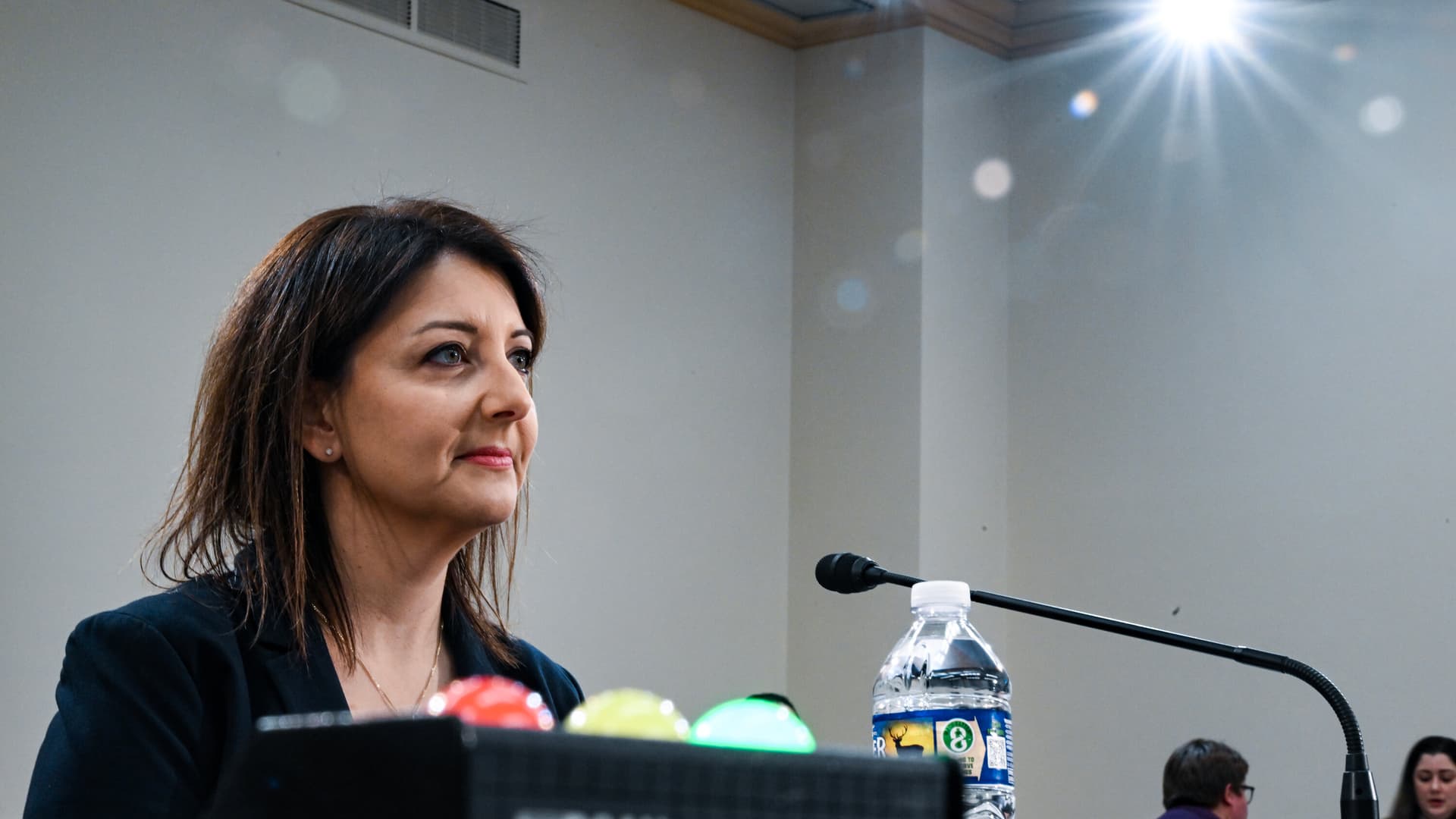
President Donald Trump on April 16 tapped Erica Schwartz, a former deputy surgeon general and retired rear admiral, to lead the Centers for Disease Control and Prevention, casting her as a steady hand for an agency that has spent much of Trump’s second term without a permanent director. Trump said Schwartz would restore the CDC’s “gold standard of science,” a signal that the White House wants the agency’s authority rebuilt even as vaccine policy remains a political fault line.
Schwartz arrives with credentials that are likely to make Senate confirmation less turbulent than many recent health nominees. She served as deputy surgeon general during Trump’s first term, was chief medical officer for the Coast Guard, and played a direct role in the federal COVID-19 response. A physician, she earned her medical degree from Brown University in 1998, completed a master of public health at the Uniformed Services University of the Health Sciences in 2000, and later obtained a law degree and admission to the District of Columbia bar. Public health groups and some lawmakers have treated her as a more traditional choice, in part because she has no public record of opposing vaccines.
The sharper question is whether that résumé can withstand the political structure around it. The CDC director traditionally has the final say on U.S. vaccine policy, but Schwartz would report to Health and Human Services Secretary Robert F. Kennedy Jr., who has long questioned vaccine safety and pushed to rewrite federal immunization policy. That tension has already shaped the agency’s recent history. Trump fired CDC Director Susan Monarez in August 2025 after a dispute over vaccine policy, less than a month after she was sworn in on July 31, 2025 as the first Senate-confirmed CDC director. Jim O’Neill then served as acting director before NIH Director Jay Bhattacharya took over as acting CDC chief in February 2026. Bhattacharya is still carrying out the delegable duties of the office while Schwartz awaits confirmation.
The upheaval has not been limited to staffing. After Monarez was fired, O’Neill signed off on decisions to reduce the number of vaccines recommended for children and remove the universal recommendation for the hepatitis B vaccine at birth. A federal judge later paused major vaccine policy changes, including changes to the childhood immunization schedule, and experts said the administration had not yet appealed. HHS also updated the charter for the Advisory Committee on Immunization Practices, broadening eligibility and expanding the panel’s mandate even as the court-ordered stay remained in effect.
Trump paired Schwartz’s nomination with three other appointments: Sean Slovenski, former president of Walmart Health, as CDC deputy director and chief operating officer; Texas health commissioner Jennifer Shuford as deputy director and chief medical officer; and Sara Brenner, the Food and Drug Administration’s principal deputy commissioner, as senior counselor for public health to Kennedy. For Schwartz, the first tests are already clear: staffing, messaging, outbreak response and vaccine policy, all inside an administration where the CDC’s independence will be tested from the start.
This article was produced by Prism’s automated news system from verified source data, official records, and press releases, then run through automated quality and moderation checks before publishing. The system is built and supervised by the people who set the standards it runs under. Read our full AI policy.
Did this article answer your question?