Trump Vows to Bomb Iran Back to Stone Ages Within Weeks
Trump pledged two to three more weeks of strikes on Iran, as Brent crude surged 5% and U.S. average gas prices crossed $4 a gallon for the first time since 2022.
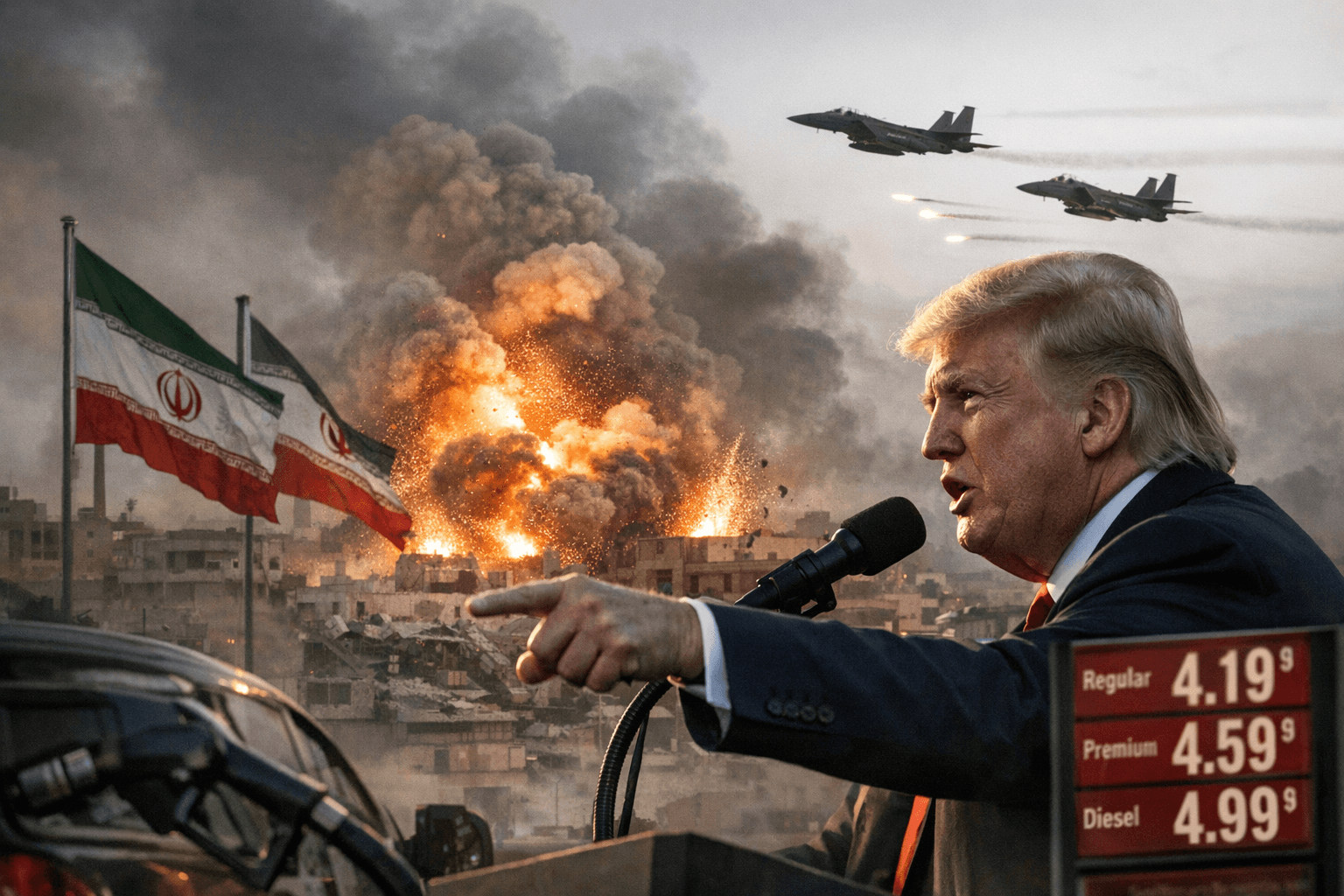
In his first formal address to the nation since launching Operation Epic Fury, President Donald Trump told Americans on Wednesday night that the United States would bomb Iran "extremely hard" over the next two to three weeks, vowing to "bring them back to the stone ages where they belong." Five weeks into the joint U.S.-Israeli military campaign, the speech drew immediate market consequences: Brent crude surged sharply following Trump's latest vow, and U.S. average gasoline prices crossed $4 per gallon for the first time since 2022.
Trump declared the military's "core strategic objectives are nearing completion" and threatened to destroy Iran's power plants, oil wells, Kharg Island (Iran's primary oil export terminal), and possibly all desalination plants if Tehran failed to reach a deal. He told NBC News separately that "a large amount of leadership" in Iran had been killed.
Hours before the speech, Trump posted on Truth Social claiming Iran's "New Regime President" had requested a ceasefire, saying the United States would "consider" it only once the Strait of Hormuz was "open, free, and clear," warning the U.S. would continue "blasting Iran into oblivion" in the meantime. Iran's Foreign Ministry and the IRGC immediately denied any ceasefire request, calling Trump's claims "false and baseless." Iran's sitting President Masoud Pezeshkian had separately written a letter suggesting openness to ending the conflict, but new Supreme Leader Mojtaba Khamenei had publicly contradicted that position.
The Strait of Hormuz, through which approximately 20% of the world's oil supply transits, has been at near-complete standstill, with no tankers transiting the strait on March 31. The International Energy Agency characterized the disruption as the "largest supply disruption in the history of the global oil market." Brent crude surpassed $100 per barrel on March 8 for the first time in four years, rising to $126 per barrel at its peak. U.S. officials and Wall Street analysts now openly discuss the possibility of prices reaching $200 per barrel, a scenario the IRGC explicitly threatened. The Dallas Fed estimated global real GDP growth in 2026 could fall 0.2 to 0.3 percentage points depending on whether the disruption extends one or two quarters.
Privately, Trump has signaled to aides he is willing to end the war without the strait being reopened. Defense Secretary Pete Hegseth reinforced that at a Pentagon press conference, declining to identify reopening the Strait of Hormuz as a "core objective" of Operation Epic Fury, listing only the elimination of Iran's nuclear capabilities, ballistic missile manufacturing, and its navy. White House Press Secretary Karoline Leavitt suggested Trump could achieve those objectives by mid-April: "The Pentagon has always stated four to six weeks as an estimated timeline for Operation Epic Fury. We're on day 30 today."
The campaign that began February 28 with the killing of Supreme Leader Ayatollah Ali Khamenei has eliminated much of Iran's senior leadership, including Supreme National Security Council Secretary Ali Larijani on March 17. Israel completed over 230 strikes against Iranian infrastructure through March 31. On April 1, former Iranian foreign minister Kamal Kharazi, who had been facilitating back-channel engagement with Pakistan on a possible diplomatic meeting, was seriously injured in an airstrike on his home; his wife was killed. Mojtaba Khamenei, appointed as the new supreme leader on March 8 with 59 of 88 Assembly of Experts votes, has not appeared in any photograph or video since, raising questions about his condition.
No large-scale popular uprising against the Iranian regime has materialized. Analysts from the Brookings Institution and the Council on Foreign Relations note that killing top leadership without changing government structures falls short of true regime change; PolitiFact rated Trump and Hegseth's claims of having achieved "regime change" as "Mostly False." Iran has launched retaliatory strikes against Bahrain, Israel, Jordan, Kuwait, Qatar, Saudi Arabia, and the UAE, drawing a defensive military response from the United Kingdom. U.S.-allied Gulf states, including Saudi Arabia, the UAE, Kuwait, and Bahrain, have pressed Trump to continue the war until significant changes in Iran's leadership are achieved, even as experts warn the IRGC has grown more entrenched and ideologically hardened under the pressure of the campaign.
Sources:
Know something we missed? Have a correction or additional information?
Submit a Tip