Trump Weighs Limited Strikes on Iran After Talks Collapse
Talks in Islamabad ended after 21 hours, and Trump’s response may be a strike that risks Hormuz, oil shocks and a wider war.
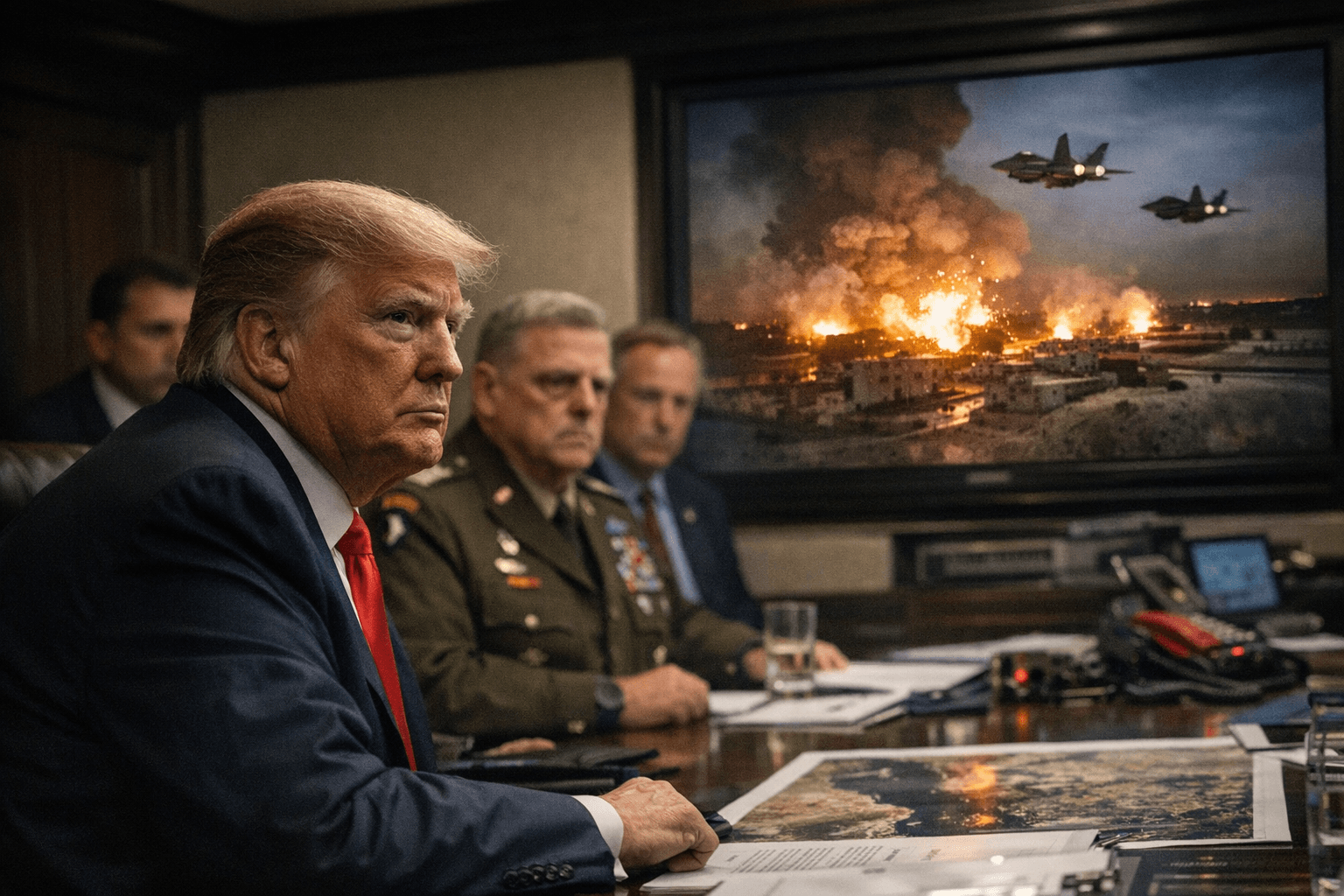
Even a limited U.S. strike on Iran could set off the chain reaction Washington most wants to avoid: retaliation from Tehran, a shock to oil markets and a deeper American military commitment in the Gulf. That is the gamble now facing Donald Trump after talks with Iran collapsed in Islamabad, leaving the White House to weigh pressure tactics against the risk that any narrow hit could widen into a regional confrontation.
The negotiations ended without a deal after roughly 21 hours, with JD Vance leading the U.S. delegation, according to multiple reports. The sticking points were the same ones that have defined years of tension: Iran’s nuclear program and control of the Strait of Hormuz. The fragile ceasefire now in place has been described as a two-week truce set to expire on April 22, and both sides remain far apart on what a final agreement would require.
The Strait of Hormuz is the central strategic and economic risk. Roughly one-fifth of global oil trade typically passes through the waterway, making it one of the most consequential chokepoints in the world economy. Iran wants to keep control of the strait and retain the right to enrich uranium. Washington is demanding no nuclear weapons and an open, safe passage for shipping. If those terms remain irreconcilable, the costs of even a limited strike could spill far beyond the battlefield.
Trump sharpened the pressure after the talks failed. Reuters reported that he threatened a naval blockade of the Strait of Hormuz. He had already said on April 8 that the United States would work closely with Iran and that tariff and sanctions relief were being discussed, even as he added that U.S. forces would remain in place until a “real agreement” was fully complied with. The whiplash underscores the policy dilemma in Washington: push hard enough to coerce Tehran, but not so hard that diplomacy disappears entirely.
That dilemma is made sharper by the military record already on the ground. White House materials say Trump authorized Operation Epic Fury on March 1, a campaign aimed at destroying Iran’s missile arsenal, degrading proxy networks and crippling naval forces. The nuclear backdrop is equally volatile. The International Atomic Energy Agency said inspectors remained in Iran through the conflict and last verified more than 400 kilograms of uranium enriched to 60% before the June 13, 2025 Israeli strikes. It also said Natanz’s Pilot Fuel Enrichment Plant, where Iran was producing uranium enriched up to 60% U-235, was destroyed in those attacks.
Pakistan urged both sides to continue the ceasefire after the talks failed, but the diplomatic lane is narrowing. If Trump chooses limited strikes, the real question is whether they stay limited or become the opening move in a broader escalation with global economic consequences.
This article was produced by Prism’s automated news system from verified source data, official records, and press releases, then run through automated quality and moderation checks before publishing. The system is built and supervised by the people who set the standards it runs under. Read our full AI policy.
Did this article answer your question?


