Trump's FY2027 Budget Slashes Civil Rights Programs, Boosts Defense Spending to $1.5 Trillion
Trump's FY2027 budget eliminates the DOJ office born from the Civil Rights Act of 1964, while pushing base defense spending past $1 trillion for the first time.
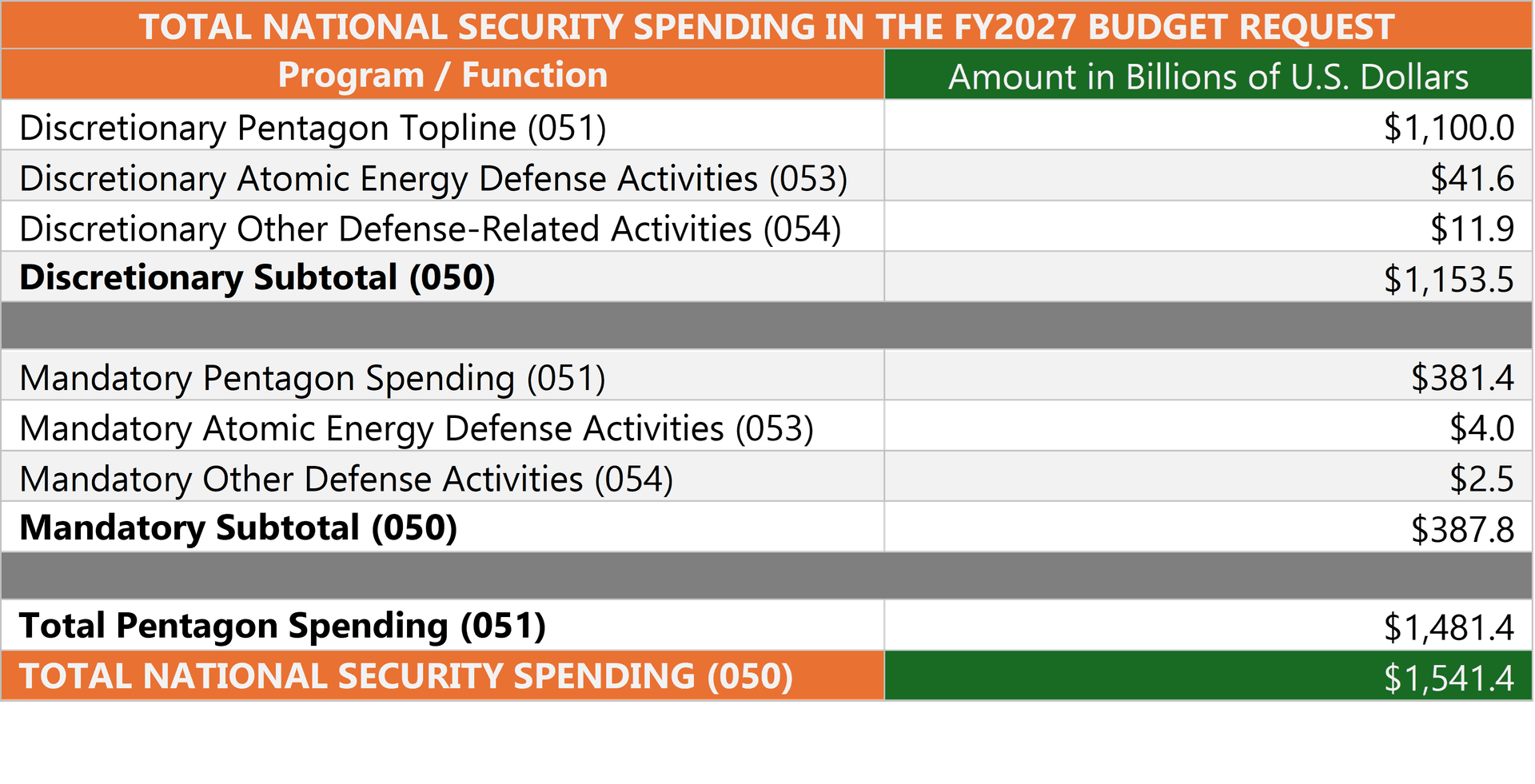
The Justice Department's Community Relations Service, created by the Civil Rights Act of 1964 to mediate racial conflicts, would be fully eliminated under the White House's fiscal year 2027 budget proposal. So would the EPA's $600 million environmental justice grant program, the Minority Business Development Agency, and at least nine other programs the administration explicitly labels "woke," even as defense spending climbs to a proposed $1.5 trillion, the first time base military funding has crossed the $1 trillion mark.
Released by the Office of Management and Budget under Director Russ Vought, the proposal cuts non-defense discretionary spending by 10%, a moderation from the 20% reduction sought in FY2026, while pairing that relative restraint with a 44% increase in defense spending. The document explicitly states plans to "eliminat[e] funding for cultural Marxism," and a White House fact sheet declares that savings come from "reducing or eliminating woke, weaponized, and wasteful programs."
The steepest agency-level cuts fall on institutions whose mandates intersect with equity and science: the Small Business Administration faces a 67% reduction, the National Science Foundation a 55% cut, and the EPA a 52% reduction. That last figure formalizes a process already underway. The EPA's Office of Environmental Justice and External Civil Rights was shuttered in March 2025, placing 168 employees on administrative leave; the FY2027 budget would now eliminate the $600 million Thriving Communities Grantmakers Program that supported communities near industrial polluters.
The CRS elimination stands as the most historically charged cut in the document. NAACP Legal Defense Fund Policy Director Todd A. Cox described the agency as having been created "to help mediate and diffuse conflicts arising from new constitutional protections for marginalized populations, including people of color," calling its elimination "irresponsible and shameful." Trump proposed the same cut in 2018; Congress preserved the CRS at that time.
The Education Department bears some of the largest dollar reductions: more than two dozen K-12 grant programs would be consolidated or eliminated, totaling $8.5 billion, and the NTIA's Digital Equity Program would lose $2.2 billion. Equity Assistance Centers and Teacher Quality Partnerships ($77 million) would be defunded. Minority-Serving Institutions programs would lose $354 million, a reduction the administration partially offsets by redirecting roughly $435 to $500 million toward Historically Black Colleges and Universities and tribal colleges, a deliberate distinction between institutions it considers acceptable and those it does not.

Native American programs face concentrated reductions: the Bureau of Indian Affairs cut by 27%, the Bureau of Indian Education by 32%. The Community Development Financial Institutions Fund, HUD's Pathways to Removing Obstacles to Housing program, the DHS Civil Rights and Civil Liberties office, and federal hate crime prevention grants would all be eliminated.
Human Rights Campaign President Kelley Robinson said the spending blueprint speaks for itself. "Presidential budgets are a reflection of the nation's values; and this budget shows how little this Administration values the lives of LGBTQ+ Americans," she said. House Democrats on the Appropriations Committee called the proposal "dead on arrival," with Rep. Shontel Brown of Ohio labeling it "disgraceful."
Those declarations reflect constitutional reality as much as partisan opposition. Presidential budget proposals carry no legal weight; Congress must pass its own appropriations bills. When Trump proposed eliminating the CRS in 2018, the agency survived. The question this year is whether a 44% defense surge bundled with the systematic elimination of civil rights infrastructure will be treated on Capitol Hill as a serious fiscal blueprint or as ideological positioning, and whether Congress will once again preserve the programs it has protected before.
This article was produced by Prism’s automated news system from verified source data, official records, and press releases, then run through automated quality and moderation checks before publishing. The system is built and supervised by the people who set the standards it runs under. Read our full AI policy.
Did this article answer your question?