Trump's Pressure Campaign Against Iran Has Yet to Force Compliance
Five weeks of U.S. airstrikes and escalating threats have yet to force Iran to reopen the Strait of Hormuz or accept any ceasefire terms.

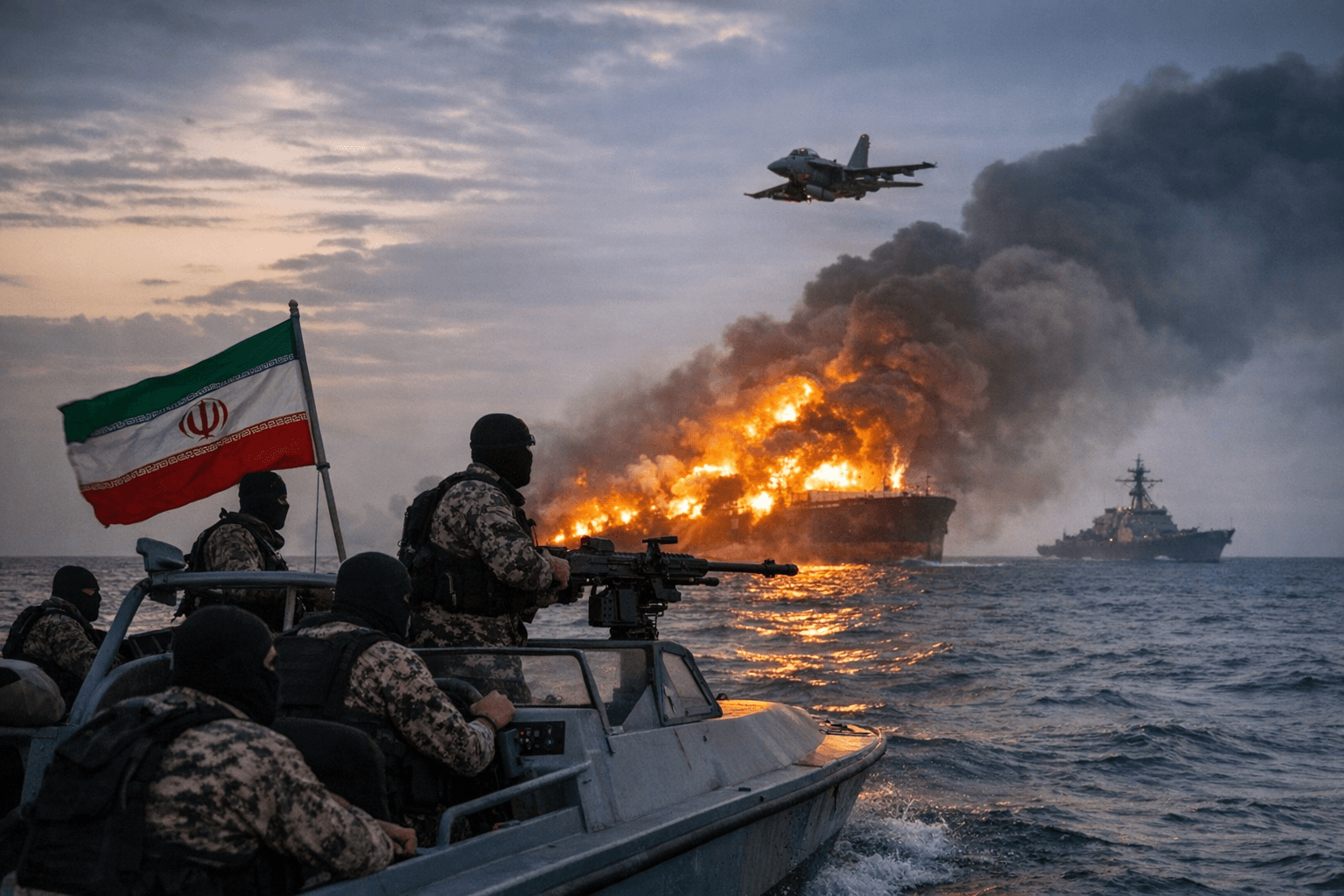
Five weeks into the U.S.-Israel military campaign against Iran, President Trump's strategy of escalating threats and airstrikes has failed to produce the capitulation he sought. Iran's leaders have refused to reopen the Strait of Hormuz, rejected a 15-point ceasefire proposal, and responded to American ultimatums with counterdemands, including war reparations and recognition of Iranian sovereignty over the strategic waterway.
The conflict, which began February 28, has already cost the United States two aircraft: an F-15 downed inside Iran and a second Air Force plane that crashed near the Strait. Iran has retaliated by striking Gulf refineries and halting commercial tanker traffic through the Strait of Hormuz, a chokepoint for one-fifth of the world's oil supply. Crude prices have surged past $110 per barrel, and American gasoline now averages more than $4 per gallon, raising costs across consumer goods and squeezing farmers hurt by higher fertilizer prices.
Trump has issued at least three separate deadlines warning Iran to open the Strait or face strikes on its energy infrastructure, including power plants, oil wells, and Kharg Island. Each time Tehran failed to comply, Trump extended the window, most recently pushing the cutoff to April 6. When he announced the latest extension, Iranian state media dismissed it as a retreat "out of fear of Iran's response." A senior Iranian Foreign Ministry official offered a more measured signal, telling U.S. media: "We received points from the U.S. through mediators and they are being reviewed."
In a primetime address on April 1, Trump declared the operation was "nearing its completion" while simultaneously warning the U.S. would hit Iran "extremely hard over the next two to three weeks." The following morning, he posted a video to social media showing the destruction of the B1 bridge near Tehran, writing that "the biggest bridge in Iran comes tumbling down, never to be used again." Iranian state media reported eight people died in the strike.
The administration's stated objectives have also shifted since the campaign launched. U.S. Central Command Commander Admiral Brad Cooper described the mission in early March as eliminating Iran's ability to project military power, with an emphasis on its missile forces and navy. Press Secretary Karoline Leavitt has since characterized the goal as "weakening" Iranian proxy groups, a more subjective benchmark than the sweeping terms the campaign originally announced.
International pressure on Washington has grown as markets have convulsed. Leaders from 40 countries convened virtually at Britain's request to discuss reopening the Strait but agreed on no specific action. French President Emmanuel Macron called Trump's demands for allied military help "unrealistic," and the United Arab Emirates appealed to the United Nations to authorize a range of measures, including force, to restore oil flows through the corridor.
With the April 6 deadline days away and Iran showing no sign of accepting Washington's terms, the distance between Trump's promises of swift resolution and the reality on the ground has grown harder to bridge.
This article was produced by Prism’s automated news system from verified source data, official records, and press releases, then run through automated quality and moderation checks before publishing. The system is built and supervised by the people who set the standards it runs under. Read our full AI policy.
Did this article answer your question?


