Trump's Secret Health MOUs Spark Exploitation Fears Across Sub-Saharan Africa
The U.S. reportedly demanded Zambia's copper and cobalt in exchange for $1 billion in health aid, exposing the transactional logic behind secret bilateral health deals.
The United States reportedly demanded access to Zambia's copper, cobalt, and lithium reserves as a condition of a $1 billion health assistance agreement, a disclosure that crystallized growing fears that the Trump administration's new bilateral health deals are extractive rather than humanitarian.
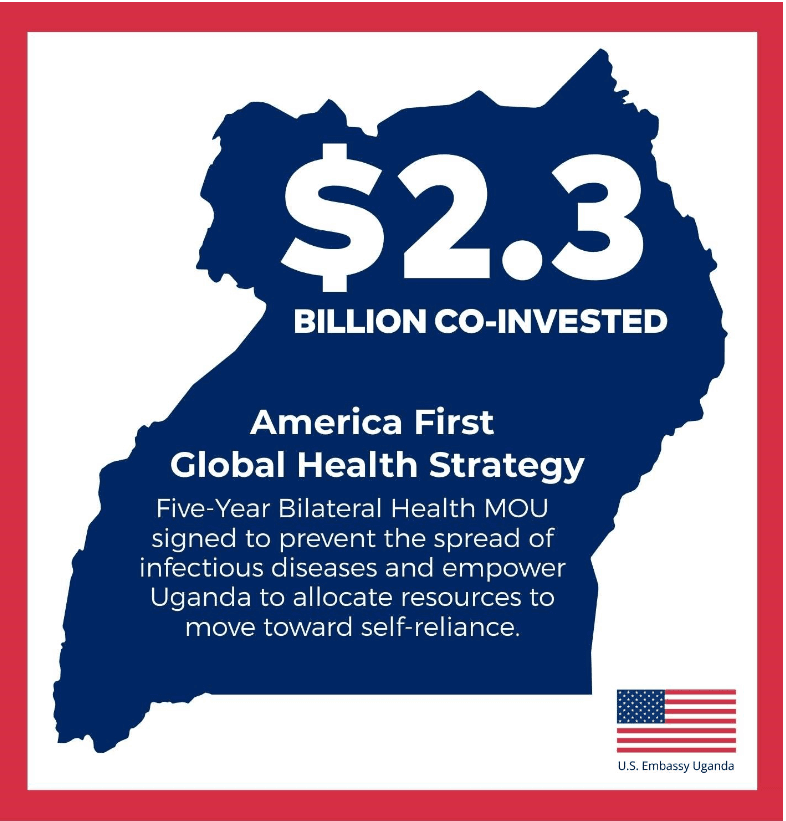
The mineral-linked offer is among the most explicit examples of the transactional logic embedded in the administration's America First Global Health Strategy, formally released September 18, 2025. The strategy replaced USAID, which the State Department absorbed in July 2025, as the primary vehicle for U.S. global health assistance. Where USAID channeled funds through international organizations and NGOs, the new framework relies on one-on-one government-to-government Memoranda of Understanding. A senior administration official said the administration had to "aggressively" move NGOs "out of the process" to "build a different health care system."
The State Department announced in December 2025 that it had signed bilateral health MOUs with nine sub-Saharan African countries: Kenya, Rwanda, Liberia, Uganda, Lesotho, Eswatini, Mozambique, Cameroon, and Nigeria, representing more than $8 billion in U.S. health assistance. Agreements with Honduras and Senegal followed in March 2026. The strategy targets HIV/AIDS, malaria, tuberculosis, polio, and global health security, with the State Department setting a December 31, 2025 deadline to complete agreements covering the "vast majority" of U.S. health assistance recipients, and implementation to begin by April 2026.
Despite that scale, virtually no full agreement texts have been made public. The Center for Global Development found that only three MOUs, those with Kenya, Uganda, and Liberia, were publicly available, and described even their provenance as "unclear." The available MOUs also fail to precisely define domestic government health expenditure obligations, the CGD found, "kicking the can down the road to a later implementation phase," while funding from other donors would be excluded from co-financing counts.
Zimbabwe joined Zambia in pushing back against what both governments characterized as "lopsided" agreements. A senior aid worker said the tight negotiating timeline "is backing many countries" into difficult positions. One unnamed expert called the approach "reckless," adding: "Obligating that scale of funding directly to host governments through bilateral agreements and hoping for the best would be reckless." The Center for Global Development further cautioned that "direct financing does not automatically resolve constraints in procurement, financial reporting, human resources, data systems, or service delivery logistics — areas that often determine whether funds translate into results."

The stakes are compounded by the collapse of broader global health financing. According to the Institute for Health Metrics and Evaluation, global health financing dropped 21% from 2024 to 2025, with further reductions expected for multilateral organizations. The United States withdrew from the World Health Organization on January 22, 2025, eliminating a key governance backstop at precisely the moment it abandoned the multilateral framework.
PEPFAR, the flagship U.S. HIV/AIDS program, sits at the center of the uncertainty. The Senate blocked the administration's attempt to cut $400 million from PEPFAR in the Rescissions Act of 2025, but the State Department transferred only approximately $640 million of PEPFAR's annual budget to the CDC, roughly half the total. Researchers estimated that a $460 million reduction in PEPFAR funding in South Africa alone would produce 565,000 additional HIV infections and 601,000 HIV-related deaths over ten years. In Zambia, approximately 1.5 million patients depend on American-funded antiretrovirals.
The Center for Global Development noted that direct U.S. government-to-government health assistance "has been rare in the twenty-first century," and that Congress previously required certification that recipient governments met core standards, including budget transparency and anti-corruption measures, before funds could flow. No comparable certification requirement has been disclosed for the new MOU framework.
This article was produced by Prism’s automated news system from verified source data, official records, and press releases, then run through automated quality and moderation checks before publishing. The system is built and supervised by the people who set the standards it runs under. Read our full AI policy.
Did this article answer your question?


