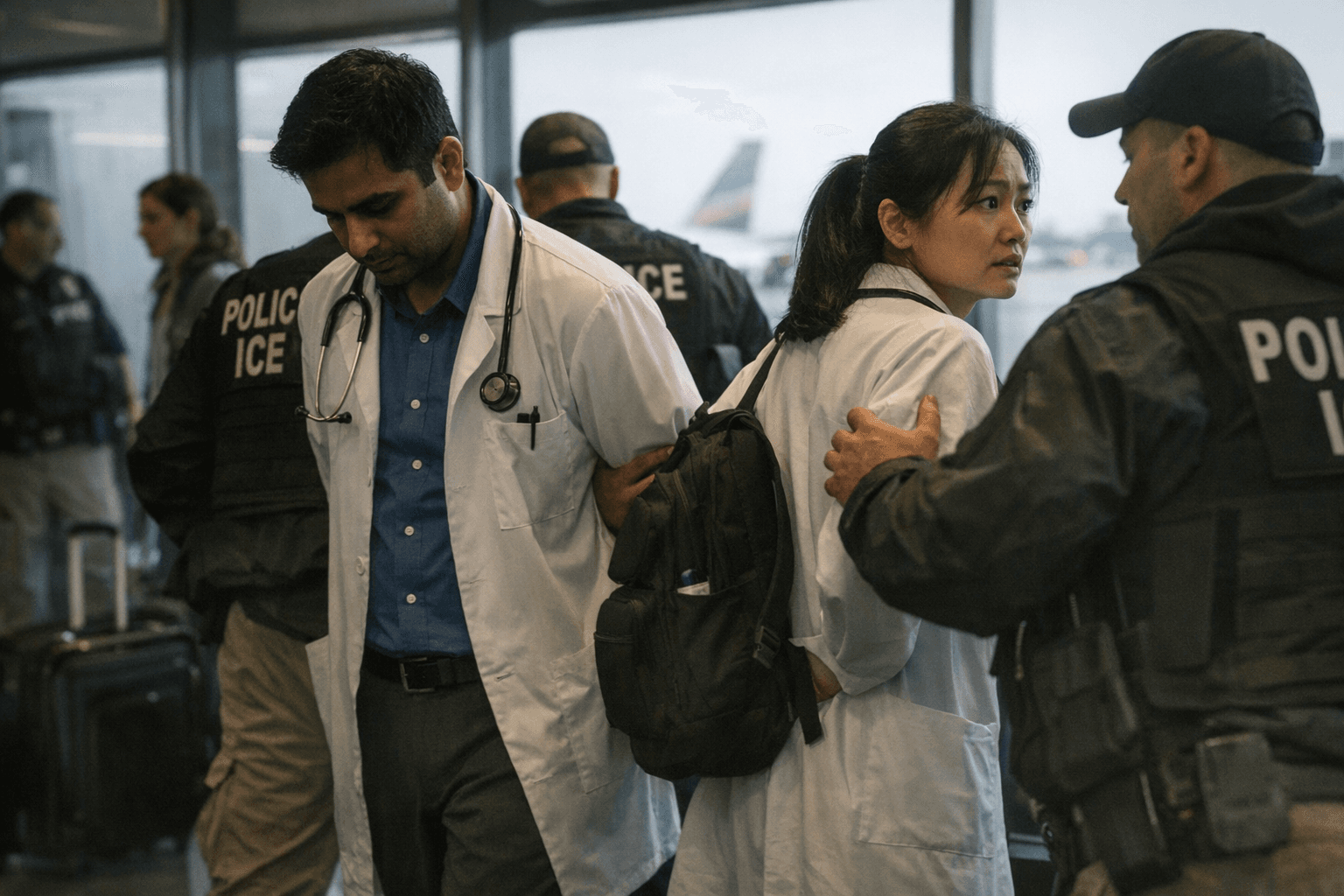
Two Doctors Detained by Immigration Agents While Traveling Within Days
Two physicians were detained by immigration agents within five days while traveling in Texas, raising urgent questions about hospital staffing and due process in border communities.
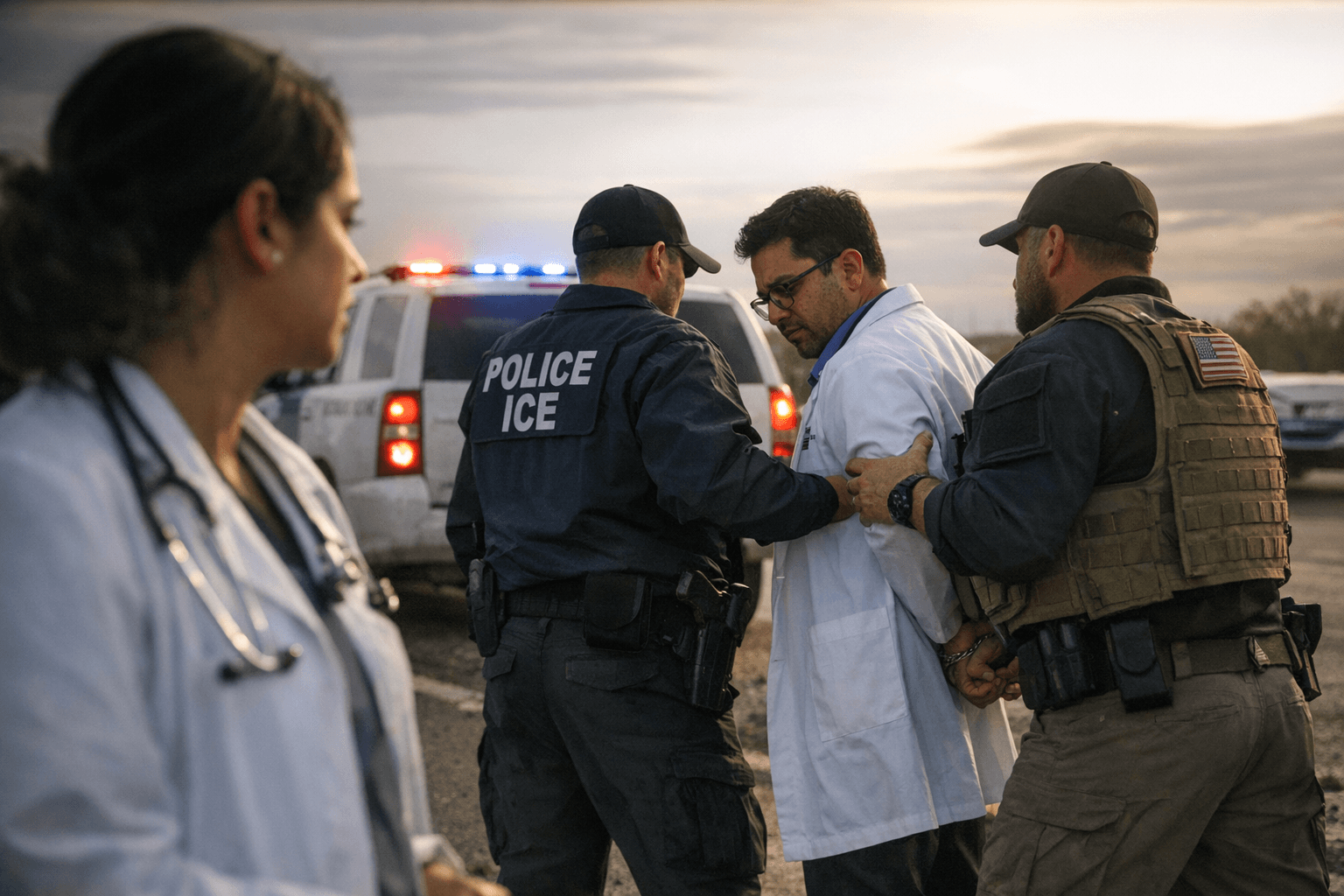
When Border Patrol agents stopped Dr. Ezequiel Veliz at the Sarita checkpoint on April 6, they weren't pulling over a border crosser. They were detaining a family medicine physician who had been named Resident of the Year in Texas, was married to a U.S. citizen, and was actively working through the immigration system. Five days later, an emergency room doctor was taken into custody Saturday under similar circumstances: in transit, away from the hospital, seized mid-journey. Two physicians. Five days. The same pattern.
The back-to-back detentions come as immigration enforcement is already straining healthcare access across the Rio Grande Valley, one of the most medically underserved regions in the country. Removing an ER physician from the workforce, even temporarily, creates immediate patient care gaps that rural and border hospitals have little capacity to absorb. Emergency departments running on lean staffing cannot easily redistribute overnight call shifts or cover unscheduled absences when a physician is sitting in a federal processing facility.
Veliz, a Venezuelan physician specializing in Family Medicine who had been practicing at UT Health Rio Grande Valley in McAllen, was taken into custody at the Sarita checkpoint while traveling to Houston with his husband, Joseph Williams, a U.S. citizen. Williams said Border Patrol agents were unable to verify Veliz's legal status or the status of his application and detained him, and that Veliz was taken to McAllen to be processed prior to appearing before an immigration judge.
Veliz had legally entered the United States with a student visa, then changed to Temporary Protected Status, and the hospital where he worked had initiated the process for a J-1 visa on his behalf. The Trump administration ordered in October that people with Veliz's status from Venezuela would have their TPS terminated, causing him to lose his job and become undocumented. Williams said the couple had been working toward a green card and decided to relocate to Houston, a journey that required passing through the interior Sarita checkpoint. Williams waited five hours at the checkpoint before learning his husband was being detained. "He said 'they're detaining me…' I started crying. I'm like 'no! This can't be happening,'" Williams said.
Veliz is one of many foreign-trained professionals affected by the Trump administration's decision to suspend the processing of visas and work permits for individuals from countries included on a travel ban list. A USCIS spokesperson said the agency "paused all adjudications for aliens from President Donald Trump's designated high-risk countries" while working to ensure maximum vetting and screening. But that administrative pause created an impossible bind for physicians like Veliz: their legal status expired precisely because the government stopped processing the applications designed to extend it.
Attorneys, lawmakers, and family members were still demanding answers about Veliz's whereabouts and the reason behind his detention days after he was taken into custody. The second detention Saturday of an emergency room physician in transit deepens that demand into something beyond a single case. When immigration enforcement intersects with the medical workforce at this pace, the consequences don't stay within the detention system. They reach into emergency departments, onto call schedules, and into the waiting rooms of patients with nowhere else to go.
Sources:
Know something we missed? Have a correction or additional information?
Submit a Tip