Two EA-37B Compass Call Jets Arrive at RAF Mildenhall, Possibly Marking First Operational Deployment
Two EA-37B Compass Call jets flew from Arizona to RAF Mildenhall, with observers tracking them toward the eastern Mediterranean in what may be the platform's first combat deployment.
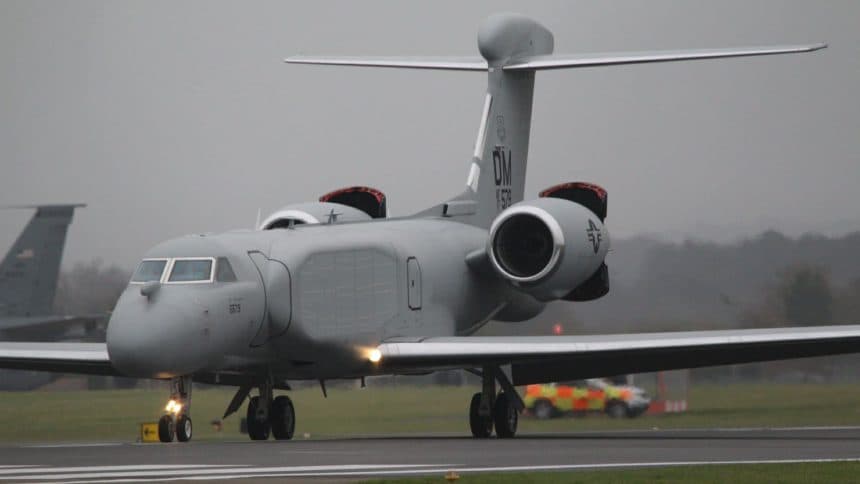
The two EA-37B Compass Call aircraft that touched down at RAF Mildenhall traveled a route stretching from Davis-Monthan Air Force Base in Arizona, with a fuel stop at Joint Base McGuire-Dix-Lakehurst in New Jersey, before arriving at the long-standing U.S.-UK air hub in Suffolk. Open-source flight tracking observers and defense journalists flagged the movement as potentially significant: the jets appeared to be continuing eastward toward the eastern Mediterranean or Turkey, a trajectory that would mark the EA-37B's first genuine operational deployment after years of demonstrations and European roadshows.
The EA-37B, developed by L3Harris and built on the Gulfstream G550 airframe, is designed to dominate the electromagnetic spectrum by jamming and disrupting adversary command, control and communications. Assigned to U.S. Air Force electronic combat squadrons, the platform represents a generational leap over its predecessor, the EC-130H Compass Call, offering substantially greater speed and range, which translates directly into improved survivability and the ability to reposition rapidly within a theater.
Defense reporting on the movement characterized it as potentially the platform's first forward deployment in an operational context. One defense outlet observed that "this could become the EA-37B's first operational deployment," a framing that underscores the shift from training and demonstration flights toward real-world employment.
The stopover at Mildenhall carries its own significance. The base has historically served as a critical node for U.S. Air Force operations in Europe and beyond, and its use here reinforces the shared basing and logistical arrangements that allow the United States and the United Kingdom to rapidly reposition high-value assets. Deploying EA-37Bs into theater would give U.S. and coalition commanders enhanced options for suppressing adversary communications and protecting friendly strike and maneuver assets operating against integrated air defense networks.

The move comes as American forces and their partners navigate an increasingly contested electromagnetic environment amid ongoing conflict dynamics involving Iran. The Compass Call's capacity to disrupt hardened command-and-control nodes could prove particularly valuable if operations expand to include counter-air, maritime, or expeditionary missions in the region.
Military commentators cautioned that forward-deploying such a high-value platform also raises the stakes. Adversaries are likely to recognize the EA-37B's operational signature and may employ anti-access measures or target the aircraft directly, making the deployment a calculated risk as much as a capability enhancement.
Tracking of onward flight plans and any U.S. Air Forces in Europe statements about tasking will determine whether the pair are supporting routine deterrence, coalition training, or direct theater operations. Official confirmation through a named operation release or Air Force public affairs announcement would clarify the scope of what observers are already treating as a meaningful escalation in U.S. electronic-warfare posture in the region.
Know something we missed? Have a correction or additional information?
Submit a Tip