Uber Forecast Tops Wall Street Expectations as Demand Stays Resilient
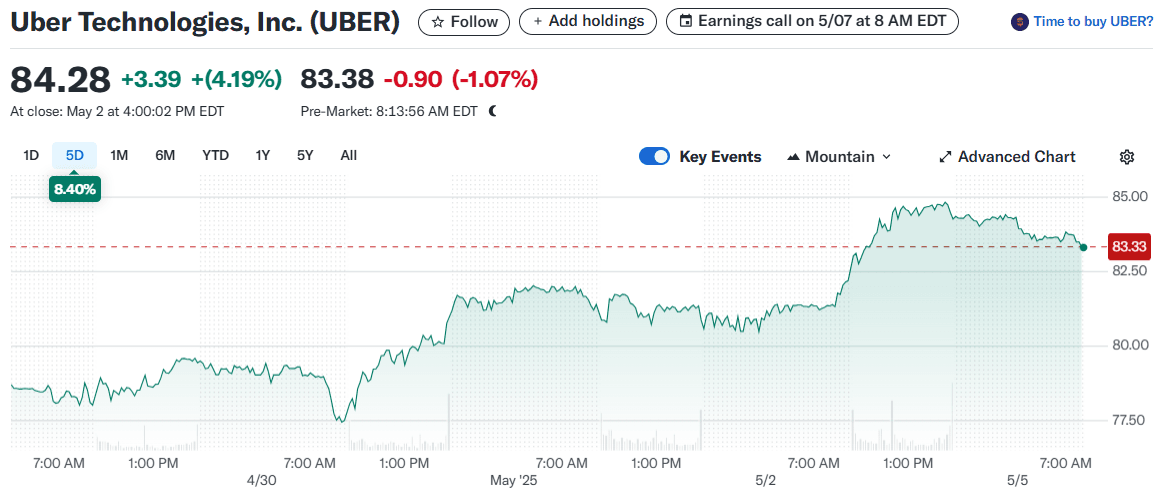
Uber’s second-quarter forecast topped expectations even as Middle East turmoil still trims growth, sending shares up about 7% and reassuring investors.
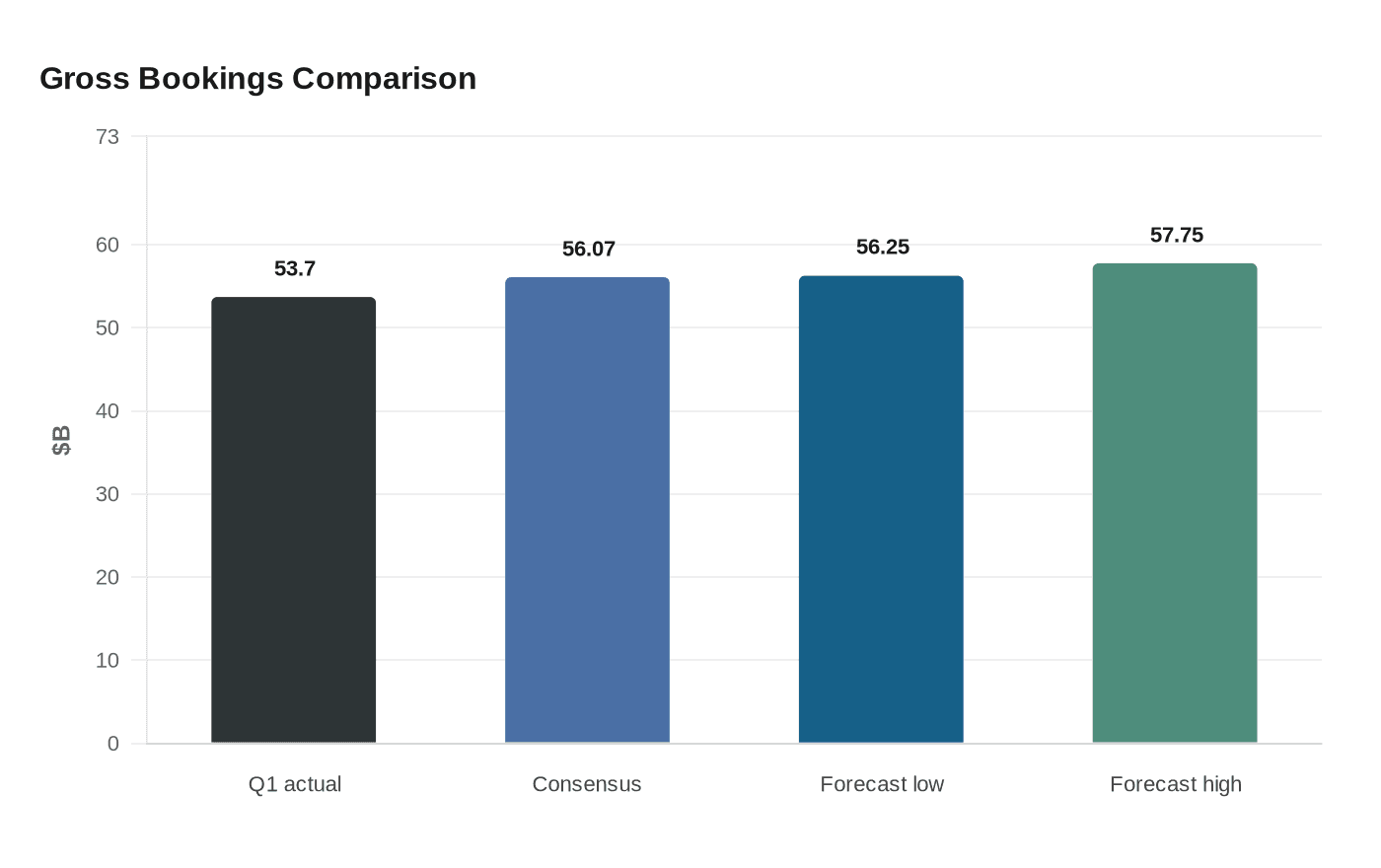
Uber’s core business kept growing fast enough to offset a geopolitical drag in the Middle East, a sign that ride-hailing and delivery are becoming stickier habits for consumers even in a volatile economy. The San Francisco company said it expects gross bookings of $56.25 billion to $57.75 billion for the June quarter, above the Wall Street consensus of $56.07 billion, and forecast adjusted earnings per share of 78 cents to 82 cents.
Investors responded immediately. Uber shares rose about 7% after the outlook, reflecting confidence that the company’s demand engine is still intact even as management said the Middle East conflict would shave about 60 basis points off growth. The forecast also pointed to some pricing discipline, with Uber holding rates steady while leaning harder into higher-margin businesses and international expansion.
The first quarter offered the same picture of resilience. Gross bookings rose 21% year over year on a constant-currency basis to $53.7 billion, trips climbed 20%, and non-GAAP earnings per share reached 72 cents, up 44% from a year earlier. Revenue came in at $13.2 billion, while Uber said it took a $1.5 billion hit to net income from revaluing equity investments.

A larger strategic shift is also visible in the numbers. Uber said its Uber One membership program surpassed 50 million users, and those members now generate half of gross bookings across Mobility and Delivery. That subscription base gives the company a recurring revenue stream and deepens customer engagement at a time when it is trying to stretch beyond its core ride-hailing model into food delivery, groceries, travel, local commerce and hotel bookings.
The company is also banking on efficiency and automation. Dara Khosrowshahi has said roughly 10% of Uber’s code changes are produced by autonomous agents, and he said the company is slowing hiring as it increases investment in artificial intelligence. That push is meant to keep costs under control while the business scales.
Uber’s autonomous-vehicle strategy remains partnership-heavy rather than fully in-house. The company said it now has more than 20 AV partners, including a Hertz Global Holdings deal announced April 30 for autonomous robotaxi and driver-led fleet operations and a Japan robotaxi collaboration with Wayve and Nissan announced in April. Taken together, the latest quarter suggests Uber is trying to turn volatile conditions into proof of durability: consumers may pull back on luxury purchases, but they are still calling cars and ordering meals.
This article was produced by Prism’s automated news system from verified source data, official records, and press releases, then run through automated quality and moderation checks before publishing. The system is built and supervised by the people who set the standards it runs under. Read our full AI policy.
Did this article answer your question?