Ubisoft warns of another year of losses after record annual operating loss
Ubisoft posted a record 1.3 billion-euro operating loss and still expects more red ink, even after cutting 1,200 jobs and trimming costs.

Ubisoft is heading into another year of losses after posting a record annual operating loss of 1.3 billion euros, a sign that even a major hit is not enough to steady a publisher wrestling with expensive production cycles, delayed releases and a restless market.
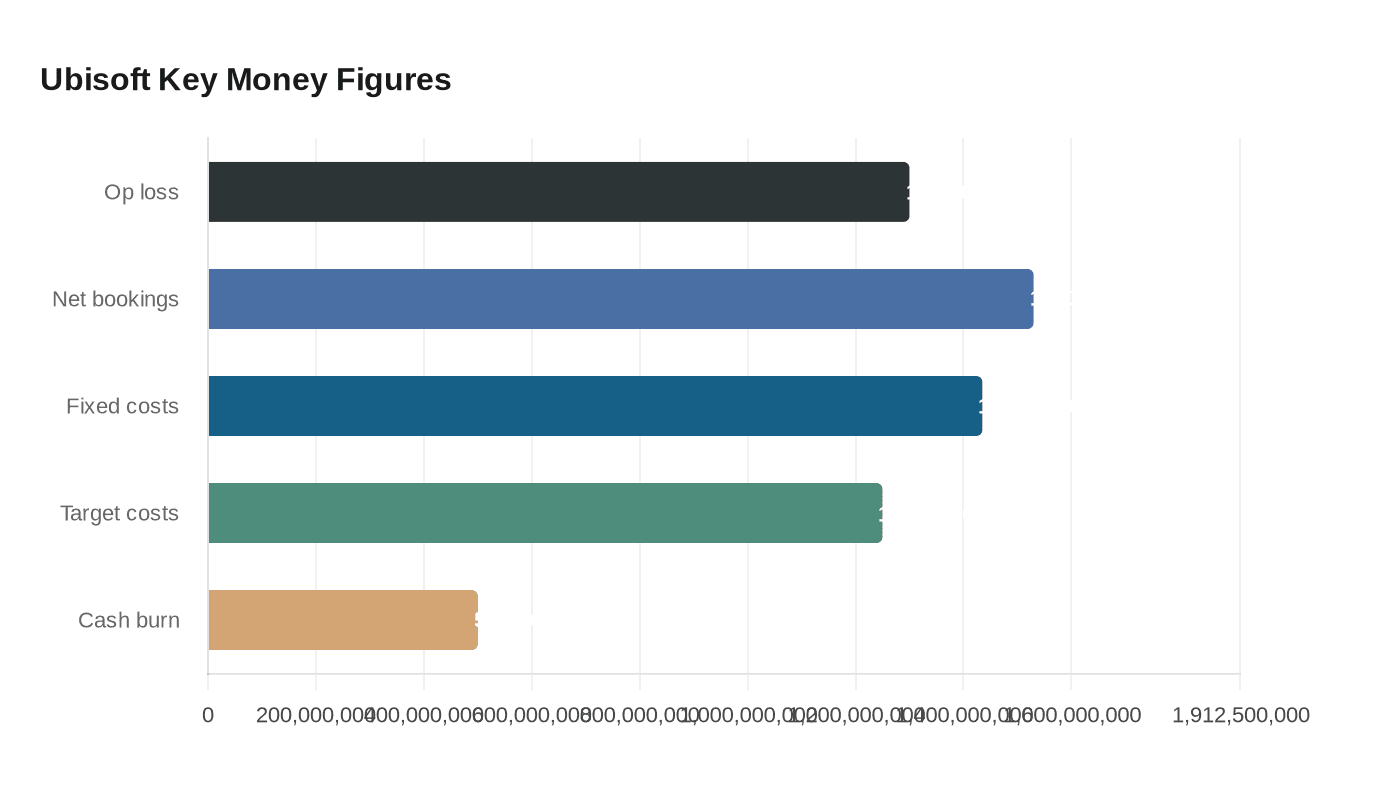
At its May 20 conference call, the Paris-based company said net bookings fell 17.4% to 1.53 billion euros in the year to March 2026. Chief financial officer Frederic Duguet called the result a record, and Ubisoft said sales in the 2026-27 year are likely to slip by about 8% to 9%. The company also said its operating-loss margin would remain in the high single digits and that cash burn could reach as much as 500 million euros.

The pressure on Ubisoft has already forced a broad reset of the business. The company cut about 1,200 jobs over the past year, leaving roughly 16,600 employees, and reduced fixed costs by 118 million euros to 1.435 billion euros in 2025-26. Ubisoft is now targeting fixed costs of 1.25 billion euros by March 2028, a level that would mark a sharp retrenchment from the current structure.
Even as losses mount, Ubisoft said it believes it has enough cash to cover near-term debt repayments and is in talks with lenders to refinance upcoming maturities. That buys time, but not much more than that. Investors are still waiting for proof that the company can turn a thinner cost base into durable profit.
Ubisoft laid out the logic for its turnaround in a January 21 reset that pointed to a more selective AAA market, a more competitive shooter landscape and rising development costs. The company said the new operating model would be built around five specialized Creative Houses, with a refocused portfolio, a revised three-year roadmap and a rightsized organization. It also said the strategy would lean more heavily on open-world adventures, games-as-a-service experiences, deeper specialization and player-facing generative AI.
That leaves Ubisoft betting that a better release slate and stronger live-service performance can restore profitability in 2027-28. For a company built on sprawling franchises and blockbuster budgets, the latest warning is a reminder that one successful title no longer cushions the whole business.
Know something we missed? Have a correction or additional information?
Submit a Tip