UK Advocacy Group Urges Government to Do More for Britons Detained in UAE
Advocacy group Detained in Dubai claims up to 70 Britons were arrested in the UAE for filming Iranian strikes, as the UK government confirmed only a "small number" receiving consular help.
A British citizen sharing footage of a missile strike with a family member at home faces potential prosecution under national security laws in the UAE, and according to one advocacy group, the UK government is not doing nearly enough about it.
Radha Stirling, chief executive of the campaign group Detained in Dubai, estimated that between 50 and 70 British nationals had been detained in the United Arab Emirates for photographing or filming Iranian missile and drone attacks, with the figure potentially rising to 100 or even 150. That claim stood in sharp contrast to the position offered by Whitehall: government sources indicated five British nationals were currently receiving consular assistance after being detained on charges relating to taking images of Iranian attacks, with some others already released.
The Foreign, Commonwealth and Development Office offered no specific number in its official statement. "We are providing consular assistance to a small number of British nationals detained in the UAE in connection with this issue, and our Ambassador is engaging with the Emirati authorities about their cases," an FCDO spokesperson said.
Stirling, a human rights advocate and lawyer focused on Dubai, rejected that response as insufficient. "When your citizens are locked up, when they're arbitrarily detained, when they're prosecuted under national security laws for simply sending a photo to a loved one, that's when your government needs to step up," she said. "And it's irrelevant whether there's tax or no tax in the UAE, our government is obliged to provide that service or else we look weak diplomatically and in the eyes of the world."
The detentions occurred under what Stirling described as the UAE's "draconian" cybercrime laws, and her group warned of an "extensive cybercrime enforcement campaign" that accelerated since the outbreak of the Gulf conflict in February. Some cases escalated beyond cybercrime classifications entirely, being treated as national security matters: a designation that, Stirling cautioned, can expose individuals to severe penalties, prolonged detention, and reduced access to due process.
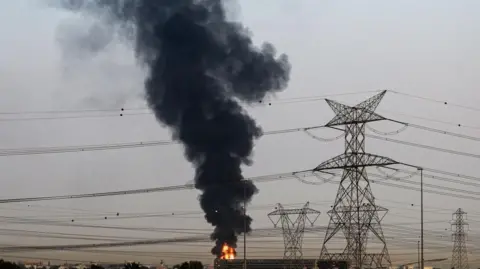
The conflict at the center of the arrests has been substantial. More than 2,300 drones, ballistic missiles, and cruise missiles were fired at the UAE since the conflict began in February, according to the country's Ministry of Defence. Hotels and airports sustained damage from the strikes, with smoke seen rising from a warehouse in Sharjah City and near Dubai International Airport following drone attacks.
The UAE made its legal posture explicit in a public statement: "The public and media are urged to rely solely on official sources for accurate information and refrain from sharing unverified material. Legal action will be taken against those who publish or republish such content in violation of UAE law."
Many of those detained appeared to have been caught off guard by how broadly those laws could be applied. "Most people did not know and were unaware of these laws and how widely they can be applied, especially in a situation like this," Stirling said.
Stirling acknowledged that the scale of her estimates remained difficult to confirm. "We're talking approaching 50 to 70 was my estimate and possibly even more," she said. "I think by the end of this we'll see a lot more, possibly 100, maybe 150." Those figures represent a campaign group's assessment and have not been confirmed by official sources. The FCDO provided no numerical breakdown, and Whitehall sources consistently pointed to five British nationals currently receiving active consular support.
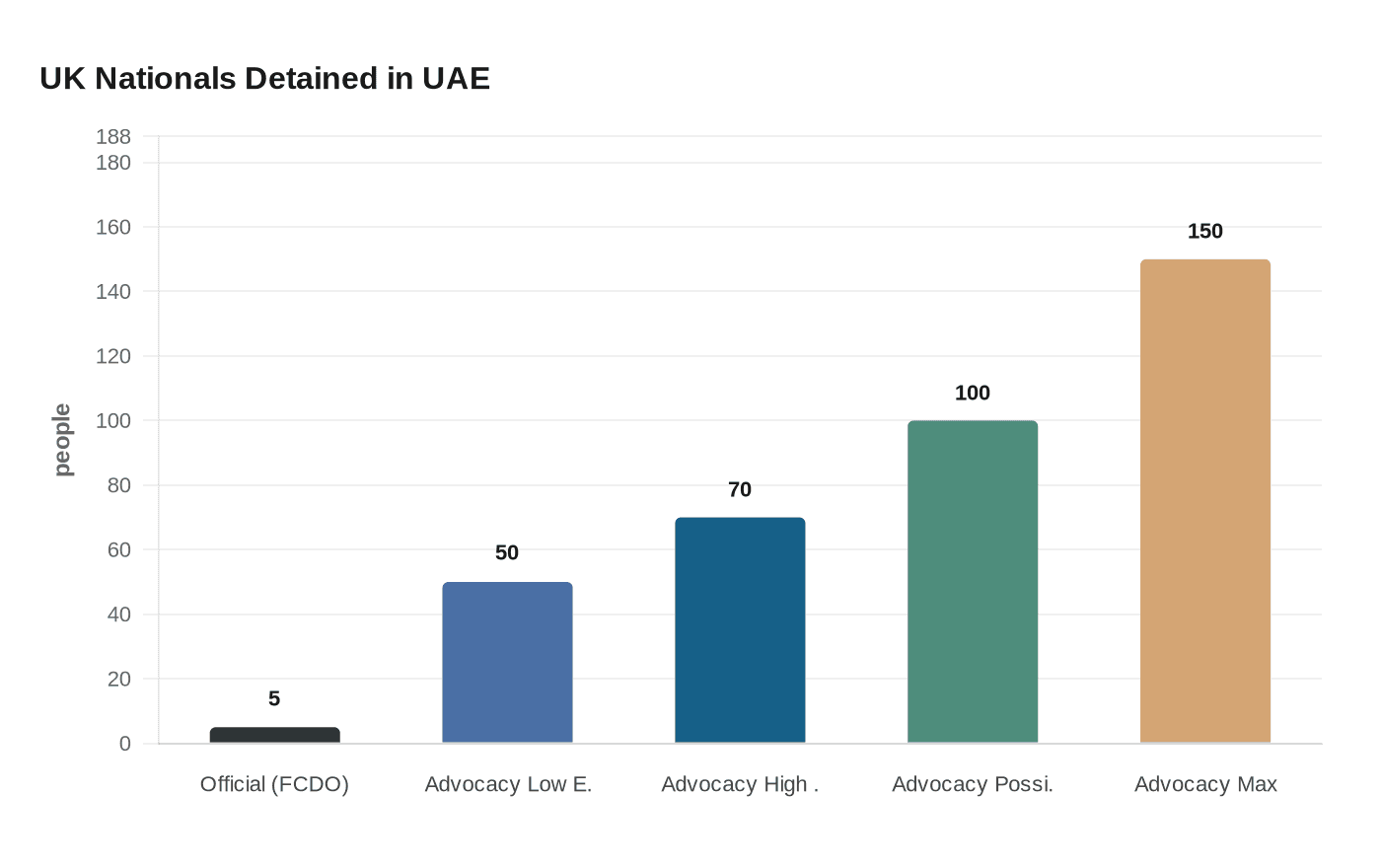
The gap between those figures raises pointed questions about visibility. British nationals are not obliged to inform the FCDO when detained, which means the official count may understate the actual situation. FCDO staff remain available to assist Brits abroad around the clock, but only when cases are brought to their attention.
Stirling also pushed back against any suggestion that British expatriates living under the UAE's tax-free arrangements are less entitled to government protection. The argument, she said, misses the fundamental obligation a government owes its citizens regardless of where they choose to reside.
The Iranian strikes were launched against Gulf neighbours in response to US and Israeli military action. That regional backdrop turned the act of filming or sharing images of missile attacks, something many tourists and residents may have considered a natural impulse, into a potential criminal offence carrying serious consequences under UAE law.
The FCDO confirmed the UK Ambassador has been engaging directly with Emirati authorities. Whether that engagement will produce releases or result in charges being dropped remained unclear, as did the full picture of how many British nationals may still be held without the government's knowledge.
Know something we missed? Have a correction or additional information?
Submit a Tip