UK Sends Troops, Jets and Air Defences to Middle East Amid Iran Crisis
An RAF Typhoon shot down an Iranian drone over Qatar as 300 UK troops came within yards of an Iranian strike in Bahrain, triggering Britain's largest-ever multi-country consular operation.
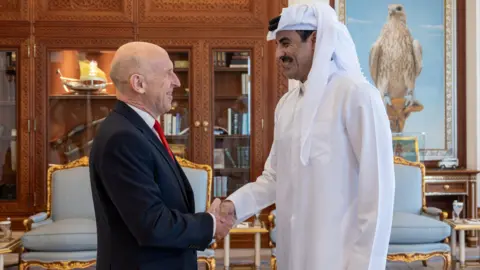
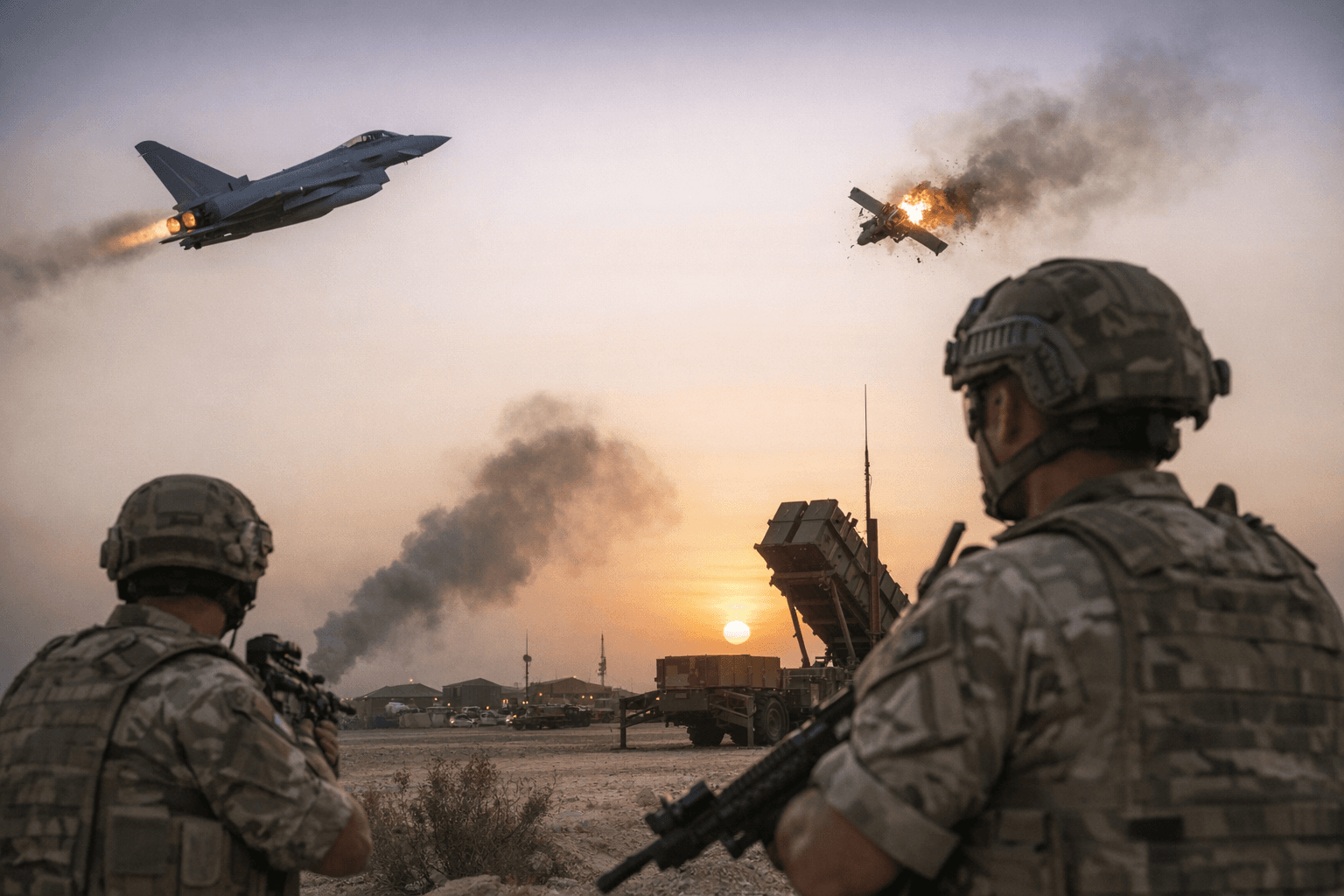
Britain's military footprint in the Middle East expanded sharply as Defence Secretary John Healey confirmed that around 300 UK troops had been within a few hundred yards of an Iranian strike on a base in Bahrain, while an RAF Typhoon operating out of Qatar shot down an Iranian drone on Sunday, according to the Ministry of Defence.
The near-miss in Bahrain and the drone intercept defined the operational edge of what London described as a coordinated regional defensive mission. Four additional Typhoon fighter jets and two attack helicopters were announced on Thursday, joining air-defence assets and fast jets the government had pre-positioned in Qatar and Cyprus weeks before the current escalation began.
Healey pushed back firmly on suggestions the UK had been caught flat-footed. "We had already, weeks ahead of this conflict, already strengthened air defences here on the island of Cyprus. Not just to defend this base and our British forces personnel but the island of Cyprus and neighbouring allied countries," he said. He added that the government had also "put extra air defences and fast jets into Qatar as well to do the same thing," describing Britain as "leading a coordinated regional defensive operation that we expected would be needed and that we've flown and helped lead from day one of this conflict."
An additional 400 UK personnel were supporting air-defence activities across British bases in Cyprus, making the island a central node in Britain's regional defensive architecture. British aircraft patrolled the region in a defensive posture. A Royal Navy destroyer remained in Portsmouth, and Healey indicated the UK was unlikely to expand operations significantly in the short term, saying Britain was "playing the role that we can best play."
The military deployment ran alongside an unprecedented consular crisis. The UK was supporting at least 200,000 British nationals in the Gulf, and more than 94,000 had registered their location and contact details with the Foreign Office, the majority holidaymakers in the United Arab Emirates or people transiting through major hub airports. Officials were formulating contingency evacuation plans should airspace in the region remain closed, and British nationals in Dubai and Doha were advised to stay indoors in a secure location. Healey said Iran had "hit airports and hotels where British citizens are staying" and urged those in the region to act: "I know this is a deeply worrying time. And we will continue to do all we can to support you."
It was the first time the government's crisis response programme had covered more than one country, and officials said the number of registered Britons was expected to continue to rise. The operation's scale illustrated a conflict that Iran launched in response to attacks by Israel and the United States, one in which the UK played no role on Saturday. Prime Minister Keir Starmer spoke to regional leaders to express his "solidarity" in the face of what he called "dangerous Iranian escalation," and no British nationals had been killed or injured.
Not all diplomatic signals were smooth. Cypriot high commissioner Kyriacos Kouros said Cyprus was "disappointed" with British failures to warn people on the island of the impending strike. Healey met Cypriot defence minister Vasilis Palmas to discuss reinforcing air defences, but the friction underlined the coordination pressures bearing on an operation spanning Bahrain, Qatar, Cyprus and the broader Gulf.
When pressed on whether the UK trusted Washington to manage the conflict's aftermath, Healey declined to say whether he had faith in the US's endgame, a pointed silence that signalled the limits of British confidence in its most important ally's strategic direction.
Know something we missed? Have a correction or additional information?
Submit a Tip