UN Experts Warn South Sudan Faces Catastrophic Return to Civil War
Sixteen UN experts declared South Sudan is "at a critical juncture," with fighting in eight of ten states pushing the world's youngest nation toward catastrophic civil war.
Sixteen United Nations-mandated experts issued an emergency warning from Geneva that South Sudan was on the verge of catastrophic conflict, declaring that "South Sudan stands at a critical juncture" and urging all armed parties to halt hostilities immediately or risk plunging the world's youngest nation back into full-scale civil war.
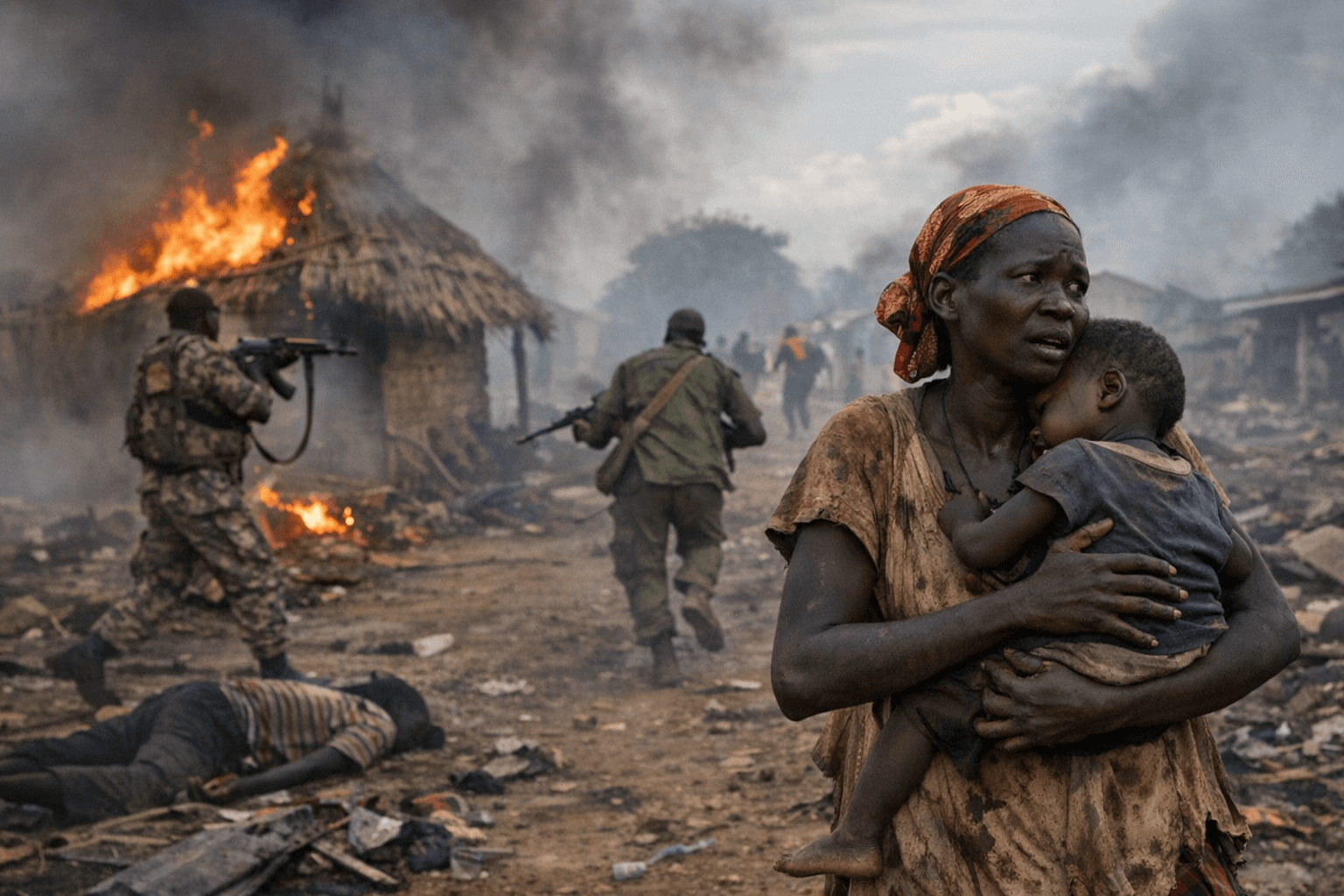
The April 2 statement arrived as active fighting between the South Sudan People's Defence Forces and the Sudan People's Liberation Army in Opposition had already spread to eight of the country's ten states, at a scale not documented since the signing of the 2018 Revitalized Agreement on the Resolution of the Conflict in South Sudan. The experts documented rising civilian casualties, targeted strikes on civilian infrastructure, mass forced displacement, and accelerating barriers to humanitarian access.
The current escalation traces directly to March 2025, when a Nuer militia known as the White Army, loosely affiliated with the opposition SPLM in Opposition, attacked a government garrison in Nasir. President Salva Kiir blamed the incident on opposition leader Riek Machar and had him placed under house arrest. Many observers disputed the attribution, noting that Kiir charged Machar with treason. The permanent ceasefire was subsequently violated repeatedly, with SSPDF aerial bombardments striking SPLM/A-IO-occupied areas including cantonment sites and training centers, while senior opposition figures were driven into self-exile. SSPDF and Ugandan forces also launched joint operations in Upper Nile, with documented sexual violence and the abduction of boys and young men to fight.
The humanitarian toll had been accumulating for months before the latest escalation. Between July and September 2025, UN monitors documented 295 conflict-related incidents affecting 1,153 civilians, including 519 killed, 396 injured, 159 abducted, and 79 subjected to sexual violence, with abductions rising 20 percent from the preceding quarter. By March 2026, government forces claimed to have captured Akobo in Jonglei state, while the United States and humanitarian organizations accused the government of using the siege of rebel-aligned areas to deliberately block food aid as collective punishment. Aid organizations warned that access constraints were already hampering relief operations and that any further escalation would overwhelm humanitarian capacity entirely.
The political architecture meant to prevent this kind of unraveling has largely seized up, with persistent ceasefire violations, stalled security sector reform, and entrenched political deadlock rendering the peace framework increasingly untenable. The 2018 agreement required security sector unification, constitutional reform, and elections, none of which have been delivered. The Council of Ministers stopped convening, and elections scheduled for 2026 have no credible path forward.
International leverage exists on paper but has struggled to translate into pressure. The African Union, the Intergovernmental Authority on Development, and the UN Security Council have all called for de-escalation and a return to dialogue, yet those calls have yielded no concrete response from the parties. IGAD has been urged to appoint a high-level envoy to mediate directly between Kiir and Machar's camp. The Security Council separately flagged government demands to close critical UNMISS peacekeeping bases in Wau and Bentiu as a serious threat to the mission's capacity to protect civilians, with the mission's mandate up for renewal on April 30.
The 16 experts called for an unconditional ceasefire, unhindered humanitarian access, and accountability for documented violations. They warned that prolonged conflict would reverse fragile development gains and sharply raise the risk of mass atrocities. South Sudan, the world's youngest country, gained independence in July 2011 and has never fully escaped the shadow of the civil war that erupted two years later. With neighboring states already absorbing millions of refugees from parallel crises in Sudan and the Democratic Republic of Congo, a return to large-scale fighting in South Sudan would put the entire region's displacement capacity under unsustainable strain.
Know something we missed? Have a correction or additional information?
Submit a Tip