UN Food Price Index Rises Again in March, Conflict Threatens Future Harvests
The FAO food price index hit its highest point since September 2025, driven by Hormuz-linked energy and fertilizer shocks that could ripple into American grocery aisles within months.
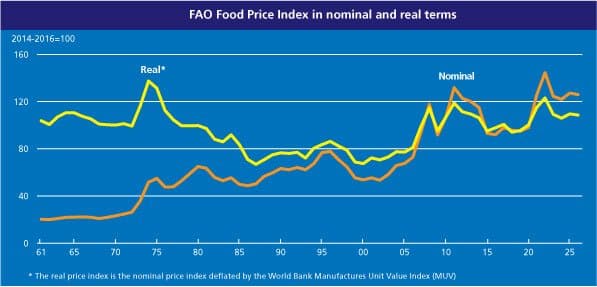
Sugar prices surged 7.2 percent, vegetable oils jumped more than 5 percent, and international wheat climbed 4.3 percent in March as the United Nations Food and Agriculture Organization's monthly price index rose to 128.5 points, its highest reading since September 2025 and a 2.4 percent jump from February's revised level. The second consecutive monthly increase put the index roughly 1 percent above where it stood a year ago, though still nearly 20 percent below the record peak of March 2022.
The engine behind March's move was not a sudden crop failure but a conflict: the Iran war that began February 28 effectively closed the Strait of Hormuz to normal traffic, driving up crude oil, marine insurance premiums, and the cost of fertilizer all at once. FAO Chief Economist Máximo Torero, speaking on April 3, acknowledged that "price rises since the conflict began have been modest, driven mainly by higher oil prices and cushioned by ample global cereal supplies," but his accompanying warning was stark. If the conflict persists beyond roughly 40 days and input costs stay elevated, Torero said, "farmers may reduce inputs, plant less, or switch crops to less intensive fertiliser crops. Those choices will hit future yields and shape our food supply and commodity prices for the rest of this year and all of the next."
The Strait of Hormuz is not just an oil chokepoint. According to the United Nations, about one-third of the world's seaborne fertilizer trade passes through the waterway, including urea, ammonia, phosphates, and sulfur exported by Qatar, Saudi Arabia, Iran, and the UAE. Since the conflict began, nitrogen and phosphate fertilizer prices have risen between 20 and 40 percent, with urea alone climbing more than 28 percent within three weeks. That timing matters acutely: planting season was already underway across much of the United States when the Strait effectively shut down.
For American consumers, the transmission mechanism runs through several channels simultaneously. Higher crude prices raise the cost of diesel used in tractors, combines, and the trucks and trains that haul food across the country. Elevated freight costs and war-risk insurance surcharges add to what importers pay for palm oil, cane sugar, and other commodities that must reach U.S. ports via rerouted shipping lanes. And the fertilizer shock, if it persists through the late-spring application window, will squeeze farmers' margins and potentially reduce planted acres of corn, soybeans, and winter wheat, tightening domestic supplies heading into 2027. The U.S. grocery store consumer price index was already running 2.4 percent above year-ago levels as of February, before the Hormuz effects had fully worked through supply chains.
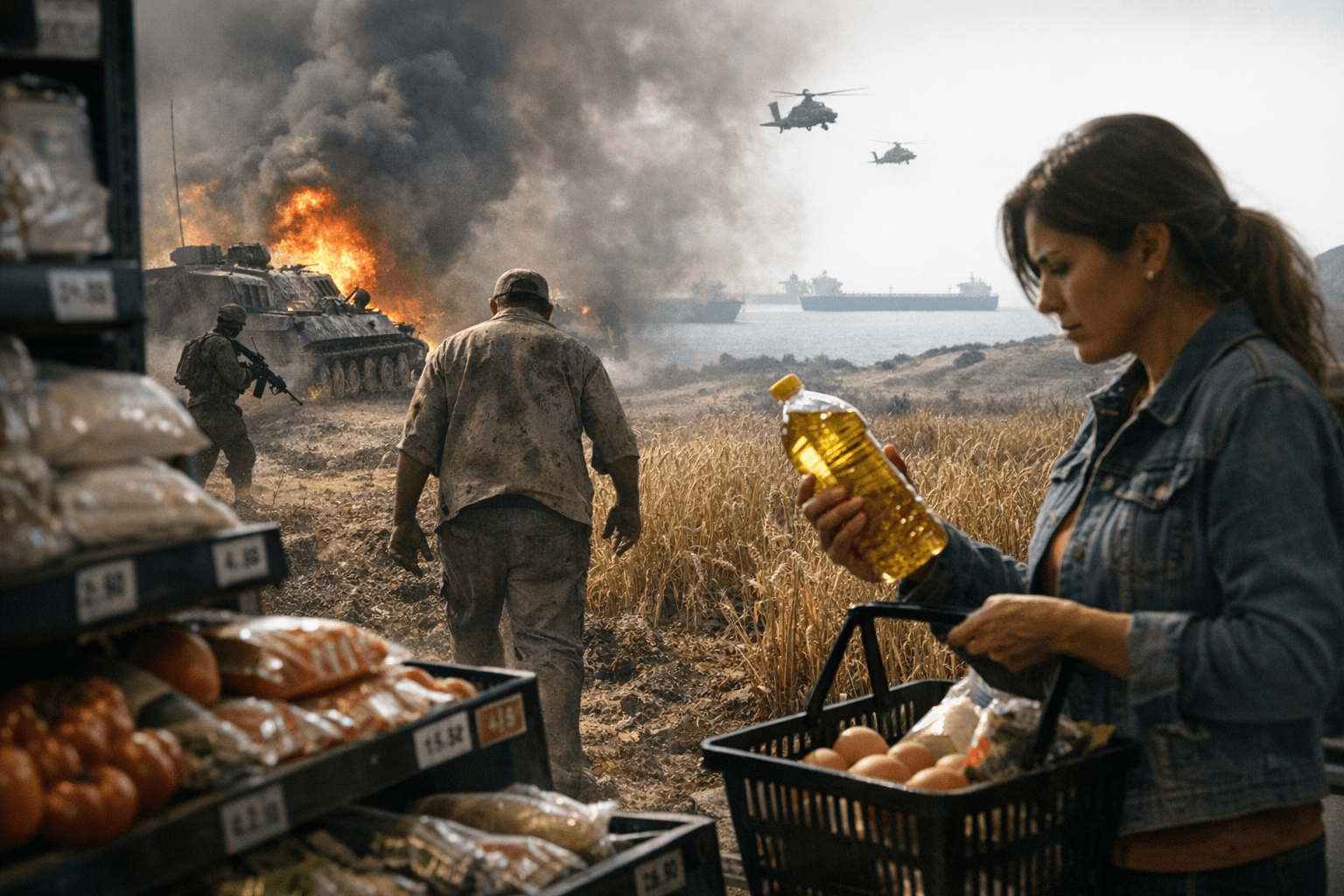
The FAO's March numbers showed rice as the only major commodity to decline, falling modestly on seasonal harvest timing and softer import demand in parts of Asia. That exception underscores how supply fundamentals can still absorb shocks when stocks are adequate: the world cereal stocks-to-use ratio sits at 32.2 percent, a level the FAO described as comfortable. But comfort at the global aggregate level does not protect countries or consumers with limited purchasing power. The UN World Food Program has warned that if crude oil remains above $100 per barrel through mid-2026, the number of people experiencing acute food insecurity could increase by 45 million, reaching a record 363 million worldwide.
The trajectory from here depends almost entirely on how long the conflict runs and whether the Strait reopens to fertilizer and LNG tankers before the critical northern hemisphere planting window closes. Torero's 40-day threshold is not a hard deadline, but it reflects the biological reality that farmers who cannot afford or obtain inputs this spring will have few remedies by harvest time.
This article was produced by Prism’s automated news system from verified source data, official records, and press releases, then run through automated quality and moderation checks before publishing. The system is built and supervised by the people who set the standards it runs under. Read our full AI policy.
Did this article answer your question?


