Uranium Prices Pull Back From January Peak Yet Remain Elevated
Cameco published an end-of‑February spot price of $86.95/lb, while U.S. futures traded in the high‑$80s, down from a late‑January spike near $101.50 but still up about one‑third year‑over‑year.
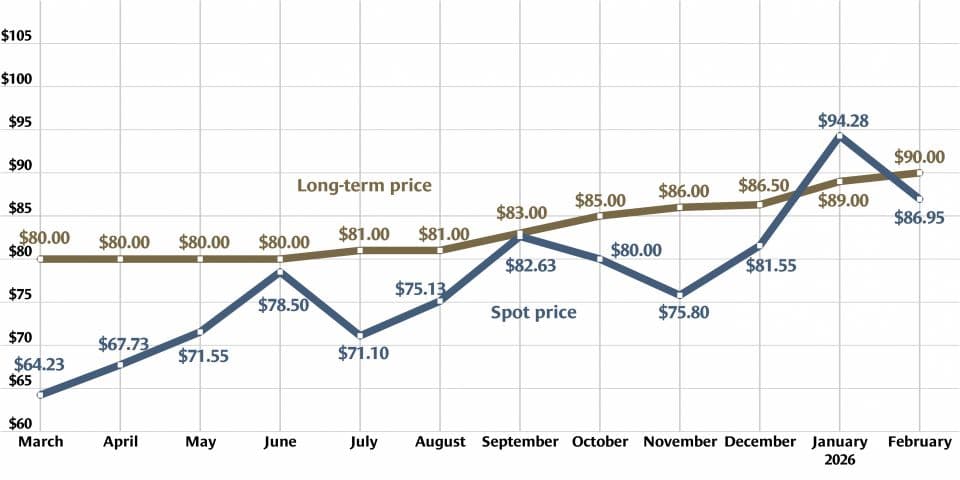
Cameco published an end-of‑February spot price of $86.95 per pound, and U.S. futures settled in the high‑$80s, marking a clear pullback from a late‑January two‑year high near $101.50 per pound. Trading Economics reported futures at $86.45/lb on March 2, “trading in a narrow range since pulling back from the two‑year high of $101.5 in late January, tracking the drop for industrial commodities as the dollar rebounded and traders eased concerns of dollar debasements.” The combined picture: prices have retreated off the $100 level but remain materially elevated versus a year ago.
Market feeds show small but meaningful differences across series. TradeTech’s weekly U3O8 assessment retraced -US$15/lb to US$85/lb in February, “including a decline of -US$4.50/lb last week, or -5%,” and recorded eight spot transactions in that week involving traders, financial entities and producers. TradingEconomics’ CFD quoted uranium at $88.05/lb on February 26 and noted the one‑month decline of 3.40% even as the price remained 34.32% higher than a year earlier. Cameco’s own series flagged a prior end‑of‑January published spot of $94.28, which the company described as a two‑year high in its series.

Market participants point to concentrated buying and structural demand as the engines behind the recent swings. Heavy purchasing by the Sprott Physical Uranium Trust — example purchases of 500,000 pounds and reported capital raises to acquire more — was cited repeatedly as the catalyst that pushed the spot up through the $100 mark in late January. Analysts and market commentary also cite expectations of persistent supply deficits, limited near‑term mine response, and rising nuclear demand from U.S. tech companies exploring small modular reactors and power‑hungry data centers as supportive fundamentals.
Differences between spot and futures quotes reflect delivery‑point and methodology variation as much as price movement. Cameco’s posted spot at $86.95 sits alongside TradeTech’s market‑average $85/lb and TradingEconomics’ $86–$88 futures prints — spreads under $4 that arise from whether the price series references ConverDyn, Cameco or Orano delivery points, timing of snapshots, and thin liquidity in a small spot market. TradeTech also highlighted that geopolitical or trade concerns such as tariffs or sanctions can widen delivery location spreads until those issues ease.
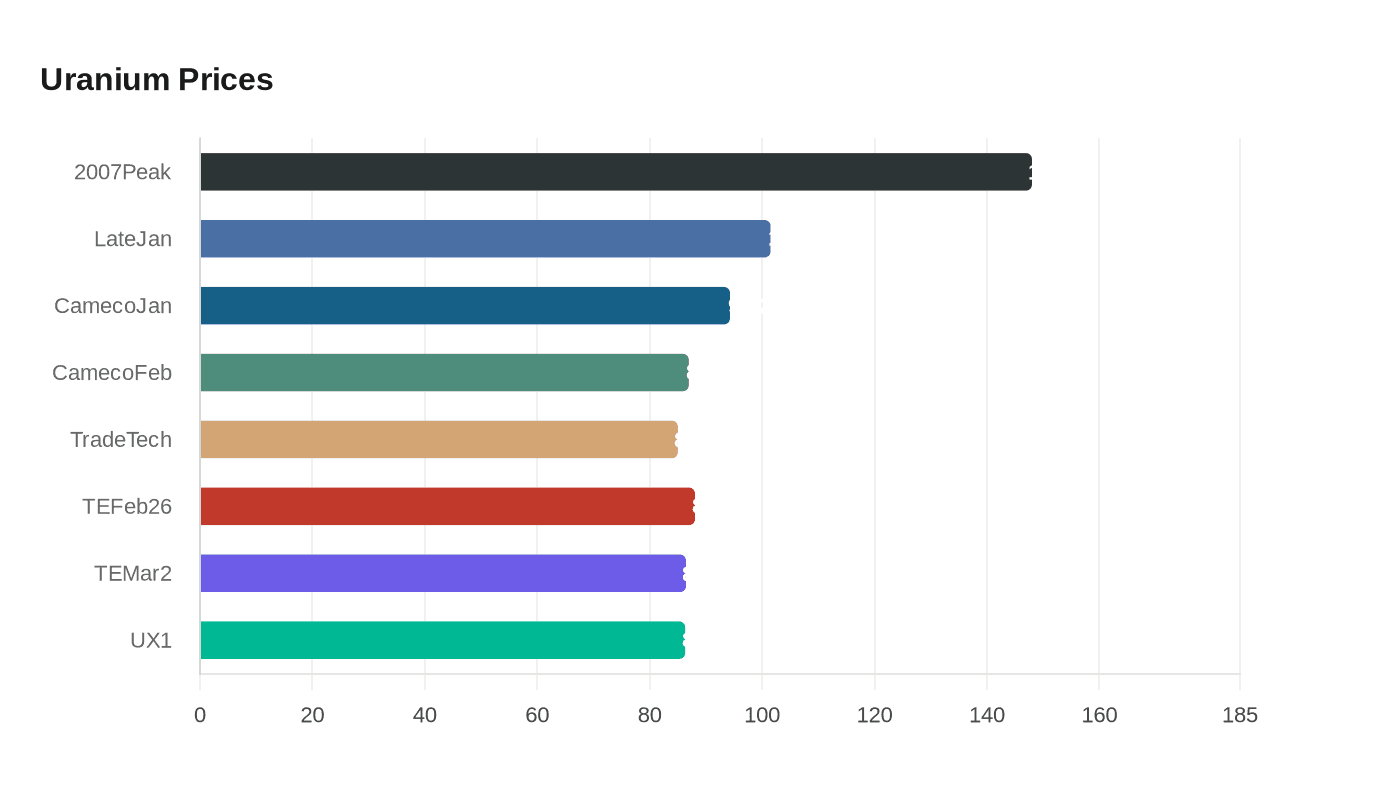
Technical and market commentary kept a close eye on near‑term levels. A market transcript referenced UX1 futures near 86.30 and noted technical support around $76–$77; that commentator summed up the calendar risk succinctly: “May is going to be interesting.” With prices still roughly 32–34% higher year‑over‑year and well above most historical ranges outside the 2007 peak of $148/lb, market participants will watch settlement windows and delivery spreads as the sector balances persistent demand and constrained near‑term supply.
Know something we missed? Have a correction or additional information?
Submit a Tip