U.S. confirms small military team deployed to Nigeria for counter-ISIS support
AFRICOM acknowledged an invited U.S. team in Nigeria to augment intelligence and ISR after December strikes; key details and legal terms remain unclear.
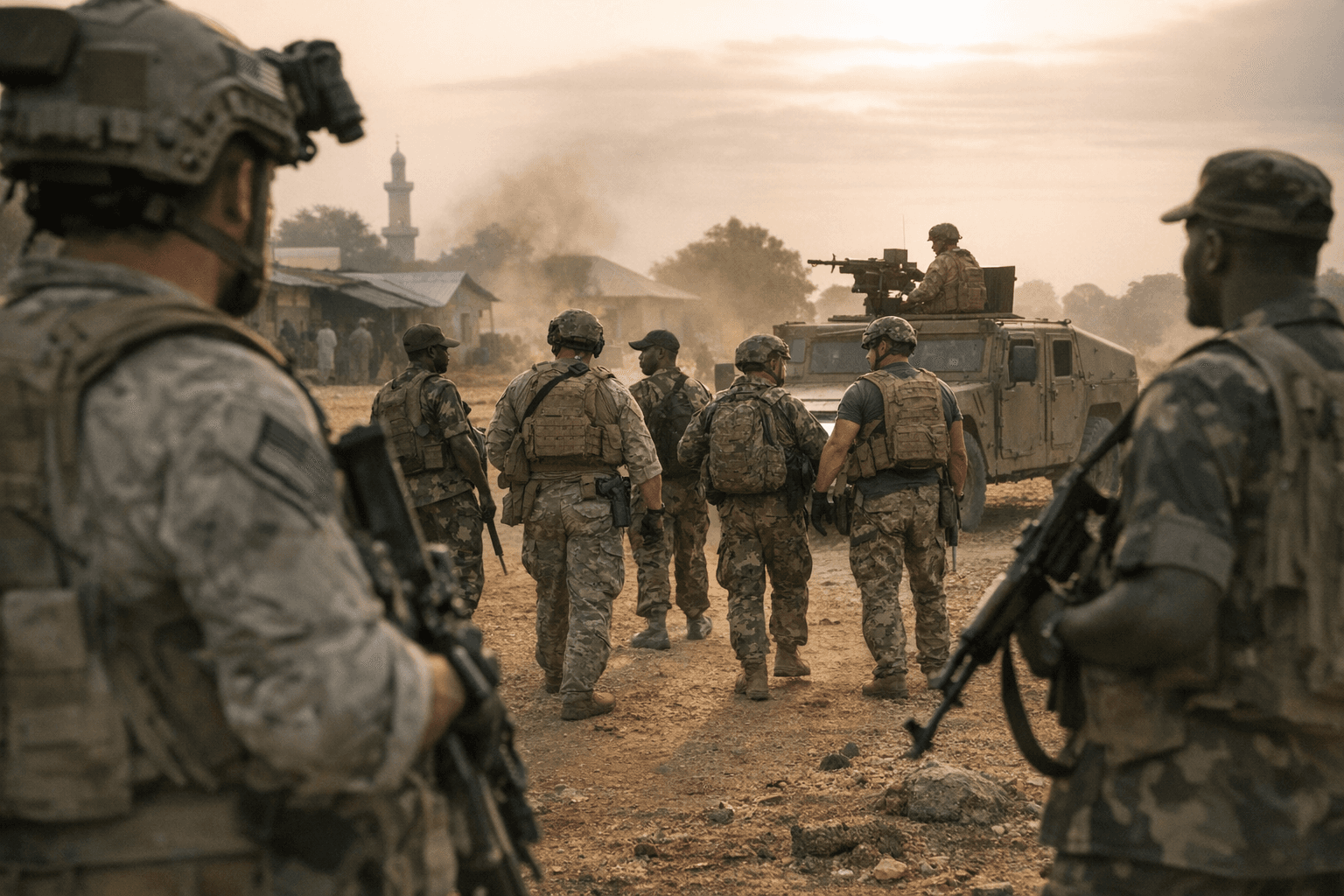
U.S. Africa Command confirmed that a small, invited team of American military personnel has been dispatched to Nigeria to support the country’s fight against Islamic State affiliates, marking the first on-the-ground acknowledgement after U.S. strikes in late 2025. AFRICOM leaders said the deployment is intended to augment Nigerian operations with specialized capabilities, intelligence sharing and airborne surveillance.
“That has led to increased collaboration between our nations, to include a small U.S. team that brings some unique capabilities from the United States in order to augment what Nigeria has been doing for several years,” Gen. Dagvin R.M. Anderson, the head of AFRICOM, said in a briefing. Anderson linked the move to recent high-level diplomacy, saying the deployment followed his meeting with President Bola Tinubu in Rome late last year.
Lt. Gen. John Brennan, AFRICOM’s deputy commander, described the contingent as limited in size. “There are some American boots on the ground, but their numbers are not significant, [a] lot of assessment (is) going on. So we have a small team that the Nigerians invited in, and we're working with them to assess their needs, and to create opportunities that we can both capitalize on together,” he said, adding that the United States is providing intelligence support and airborne ISR to improve the precision of Nigerian operations. “We are continuing to provide them (the Nigerians) intelligence support, airborne ISR, (intelligence, surveillance and reconnaissance), things that will make them more accurate,” Brennan said, noting reported local successes in Sokoto tied to post-strike activity.
U.S. officials also signaled increased materiel flows to Abuja. “Some military equipment is being shipped in from the U.S. ... it's nothing out of the ordinary. It's things they (the Nigerians) had already purchased, as far as ammunition, things that make to help them be more accurate in their operations against ISIS, West Africa Province and Boko Haram,” Brennan said. An unverified social media post circulating images of sealed consignments claimed American missile strikes and listed specific aircraft, but AFRICOM and Nigerian authorities have not publicly corroborated those exact inventories.
Nigeria framed the cooperation as necessary and respectful of national sovereignty. “Nigeria’s primary and unwavering stance is that terrorism, in all its forms, is a global scourge that requires a collective, yet sovereignly respectful, response,” Rabiu Ibrahim, a special assistant to Nigeria’s minister of information and national orientation, said. He added that actions which degrade terrorist capabilities are tactical components of a broader strategy.
Key operational and legal questions remain unanswered. AFRICOM has not disclosed the team’s arrival date, exact personnel numbers, base locations or the legal status governing their presence. Independent verification of the December strikes’ impact is limited; journalists and monitors have not confirmed militant casualty figures. There is also an unresolved discrepancy in local reports over place names spelled as Sokoto and Suko in post-strike accounts.
The deployment comes amid a broader recalibration of U.S. posture in West Africa. Brennan emphasized a transitory approach to capabilities and rejected the notion of seeking long-term bases or new drone hubs in the region, saying the U.S. focuses on positioning capability “to the right place at the right time and then leaving.”
For Nigeria, where domestic politics and regional instability shape popular sensitivities to foreign military presence, the arrangement tests the balance between urgent counterterrorism needs and questions of sovereignty, transparency and oversight. International legal and parliamentary scrutiny in Abuja, as well as scrutiny by independent monitors, will shape how this limited U.S. footprint is perceived and whether it remains narrowly focused on assessment and intelligence support or expands into a longer-term partnership.
This article was produced by Prism’s automated news system from verified source data, official records, and press releases, then run through automated quality and moderation checks before publishing. The system is built and supervised by the people who set the standards it runs under. Read our full AI policy.
Did this article answer your question?


